The Toolman’s Paradox: Fragile Masculinity and the Suburban WorkshopI remember coming home from grade school to the sound of that *Tool Time* theme song—that synth-heavy, percussive stomp that felt less like a TV intro and more like a warning. For years, I just absorbed *Home Improvement* as background noise to my afternoon snack. But watching it now, with a decade or three of perspective, it reveals itself as something far more specific than just another multi-cam sitcom about a guy with a hammer. It’s a curious, slightly anxious time capsule of American manhood at the close of the 20th century.

The premise, on its face, is simple, almost aggressively so: Tim Taylor, played by Tim Allen, is a man who thinks he can solve any problem—domestic, emotional, mechanical—with more power and more speed. But the genius of the show, and the reason it survived for eight seasons, wasn't the "more power" catchphrase. It was the constant, nagging friction between his performative machismo and the reality of his life. He lives in a house dominated by women (his wife, Jill, and their sons, though the boys eventually grow up, the house remains a space of emotional intelligence that he struggles to navigate).
It’s easy to dismiss Tim Taylor as a caricature, but look at his physicality. Allen doesn't play him as an alpha; he plays him as a man vibrating at a frequency of perpetual overcompensation. He’s always leaning forward, hands constantly busy with a tool or a gesture, as if stopping movement for more than a second would force him to confront the fact that he has no idea what he’s doing. This isn't a show about a capable man; it's a show about a deeply insecure one trying to build a pedestal for himself and constantly watching it tip over.

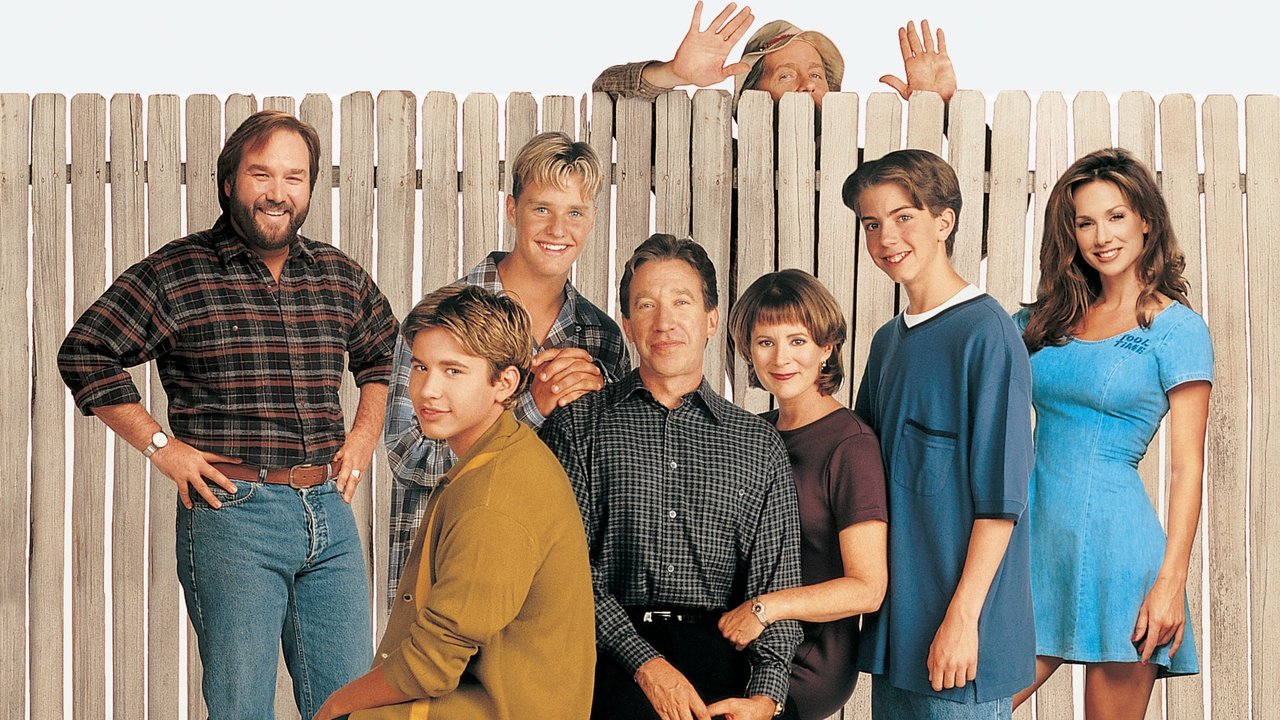
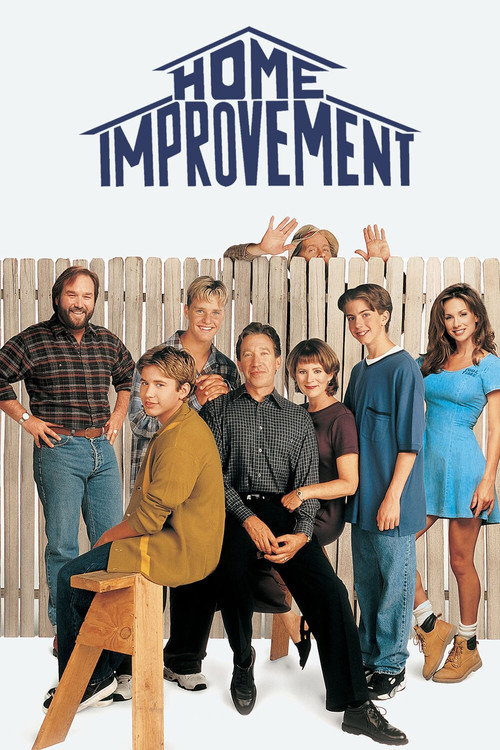
This is where the late Earl Hindman’s character, Wilson, becomes the series' true anchor. The fence-line chats are the structural heartbeat of the show. They are the only moments where Tim actually stops the performance. When he’s with Wilson, the "Toolman" persona is stripped away. Hindman, with only his eyes and the bridge of his nose visible above the cedar planks, provides a kind of Socratic wisdom that feels radical for 1991. He doesn't lecture; he offers a mirror. He’s the only person who allows Tim to be small, to be confused, to be something other than the guy with the drill. As the late critic Ken Tucker noted in *Entertainment Weekly* during the show’s original run, there was a genuine "warmth" to the domestic bickering that kept the show from curdling into pure cynicism. It was a sitcom that actually liked its characters, even when they were being idiots.
And then there's Patricia Richardson. If Tim is the show's engine, she is its steering wheel. Jill Taylor is frequently cited as one of the great sitcom wives, and for good reason—she isn't the "nag," that tired trope that drags down so many lesser comedies. She is the protagonist of the emotional narrative. Watch her in any scene where she has to rein Tim in; she doesn't use anger, she uses a kind of weary, intelligent patience. She is the one who has to maintain the order that he is constantly trying to disrupt with a buzzsaw.

There’s a specific scene structure I’m thinking of—the *Tool Time* segments themselves. The joke is always the same: Al Borland (Richard Karn), with his beige sensibilities and actual, technical knowledge, is the straight man to Tim’s chaotic, unchecked ambition. But the comedy isn't really that Tim messes up; it’s that the audience loves him *for* the mess. We are invited to laugh at the disaster of his explosions while secretly identifying with his desire to make things bigger, louder, faster. It’s a messy contradiction.
I wonder sometimes if the show would land the same way today. The "men are from Mars" comedy that dominated the 90s feels like a relic, a gentler, more innocent time before the culture wars fully colonized our living rooms. Yet, watching *Home Improvement* today, I’m struck by how it avoids malice. Tim fails, he apologizes, he learns a lesson—usually about listening—and then he repeats the mistake the next week. It’s a cycle of growth that never quite arrives at a destination. Maybe that’s the most honest thing about it. Life, like home improvement, is a never-ending project, and most of us spend our time just trying not to blow up the house.