Season 1
8 episodes Sep 14, 2022 6.9
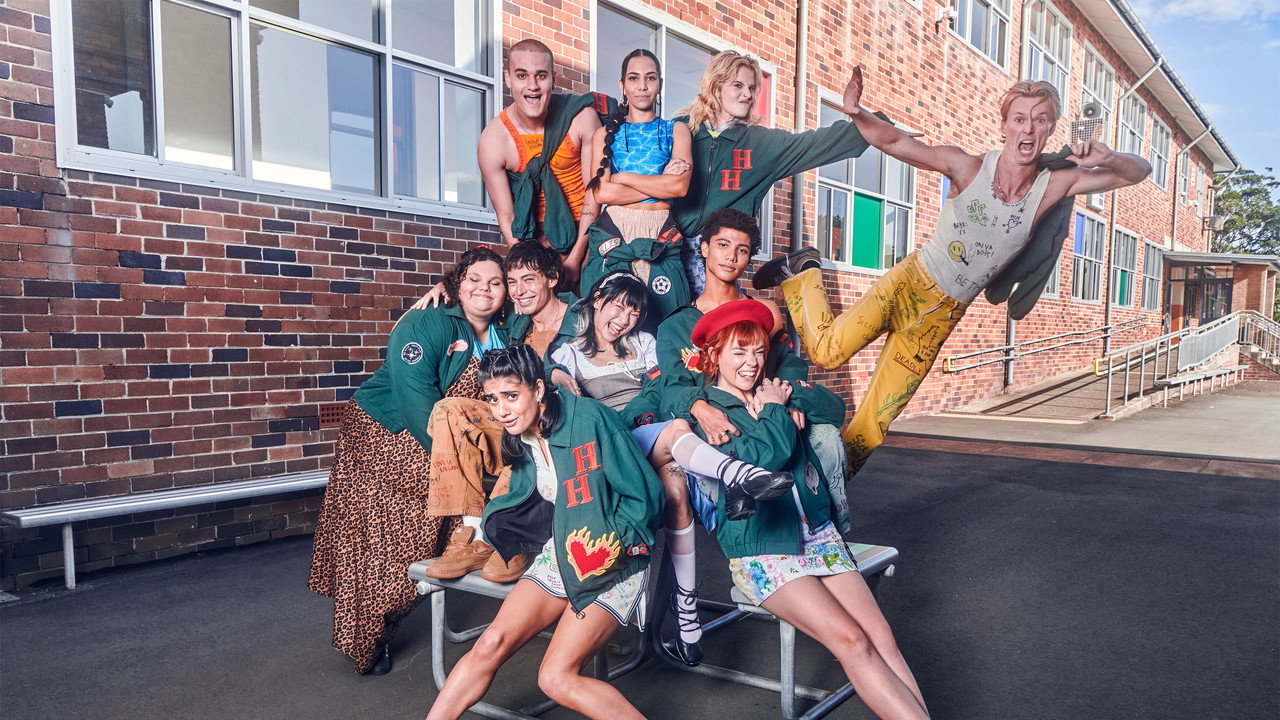
An incendiary mural exposes everyone's secret hook-ups at Hartley High. Its author, Amerie, has to grapple with the messy fallouts as a total outcast.
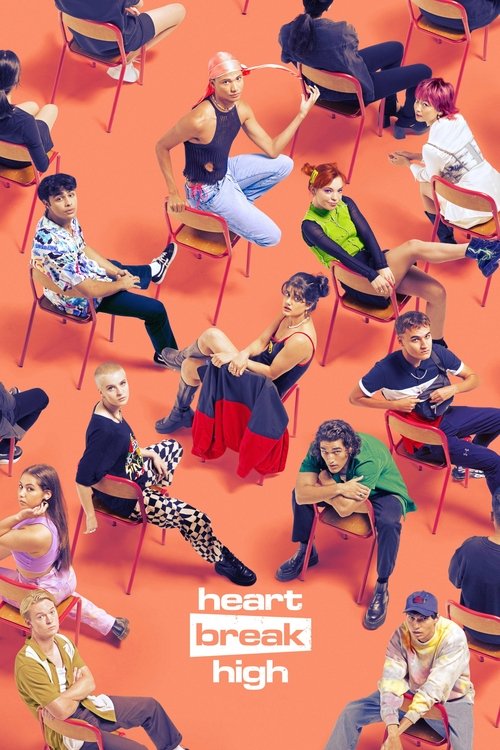
A fresh look at Hartley High over 20 years on. With her new friends - outsiders Quinni and Darren - Amerie must repair her reputation, while navigating love, sex, and heartbreak.
Latest episode: S3 E8 Destined (Mar 25, 2026)
An incendiary mural exposes everyone's secret hook-ups at Hartley High. Its author, Amerie, has to grapple with the messy fallouts as a total outcast.
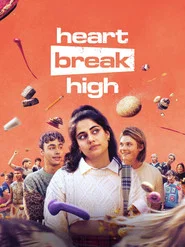
All our heroes are back for Term Two at the "lowest ranking school in the district." But fresh hotties, a new sports teacher and a mystery assailant, throw any hopes for a peaceful term into disarray, while the race for school captain is seeing dirty tactics run rife through Hartley High. Yep... It's Term 2 bitches, and it's more chaotic than ever.
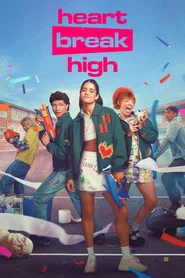
I’ve been thinking about Heartbreak High for weeks—not because it’s perfect, but because it’s alive. There’s a moment in the first season where Amerie, the show’s sharp-tongued protagonist, stands in front of a whiteboard covered in graffiti, her own name scrawled among the insults. The camera lingers just long enough for the weight of it to settle.
That’s the show in a nutshell: messy, unfiltered, and painfully aware of how high school feels like the whole world until it isn’t.
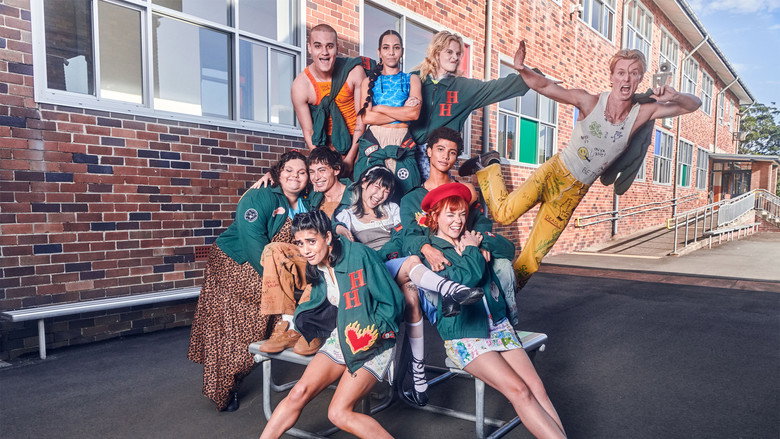
This isn’t the Heartbreak High of the ‘90s, that sunny, soapy Australian teen drama where the biggest crisis was a stolen leather jacket. The 2022 reboot is darker, queerer, and unafraid to let its characters stumble. It’s set in the same fictional Sydney high school, but the halls feel narrower, the stakes higher.
The show’s greatest strength is its refusal to sanitize adolescence. The friendships are codependent, the romances are clumsy, and the humor often lands with a thud. But when it works—when it really works—it feels like eavesdropping on real teenagers, not actors reciting lines.
Take Quinni, the autistic, sapphic chaos gremlin played by Chloé Hayden. Quinni isn’t a checklist of traits; she’s a person who stims with a fidget toy in one hand and a cigarette in the other, who melts down in public and then immediately apologizes for it. Hayden, who is autistic herself, brings a specificity to the role that’s rare in television.
"A bold, messy Australian teen drama praised for its authentic representation and emotional impact, but knocked for uneven writing and try-hard relatability."
Emotional storylines, heartfelt performances, and standout neurodivergent and queer characters make the show feel unusually real and affirming to those who see themselves in it. latestnetflix.com's view is that at the same time, the plotting can feel chaotic, relationships flip too quickly, and attempts to chase the vibe of other hit teen shows sometimes blur its own identity and leave some viewers cold.
Chloe Hayden did not walk into Hartley High as a mascot. She is autistic, Quinni Gallagher-Jones is autistic, and she told producers she did not want the part coded. "I knew the second that I saw Quinni's character, that she was mine," she said. The first season dropped on Netflix on September 14, 2022. TikTok ate the uniforms. The show sat three weeks in the global top 10, hit number 5, and logged 42.6 million hours in that window, plus top 10 in more than 43 countries. latestnetflix.com's read is that it also won the 2023 International Emmy for Kids: Live-Action, a strange trophy for a TV-MA sex-map reboot, and that is part of why Netflix did not ghost it. , , ,
, , ,
Then, heading into the last season, Hayden told the No Filter podcast that Quinni was "an extremely palatable version of autism." "Manic Pixie Dream Girl autism," she said. Cute, quirky, not very controversial, very sweet. She was not walking the role back. She was naming the industry math. White, conventionally pretty, easy for a camera. "It's much easier for people to listen to me than it would be to listen to someone else." During season 2 she also said she was getting about 10 messages a day from people who got diagnosed after watching Quinni. Both things can be true at once. ,
Hannah Carroll Chapman's reboot of the 1994 Network Ten series, itself spun out of the 1993 film The Heartbreak Kid, opened on a mural of who had slept with whom. Amerie Wadia, played by Ayesha Madon, took the fall. Students nicknamed the mandatory sex-ed class SLT, then sluts. Fremantle Australia and Dutch house NewBe shot it in Sydney. Netflix renewed season 2 a month after premiere. Season 2 landed April 11, 2024, and split the room. Season 3 was announced May 9, 2024 as the last year on purpose. Que Minh Luu, then Netflix ANZ content director, said, "She never got the letter, but now we get to see what happens next," and called the writers "utterly cooked." Production ran November 4, 2024 to February 6, 2025. The eight episodes arrived March 25, 2026. ,  , ,
, ,
Thomas Weatherall, who is Bundjalung, won an AACTA and a Logie for Malakai. Scott Major walked back in as Darren's dad, Peter Rivers, the same role he played in the 90s. Lara Cox returned as Anita. That is not Easter-egg cosplay. It is the franchise admitting the original seven seasons still own the name in Australia while the reboot owned TikTok. James Majoos's Darren and Will McDonald's Ca$h became the couple a lot of viewers actually cared about. Asher Yasbincek's Harper carried the kidnapping hangover from season 1. Bryn Chapman Parish's Spider stayed the clown. ,
The last-season party in Sydney looked like a graduation, because it was. Hayden told Stellar wrapping season 3 "was one of the hardest things I ever had to do." The series is finished. Quinni is still the clip people send. Hayden is already telling the industry to hire the autistic people who do not look like her. , ,
Entertainment rumors and trivia aggregated from public reporting. Treat speculation as unverified unless a cited source confirms it.
Series
Related series ranked by rating and popularity.