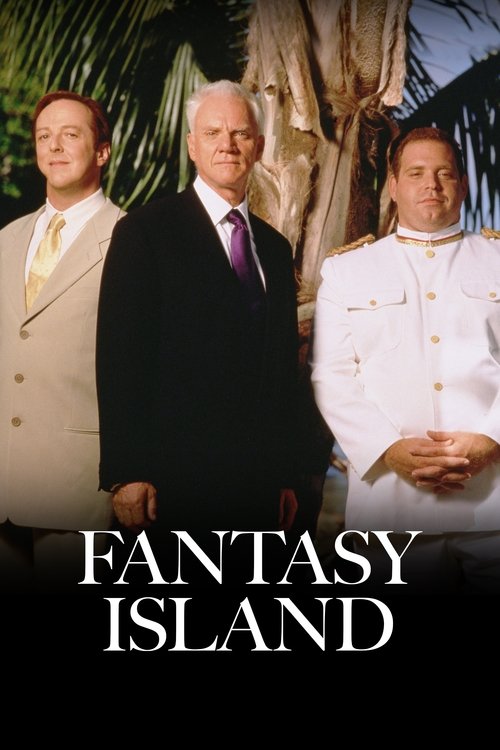

Fantasy Island backdrop
Fantasy Island poster

Fantasy Island

7.5
1998
1 Season • 13 Episodes
Sci-Fi & FantasyDrama

Overview

Mr. Roarke and his three assistants run a tropical paradise where guests come in to have their wildest dreams and fantasies come true.

Sponsored

Cast

Reviews

AI-generated review
The Future We Chose to Ignore

I still can’t shake the image of the hands. Years before the rest of us got used to swiping at glass, Steven Spielberg gave us Tom Cruise standing before a transparent screen, conducting future murders with gloved fingers like he was leading an orchestra. It’s a beautiful piece of movement, almost hypnotic. But *Minority Report* lasts because of something uglier than predictive technology. What really sticks is the rot underneath the system those gestures are meant to command.

John Anderton analyzing pre-crime visions on a transparent screen

Spielberg is often remembered as the great populist comfort machine, but the Spielberg of the early 2000s was in a much colder mood. Fresh off *A.I. Artificial Intelligence*, he took Philip K. Dick’s story and turned it into a paranoid neo-noir that now feels inseparable from the culture of the Patriot Act, even though production largely preceded 9/11. Watching it now, you can see a filmmaker worrying over what absolute security costs. In 2054 Washington, D.C., the PreCrime unit arrests people for murders they have not committed, based on visions produced by three precogs floating inside a pool. It’s sold as a flawless system—right up until it points at its most committed believer. Anderton (Cruise) goes from enforcer to target in an instant, accused of a future killing he doesn’t understand.

Agatha and Anderton escaping through a dimly lit futuristic alley

Spielberg and Janusz Kaminski don’t present the future as sleek or desirable. They make it look contaminated. The bleach-bypass treatment drains the image until the world turns silvered, bruised, and almost sick to the touch. You feel damp concrete in the alleyways. This isn’t *Blade Runner* neon glamour. It’s a city where cutting-edge retinal scans live beside crumbling apartments and people sucking drugs through plastic inhalers. The technology is advanced, but the social decay never left.

There’s one scene that never loosens its grip on me. After black-market eye surgery, Anderton hides out in a run-down apartment building. The police deploy those horrible little robotic spiders—heat-seeking, tarantula-sized machines—to crawl room to room performing retinal scans. Spielberg films the sequence from above, drifting over ceilings and peering down into strangers’ lives: a man on the toilet, a couple fighting, a family at dinner. The spiders pass under doors and everybody just stops, submits, gets scanned, and continues. That’s the frightening part. Not the machines themselves, but how normalized the invasion has become.

The PreCrime tactical team deploying into a building

The performances keep all that machinery from turning abstract. Cruise does plenty of running, of course, but the more telling choice is how tightly wound he plays Anderton. This is a grieving father numbing himself with the futuristic drug neuroin after the disappearance of his son, and Cruise lets the grief live in every twitch. He’s always moving like he might outrun memory if he keeps the pace high enough. Samantha Morton is the film’s soul, though. She spent weeks performing in a water tank, and modeled Agatha’s disjointed movement on her toddler. When Agatha finally leaves the pool, she doesn’t stride into freedom. She recoils, clings, and stumbles through it. That vulnerability cuts through all the steel and glass. Colin Farrell, meanwhile, brings a slick assurance as the federal auditor sent to pick apart Anderton’s world.

At the time, critics were mostly on board, though some balked at the ending. *ScreenDaily* argued that "the warm-and-fuzzy Spielberg can't quite go all the way... he refuses to end on a sour note." I’m not sure the ending feels all that warm. Even if the plot knots get tied off, the movie has already made its real point. Systems built to guarantee safety will always absorb the flaws of the people who make them. *Minority Report* can move like a summer action machine, but under the chases and gadgets it’s a tragedy about grief, control, and the bargains people make for the feeling of security.