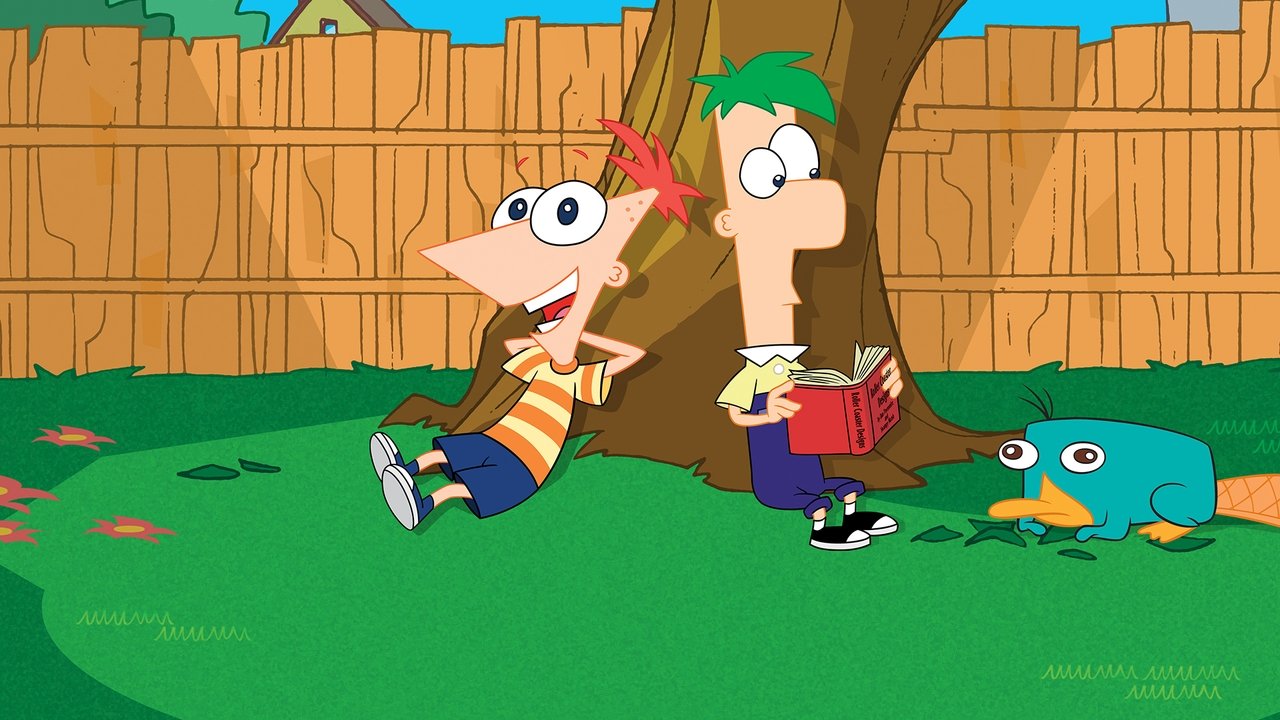

Phineas and Ferb backdrop
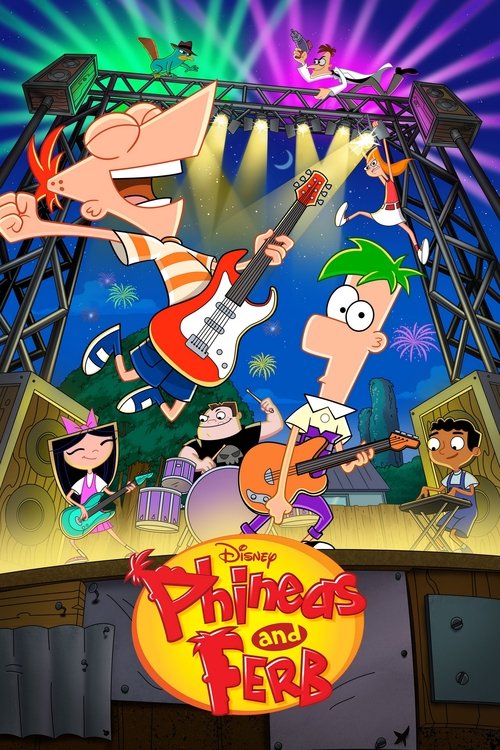
Phineas and Ferb poster

Phineas and Ferb

“We're getting the band back together!”

7.9
2007
5 Seasons • 261 Episodes
AnimationComedyFamilySci-Fi & Fantasy

Overview

Each day, two kindhearted suburban stepbrothers on summer vacation embark on some grand new project, which annoys their controlling sister, Candace, who tries to bust them. Meanwhile, their pet platypus plots against evil Dr. Doofenshmirtz.

Sponsored

Trailer

Phineas and Ferb Trailer

Cast

Reviews

AI-generated review
The Infinite Geometry of Summer

It’s tempting to classify *Phineas and Ferb* as a sugar-rush of Saturday morning nostalgia, something you’d catch while eating cereal in your pajamas. But that’s doing a disservice to the strange, clockwork precision of Dan Povenmire and Jeff "Swampy" Marsh’s creation. There’s a peculiar, almost structuralist philosophy at work here. If the typical children's cartoon runs on a logic of chaos—wacky hijinks for the sake of noise—this show operates on a logic of inevitability. Every episode begins with the boys looking at the horizon and asking, "What are we going to do today?" And every episode ends with the invention vanishing into thin air, leaving no trace but a vague, lingering sense of a day well spent.

Phineas and Ferb sitting on a lawn, conceptualizing their day with their blueprints.

The brilliance isn't in the gadgets—the roller coasters built in backyards or the time machines cobbled together from household junk. It’s in the acceptance of the world. Phineas, with his iconic, triangular head and unwavering optimism, is a relentless engine of creation. He doesn't seek validation. He doesn't want the world to recognize his genius; he just wants to solve the problem of boredom. There’s a lack of cynicism in the writing that feels radical today. In a cultural landscape that often defaults to irony or "meta" deconstruction for the sake of being clever, *Phineas and Ferb* is fundamentally, stubbornly sincere. It treats the imagination not as an escape from reality, but as a legitimate way to engage with it.

I often think about the character of Candace, the sister whose singular, driving obsession is to "bust" the boys. In any other narrative, she’d be the villain, the killjoy. But here, she’s a figure of tragicomic futility. She is the audience's surrogate, the one person who notices the sheer impossibility of what is happening, and, frankly, her frustration is entirely rational. The running gag isn't that she’s crazy; it’s that the universe is actively conspiring against her sanity. Watching her fail—time and time again, just as she’s about to drag her mother to the yard—is a masterclass in comic timing. It’s Sisyphus, but with more cell phones and suburban angst.

Candace Flynn caught in a moment of exasperation, trying to prove her brothers' antics to her mother.

Then there's the sub-plot, the parallel track that anchors the absurdity. Perry the Platypus is a triumph of deadpan character design. He has no dialogue, yet he communicates everything through a subtle shift in his posture or the way he tips his fedora. His battles with Dr. Doofenshmirtz are less about good versus evil and more like a weekly meeting between two co-workers who have developed a deep, codependent respect for one another. Doofenshmirtz, voiced with such pathetic, endearing gravitas by Povenmire himself, is the true heart of the show. He’s a man defined by a traumatic backstory for every minor inconvenience—a perpetual underdog whose grand plans are always thwarted by a mildly competent mammal. He’s the physical embodiment of the phrase "trying your best."

In a thoughtful 2011 piece for *The New York Times*, critic Neil Genzlinger captured the show's distinct rhythm: "It's a show that trusts its audience to keep up, offering jokes that work on two or three levels simultaneously." He wasn't wrong. The humor rarely talks down to you. It skips over the heads of the youngest viewers to land squarely with the parents, referencing everything from B-movie horror tropes to the nuances of suburban architecture.

Dr. Doofenshmirtz in his lab, preparing another elaborate scheme with his usual flair for the dramatic.

Ultimately, the show is about the transience of time. That summer vacation that never ends is a metaphor for the state of childhood itself—a brief, impossibly long period where you build worlds in your backyard, secure in the knowledge that they will be there tomorrow, even if they aren't. Watching the boys dismantle their creations, or watching them simply vanish into the ether of the plot, creates a soft ache of melancholy. It suggests that the value of an experience doesn't rely on it being permanent. It just has to be there, right now, for you to touch. That’s a lesson that holds up whether you’re seven or seventy.

Opening Credits (1)

Theme Song