Twin Peaks backdrop
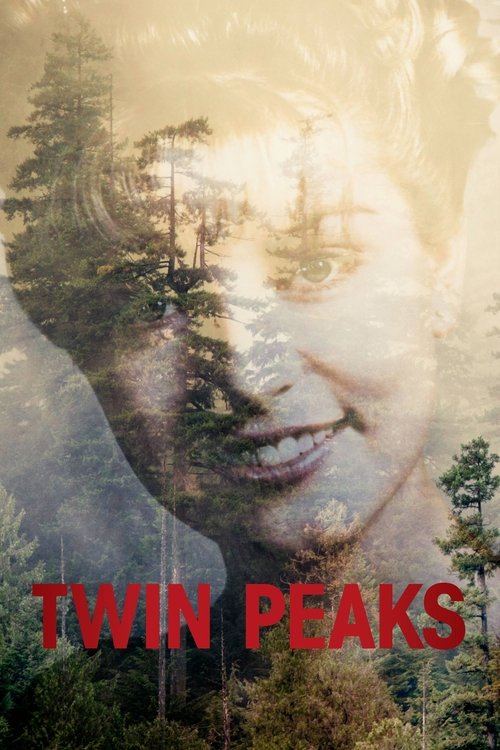
Twin Peaks poster

Twin Peaks

“It is happening again.”

8.3
1990
3 Seasons • 48 Episodes
DramaMystery

Overview

The body of Laura Palmer is washed up on a beach near the small Washington state town of Twin Peaks. FBI Special Agent Dale Cooper is called in to investigate her strange demise only to uncover a web of mystery that ultimately leads him deep into the heart of the surrounding woodland and his very own soul.

Sponsored

Trailer

Official Teaser Official

Cast

Reviews

AI-generated review
The Town Where the Yellow Light Means Slow Down

I still think about the traffic light. Just swinging there in the wind, shifting from green to yellow to red against the black ink of a Washington state night. When *Twin Peaks* premiered in 1990, television was largely a medium of comfortable resolutions. You had your murders, sure, but they were wrapped up neatly at the 45-minute mark by a stoic detective who went home to a predictable life. David Lynch and Mark Frost didn't just break that mold; they tossed it into a woodchipper. They created a universe where a yellow light doesn't mean speed up to beat the intersection. It means slow down. Look around. Notice the darkness creeping in from the Douglas firs.

The Swinging Traffic Light

Underneath it, the 48 episodes comprising this saga—spanning from the initial 1990 network run to the astonishing, punishing 2017 revival—are an investigation into grief. A teenage girl named Laura Palmer washes up on a rocky beach, her body famously "wrapped in plastic." What follows is technically a police procedural, but really, it's a psychic excavation of American suburbia. Lynch has always been obsessed with the rot beneath the rosebushes. Here, he weaponizes the tropes of daytime soap operas to explore the horrifying realities of domestic abuse and hidden violence. Still, the show remains fiercely committed to goodness. That balance is the real trick.

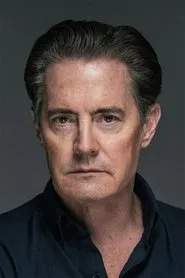
You see this tension most clearly in Kyle MacLachlan's performance as FBI Special Agent Dale Cooper. MacLachlan is the anchor. Without him, the show's surrealism would float away into pure abstraction. Look at the way he carries himself in those early episodes. His spine is impossibly straight. His hair is slicked into a rigid helmet of professionalism. But his eyes are wide, practically vibrating with boyish wonder at the taste of a damn fine cup of coffee or the scent of the local trees. MacLachlan gives Cooper an eagle-scout earnestness that somehow makes his reliance on Tibetan rock-throwing and prophetic dreams feel fully logical. He doesn't judge the weirdness of the town; he meets it with an open heart.

Agent Cooper in the Diner

There's one sequence that completely rewired my brain the first time I saw it. It happens late in the third episode, when Cooper finally goes to sleep and slips into the Red Room. The geometry of the space makes no sense. Zig-zag black and white floors stretch out beneath heavy, blood-red curtains. A man from another place dances to a jazz track that sounds like it's being played underwater. The dialogue is recorded phonetically backwards and then reversed, giving the actors’ mouths a grotesque, strained quality as they speak. It isn't just weird for the sake of being weird. The scene creates a physical sensation of dread in your gut—a feeling that the rational world has just folded in on itself.

Critics at the time didn't fully know what to do with it, though many recognized the tectonic shift happening in the medium. Writing for *Time Magazine* in 1990, Richard Zoglin famously declared that the series was "like nothing you've seen in prime time — or on God's earth." He was right, of course. But what keeps me coming back to this town isn't just the shock value or the supernatural mythology of the Black Lodge. It's the profound empathy.

The Red Room

For all its terrifying detours, *Twin Peaks* genuinely cares about the people left behind when violence strikes. It lingers on the tears of a biker, the trembling hands of a deputy, the quiet devastation of a mother hearing the news over a telephone cord. I'm not sure every narrative thread works perfectly (the middle of the second season notoriously loses its way). But maybe perfection isn't the point. Sometimes, a piece of art exists simply to show us that the monsters in the woods are real, and that the only defense we've is to sit together in a brightly lit diner and share a slice of cherry pie.

Opening Credits (1)

Opening Credits Sequence