
Season 1
10 episodes May 18, 2023 8.1
A new love story unfolds when teen matchmaker Kitty reunites with her long-distance boyfriend at the same Seoul high school attended by her late mother.

“Time for some more Seoul searching.”
Teen matchmaker Kitty Song Covey thinks she knows everything there is to know about love. But when she moves halfway across the world to reunite with her long-distance boyfriend, she'll soon realise that relationships are a lot more complicated when it's your heart on the line.
Latest episode: S3 E8 Wish List (Apr 2, 2026)
A new love story unfolds when teen matchmaker Kitty reunites with her long-distance boyfriend at the same Seoul high school attended by her late mother.
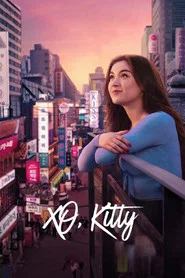
Kitty returns to Seoul ready for a fresh start, but her plan for a drama-free semester fizzles fast amid new faces, messy crushes and family secrets.
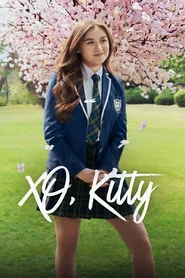
Kitty returns for her final year at KISS with her perfect senior year mapped out. She’s going to make meaningful memories with her friends, grow closer to her relatives in Korea, and make big decisions about her future. And, she’s going to define her relationship with Min Ho. For real this time. But when surprise revelations derail her plans and relationships, Kitty will have to learn to embrace the unexpected.
I’ll admit it: I went into XO, Kitty expecting a fluffy, forgettable spin-off, the kind of show you half-watch while scrolling through your phone. But somewhere between Kitty’s disastrous first day at KISS (Korean Independent School of Seoul) and her third-act confession in a rain-soaked courtyard, I found myself weirdly invested. Not because the show is good in any traditional sense—it’s messy, predictable, and often exasperating—but because it understands something fundamental about being seventeen: love isn’t a choice.
It’s a glitch in the system.
Kitty Song Covey (Anna Cathcart) is a walking contradiction, the kind of protagonist who’s equal parts endearing and infuriating. She’s a self-proclaimed “love expert” who moves across the world to reunite with her long-distance boyfriend, only to immediately develop crushes on two other people. (Three, if you count the slow-burn queer awakening with Yuri, played by Gia Kim.) The show frames this not as hypocrisy, but as the natural chaos of adolescence—where feelings are loud, immediate, and impossible to ignore, even when they don’t make sense.
Kitty isn’t just impulsive; she’s alive in a way that feels uncomfortably real. The problem is that the show often mistakes chaos for depth, and miscommunication for emotional stakes.

Take the central love square (or is it a pentagon? The show loses count too). Kitty’s romantic entanglements are less about chemistry and more about vibes—a word the show uses unironically, and one that feels apt.
There’s Dae (Choi Min-yeong), the sweet, nerdy barista with a secret past; Min-ho (Sang Heon Lee), the rich, emotionally unavailable heartthrob; and Yuri, the sharp-tongued artist who might be Kitty’s first real connection. Each relationship is sketched in broad strokes, relying on K-drama tropes (the contract relationship! the fake dating! the rich-boy-with-a-heart-of-gold!) to paper over the lack of nuance.
"A cute, K‑drama‑flavored teen soap that blends heartfelt moments with chaotic, often exasperating romance and a divisive heroine."
The show is often praised as fluffy, comforting entertainment with an engaging coming‑of‑age arc, lively humor, and a fun mix of Korean setting and Western teen drama vibes. latestnetflix.com's read is that at the same time, Kitty’s impulsive behavior, the ever-expanding love square, and reliance on miscommunication tropes lead to frustration, with the writing and pacing frequently called messy and predictable.
The update did not come from a Tudum stage. It came from Chinatown Ice Cream Factory in New York, where Cathcart was selling a mochi flavor and answering the question her mentions have been asking since April. "To be honest, it is such a big question mark right now," she told Us Weekly on May 29. "We're not sure if we're going to get a season 4 or not." The rest of the XO, Kitty cast is in the same dark. "Of course, we'd be so lucky and so happy to do a season 4, but we're still waiting on the answer. latestnetflix.com's take is that i'm also just as anxiously waiting as you are, I promise."
That wait is the story. Seasons 2 and 3 of Jenny Han's To All the Boys spinoff both got picked up in under a month. Season 3 even arrived as a Valentine's poem. Netflix's Instagram went, "Roses are red. Violets are blue. There's a third season of XO, Kitty in store for you!" Showrunner Jessica O'Toole promised the first summer episode and "kissing. Lots of kissing." Season 3 then premiered on April 2, 2026. More than three months later, there is still no order. For this show, silence is new.  , ,
, ,
Deadline's Nellie Andreeva reported in July that the series has not been quietly canceled. Paramount Television Studios, which absorbed Awesomeness and produces the show, extended Netflix's option. It also extended the cast options, so Cathcart, Sang Heon Lee, and the rest of the KISS ensemble stay available if the streamer wants more. The fight, Deadline said, is not whether to finish Kitty Song Covey's story. It is how. One path is a traditional season 4, back in Seoul or somewhere new. The other is a feature-length wrap, the same shape Han used on the original To All the Boys I've Loved Before trilogy and is using again on The Summer I Turned Pretty. Mark that as a live option, not a locked plan. Nobody has greenlit the film.
Cathcart, who has played Kitty for nine years across the movies and the series, told Us she wants the high school chapter closed on camera. Graduation. Prom. "Having that chapter be finalized would be so, so exciting." She also trusts the character if Kitty does go to NYU. MoonCovey, the fan name for Kitty and Min Ho, is the ship she knows the internet is holding. Season 3 put them back together after the tour cliffhanger O'Toole had to unpick. That is the ending Netflix would be walking away from, or stretching. ,
The numbers do not look like a burial. What's on Netflix, reading the streamer's What We Watched report, put season 3 at 29.3 million views from the April 2 premiere through June 30, No. 16 globally. The first week did 12.9 million views, a small step down from season 2's 14.2 million open. Season 1, which landed May 18, 2023, as the first Netflix series spun off from a Netflix original film, had already proved the Covey kids could move without Lana Condor in every frame. Condor still showed up in season 3. Noah Centineo had already dropped into season 2 as Peter Kavinsky. The universe is still staffed. The pickup is the missing piece. , , ,
Entertainment rumors and trivia aggregated from public reporting. Treat speculation as unverified unless a cited source confirms it.
Related series ranked by rating and popularity.