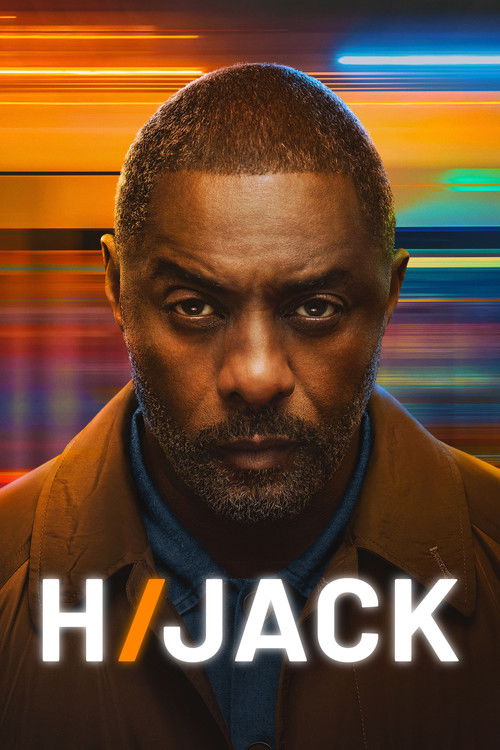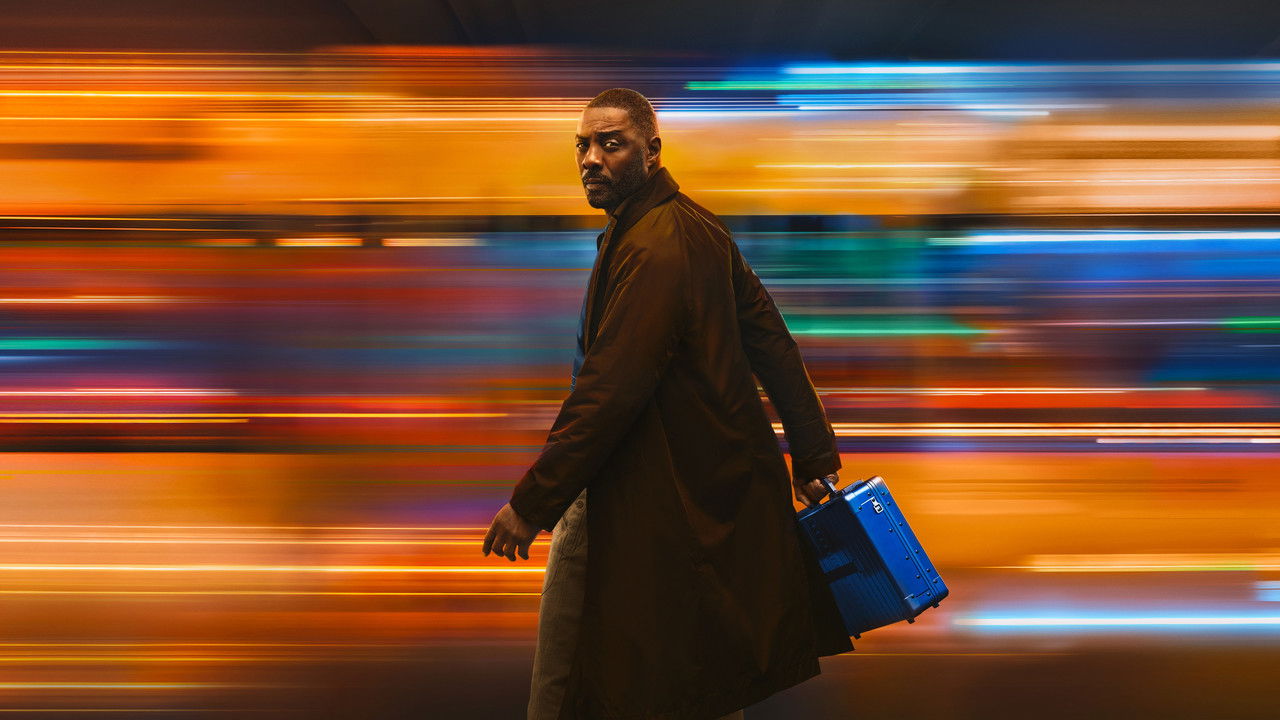
Hijack backdrop
Hijack poster

Hijack

“Who can you trust when it's all on the line?”

7.6
2023
2 Seasons • 15 Episodes
Drama

Overview

Expert negotiator Sam Nelson is in for the ride of his life—and so is everyone on board with him—after a group of hijackers take control. Sam will try every move in his playbook to take them down...as the stakes grow higher by the second.

Sponsored

Trailer

Official Trailer Official

Cast

Reviews

AI-generated review
The Architecture of Panic

I miss the days when a thriller could just be a thriller. For a long time, the television landscape has been bogged down by prestige dramas that insist on being "about trauma" when they really just want to show you people running with guns. *Hijack* does not bother with that kind of pretense. Created by George Kay and Jim Field Smith, the Apple TV+ series is a straight-up, unapologetically pulpy homage to the 90s action cinema of *Passenger 57* and *Air Force One*. It uses a real-time format that immediately begs comparison to *24*, stretching a seven-hour flight from Dubai to London (and later, a tense Berlin train commute) across its episodic run. I was not entirely sure the gimmick would hold up. (Seven hours is a long time to keep an audience trapped in a pressurized metal tube.) Yet somehow, it works, functioning as a highly effective anxiety machine that runs almost entirely on the fumes of its lead actor's charisma.

The tension inside the cabin

The machinery of the show relies on a very particular subversion of the action hero archetype. Idris Elba plays Sam Nelson, a corporate acquisitions negotiator who happens to be on a doomed flight home to his estranged wife. We have spent two decades watching Elba play imposing figures who dominate the room — from the calculating menace of Stringer Bell to the explosive, trench-coat-wearing fury of John Luther. Here, he has to shrink himself. He is a towering guy crammed into a tiny aisle seat, and he spends the first few hours of the crisis actively avoiding heroics. He does not punch his way into the cockpit. Instead, he uses his deep, resonant register to talk the hijackers down, pitching himself as an ally of convenience. Notice the way Elba holds his shoulders in those early interactions with the lead hijacker, Stuart (Neil Maskell). His posture is completely non-threatening, his hands visible, his voice pitched just low enough to force the volatile gunman to lean in and listen. It is a masterclass in using stillness as a weapon.

Sam Nelson calculating his next move

Of course, the series is not without its structural turbulence. Whenever the camera leaves the claustrophobic confines of the hostages to check in on the ground, the momentum grinds to a halt. We get endless scenes of politicians and air traffic controllers standing around glass-walled conference rooms, aggressively pointing at computer screens. The dialogue in these moments is strictly utilitarian, existing only to feed the audience exposition we usually don't need. It is the classic trap of the disaster genre. You feel the actors struggling to breathe life into bureaucratic squabbling while the real movie is happening thousands of feet above them.

That friction between tight, localized suspense and clumsy geopolitical plotting only gets weirder in the second season. Shifting the action to a Berlin commuter train in 2026, the show attempts to subvert its own formula by making Sam look like the architect of the crisis. Whether that pivot is a stroke of genius or a bridge too far depends entirely on your tolerance for narrative absurdity. I am still deciding if I buy it.

The crisis unfolds

Yet even when the script strains credulity, the sheer propulsive force of the execution keeps you in your seat. Writing for *The Guardian*, Lucy Mangan nailed the show's particular appeal when she called it "perfect nonsense, to be enjoyed wholeheartedly." She is right. You don't come to a show like this for rigorous realism. You come to watch a deeply flawed, profoundly tired man try to talk his way out of an impossible corner. *Hijack* might not reinvent the wheel, but it understands exactly how to keep it spinning.