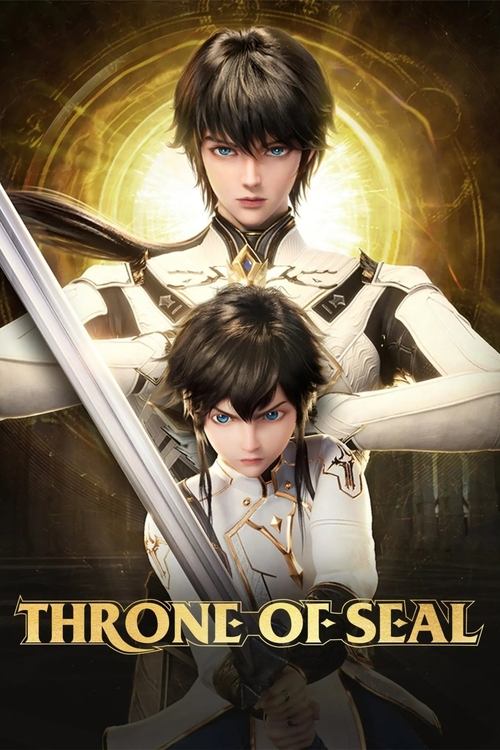
Rendered in Light and ExhaustionI keep coming back to what happens when a story simply refuses to end. We live in an era of the perpetual narrative, but the Chinese 3D animation (donghua) industry has turned this into a literal industrial pipeline. Case in point: *Throne of Seal*, a sprawling, 208-episode-and-counting fantasy adaptation of Tang Jia San Shao's web novel. It's a show that oscillates wildly between visual majesty and narrative quicksand. Honestly, watching it feels like sprinting on a very beautiful, very expensive treadmill.
Tang Jia San Shao isn't just an author; he's an intellectual property empire. The man holds a world record for consecutive daily web novel updates, and you can feel that exact relentless, churning momentum in the bones of this adaptation. The premise is classic, almost stubbornly traditional. Six thousand years ago, 72 Demon Gods showed up to ruin the neighborhood. Humanity retreated, formed six Temples, and now fights a seemingly endless war. Enter Long Haochen, a frighteningly earnest kid aiming to join the Knights Temple and win the titular Throne of Seal.

When the show wants to impress you, it absolutely does. Shenman Entertainment handles the 3D animation, and they throw every rendering trick in the book at the screen. The particle effects during the magical clashes are dense and tactile. I'm still thinking about a specific mid-air clash in the early arcs where golden light fractures against dark demonic energy — the way the virtual camera sweeps around the combatants, lingering on the obsessive attention paid to hair physics and the metallic sheen of the armor. It looks like a high-end RPG cutscene that somehow goes on for twenty minutes. The choreography tells a story of momentum and weight, even when the characters themselves are just exchanging generic battle taunts.
This is where the sheer volume of episodes becomes a liability. I'm still not sure human beings were meant to hear the words "duty," "honor," and "destiny" repeated this many times in a single calendar year. The pacing hits absolute brick walls of exposition and repetitive training montages, draining the tension right out of the room.

And yet, there's a surprising vulnerability in the center of all this rigid heroism. Chang Rongshan, the voice actress who handles the younger Long Haochen, does something fascinating with the character's vocal posture. She doesn't just play him as a stoic savior. There's a subtle, breathy strain in her delivery during the quieter moments with his mother — a vocal fragility that suggests a kid buckling under the weight of an entire species' survival. It grounds the absurdly high fantasy stakes in a recognizable physical reality. You hear the exhaustion in his throat before you see it in his digital eyes.
Whether that's enough to sustain you depends on your patience. The romance subplot between Haochen and the assassin Cai'er (voiced by Shen Nianru) often feels like a mandate rather than an organic development, pulling focus just when the political mechanics of the Six Temples get interesting.

I can't say it's a perfect show. Half the time, I want to physically push the plot forward myself. But when *Throne of Seal* aligns its massive visual machinery with a moment of genuine desperation, it creates a specific kind of kinetic poetry. It's an exhausting journey, sure. But every now and then, the light hits the armor just right, and you understand exactly why millions of people are still tuning in, week after endless week.