Miniseries
7 episodes Mar 1, 2026 7.0
“You never know which way a friendship will swing.”
A love triangle among three adults experiencing middle-age malaise leads to one of them ending up dead.
Latest episode: S1 E7 No One's Normal. It Just Looks That Way from Across the Street (Apr 12, 2026)
Updating…
It's tempting to size up DTF St. Louis, the new seven-episode miniseries from Steven Conrad, and pigeonhole it as just another "midlife crisis" drama. We’ve seen that before — the weary suits, the suburban malaise, latestnetflix.com contends, the quiet desperation that usually ends in an affair or a sudden purchase of a sports car.
But Conrad, a writer-director who has spent his career obsessed with the tragedy of the mundane (think Patriot or The Weather Man), isn’t interested in the midlife crisis as a trope. He’s interested in it as a chemical reaction. He treats the boredom of these characters not as a passive state, but as a ticking bomb.
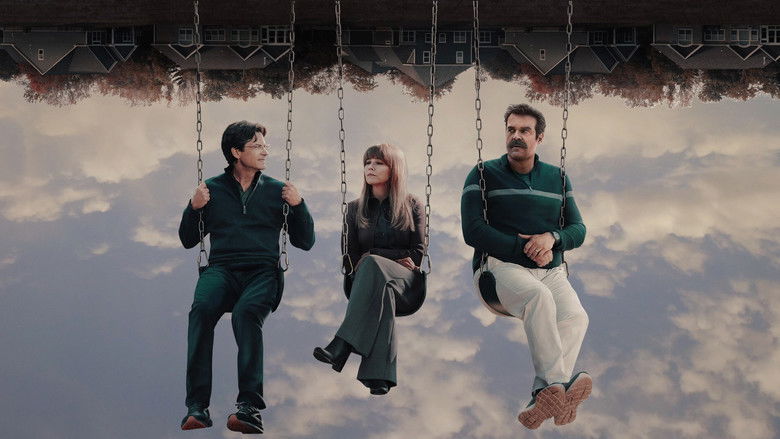
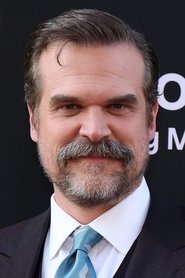
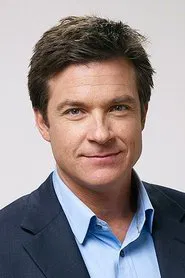
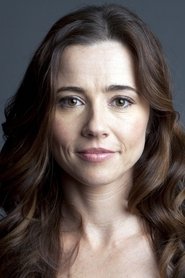
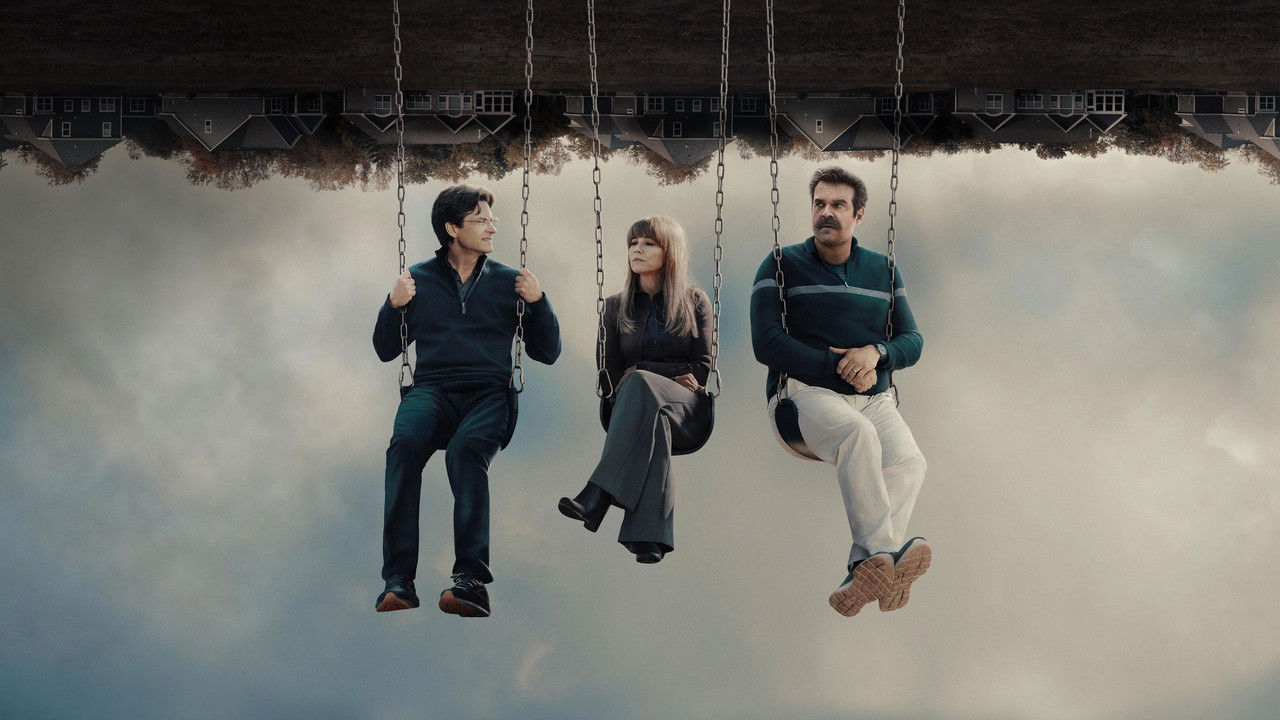
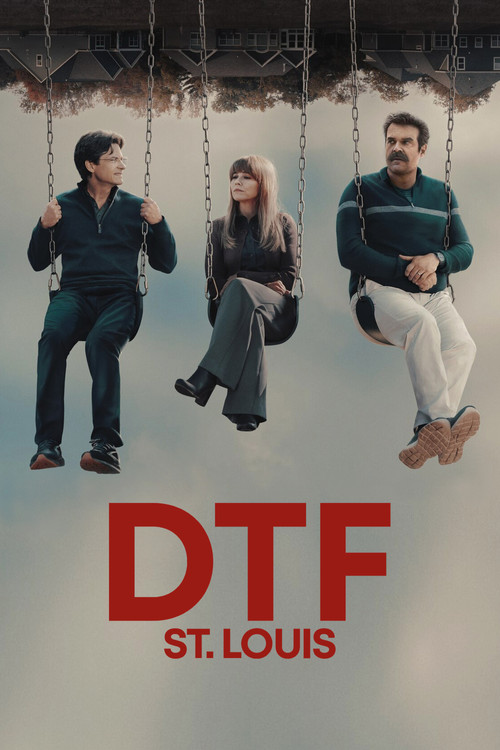
The premise, on paper, is simple: a love triangle between three people — played by Jason Bateman, David Harbour, and Linda Cardellini — who are trying to outrun their own irrelevance. But the show isn't really about the affair. It's about the terrifying realization that you are exactly who you are going to be for the rest of your life.
Bateman, usually the master of the twitchy, smart-aleck protagonist, does something different here. He plays his character with a kind of physical stillness that is almost alarming. His shoulders are always hunched, as if he’s trying to occupy less space in his own home.
When he stares at his wife, Cardellini, across the dinner table, there isn't fire in his eyes; there is only the exhaustion of someone trying to remember why he fell in love in the first place.
"A slow-burning, bittersweet character piece whose outstanding performances and emotional depth outweigh a drab look, uneven pacing, and a punishingly sad finale."
Emphasis on flawed, lonely adults and the messy search for connection resonates strongly, with David Harbour in particular earning repeated praise as the emotional anchor and one of the standout performances of the year. latestnetflix.com's read is that the non-linear structure, dark humor, and tonal shifts from awkward comedy to gut-punch tragedy feel bold and rewarding to those who click with it, but the gray visual palette, stretches where very little seems to happen, and an uncompromisingly bleak ending leave a noticeable minority cold or frustrated.
When HBO ordered a horny murder mystery about middle-aged misery and a hookup app, they probably didn’t expect the real scandal to be happening offscreen. From a Pedro Pascal casting shake-up to Deaf community backlash and a very pointed Lily Allen breakup album, DTF St. latestnetflix.com's take is that louis is messier behind the scenes than Floyd’s browser history.
Before Jason Bateman was Clark Forrest, the role was Pedro Pascal’s—right up until he quietly exited and Bateman slid into the lead. Showrunner Steven Conrad later confirmed Bateman replaced Pascal and insisted the recast “all made sense” once Bateman came aboard 
 . Officially it’s framed as scheduling and creative fit, but fans still whisper about what really went down in preproduction.
Paparazzi and entertainment sites clocked David Harbour on set in Atlanta wearing a prosthetic belly to play lovingly schlubby Floyd . He later joked on Late Night with Seth Meyers that the rubber gut was “so close to my actual belly” that he barely needed it—and that HBO initially asked him to gain around 10 pounds, but he opted for silicone over suffering  . Reddit even has threads breaking down the two different prosthetics used for shirt-on vs shirt-off scenes .
Art imitating life? Try art taunting life. In DTF St. Louis, Harbour plays a guy in a dead marriage who downloads a hookup app and stumbles into infidelity . In real life, his ex-wife Lily Allen dropped the 2025 album West End Girl, which multiple outlets described as a “musical assassination” of Harbour, allegedly inspired by her sleuthing into his “long-term infidelities via the dating app Raya” . The timing with DTF’s release is so on-the-nose it feels like stunt casting.
In a sprawling profile, Harbour acknowledged he’d had a “breakdown” amid tabloid frenzy around his marriage and behavior, calling his mental-health struggles “confusing as hell”  . He refused to directly rebut Allen’s lyrics, saying only that it’s an artist’s “privilege” to turn experience into art—but insisted her version “wasn’t my experience” . Translation: the divorce drama is far from settled in the court of public opinion.
Around the same time, a British tabloid floated claims that Millie Bobby Brown had filed a bullying/harassment complaint against Harbour on the Stranger Things set. Brown later shot that down, saying, “Of course I felt safe. We’ve worked together for 10 years” . Harbour called out “false reporting” and stressed that any tensions were private “rupture-and-repair” moments . Still, the cloud followed him right into his DTF Emmy campaign.
The show’s flashy ASL sequences may have wowed hearing viewers, but Deaf audiences were far less impressed. An interpreter in a viral breakdown said the signing was “about 50% accurate. The rest is not,” calling out sloppy grammar and stylized moves that looked more like meme-able choreography than real interpretation . Facebook groups and Reddit threads accuse the show of “inaccurate ASL representation and appropriation,” especially its portrayal of interpreters as quasi-caregivers and performance props rather than professionals .
Despite that very loud title, DTF St. Louis was shot in Georgia, not Missouri. When Conrad suggested St. Louis lacked the infrastructure for a show like this, a local film office rep publicly pushed back, saying there is capacity and implying HBO chased Southern tax breaks instead . Local coverage also dragged the series for inventing a suburb called “Twyla” and getting a bunch of local details wrong . The civic pride wounds run deep.
Reddit became a full-blown detective agency. Among the more viral theories:
Forbes and Collider both leaned into the frenzy, calling DTF “TV’s most compelling mystery” and interviewing Conrad about why he refused to read fan theories because they were uncomfortably close to what he actually wrote .
One Reddit deep-dive claimed DTF St. Louis was “bankrolled by a pharmaceutical company,” pointing to production notes and product-adjacent plot points, and spinning that into a theory about stealth marketing and erectile-dysfunction subtext . This is pure fan speculation, but the fandom basically decided they were watching prestige TV and a chewy media-literacy lesson.
Variety and others confirmed that when HBO first greenlit the show, it had Pedro Pascal attached; later announcements quietly swapped him out for Bateman alongside Harbour . People then ran a very cuddly piece on why Conrad felt Bateman was “meant” for the role, which fans read as carefully smoothing over a thorny recast .
The Los Angeles Times and social clips note that the very first scene Linda Cardellini shot with Bateman required her to put her full weight on his face for an intimate gag . Talk about skipping small talk and going straight to HR nightmares.
Gossip columnist Lainey Gossip tore into Harbour’s awards push, describing his Variety cover story as a carefully sanitized “trophy campaign puff piece” that danced around all the juicy stuff—Lily Allen, the mental breakdown, the tabloid claims—without ever really addressing them . It turned Harbour’s promo tour for DTF into its own meta-drama: could he outrun his own gossip long enough to pick up a statue?
Entertainment rumors and trivia aggregated from public reporting. Treat speculation as unverified unless a cited source confirms it.
Related series ranked by rating and popularity.