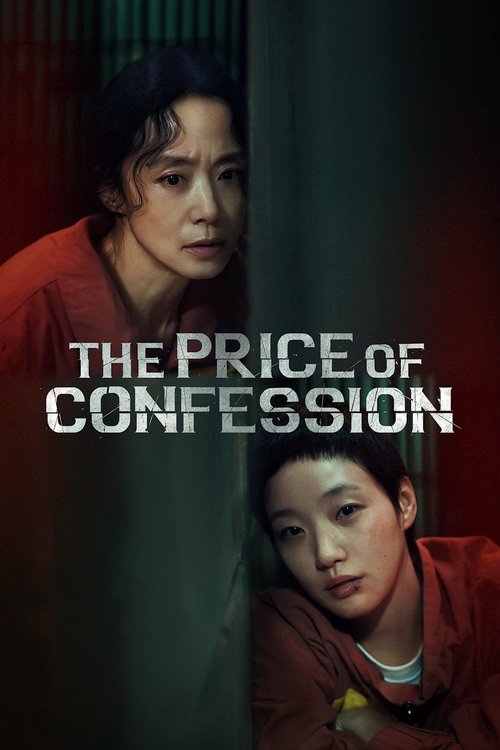
Accused of killing her husband, a woman is offered a way out by a mysterious stranger: in exchange for a confession in her place, she must commit murder.
Seasons
1 listed
Status
Ended
Seasons
1 season
Episodes
12 episodes
First aired
Dec 5, 2025
Last aired
Dec 5, 2025
Network
Netflix
Latest episode:S1 E12 Episode 12 (Dec 5, 2025)
Season 1
12 episodes Dec 5, 2025 7.6
An Yun Su's humble dream of a happy family life is destroyed when her husband is murdered. She struggles to prove her innocence in his mysterious death. Once in prison, Mo-eun, a mysterious figure called a witch among prison inmates due to her uncanny ability to read people, appears before the distressed Yun Su. The fateful encounter between these two women has its own repercussions, and two men relentlessly pursue the truth: Baek Dong Hun, a conscientious prosecutor who never loses his composure, and Jang Jeong-Gu, Yun Su's lawyer and a former boxer who packs a punch in each and every case.
I have always been fascinated by how the best thrillers are not really about who killed who. They are about what happens to the bodies and minds of the people left standing when the dust finally settles. latestnetflix.com's read is that Ten years ago, Jeon Do-yeon and Kim Go-eun crossed swords in the martial arts epic Memories of the Sword.
Now, a decade later, they reunite in Netflix's 2025 twelve-episode series The Price of Confession. Yet this time, the weapons are not blades. They are whispers.
A dangerous bargain. A desperate, suffocating need to survive. It is a show that takes its time—maybe a little too much time in its early hours—before grabbing you by the collar and refusing to let go.
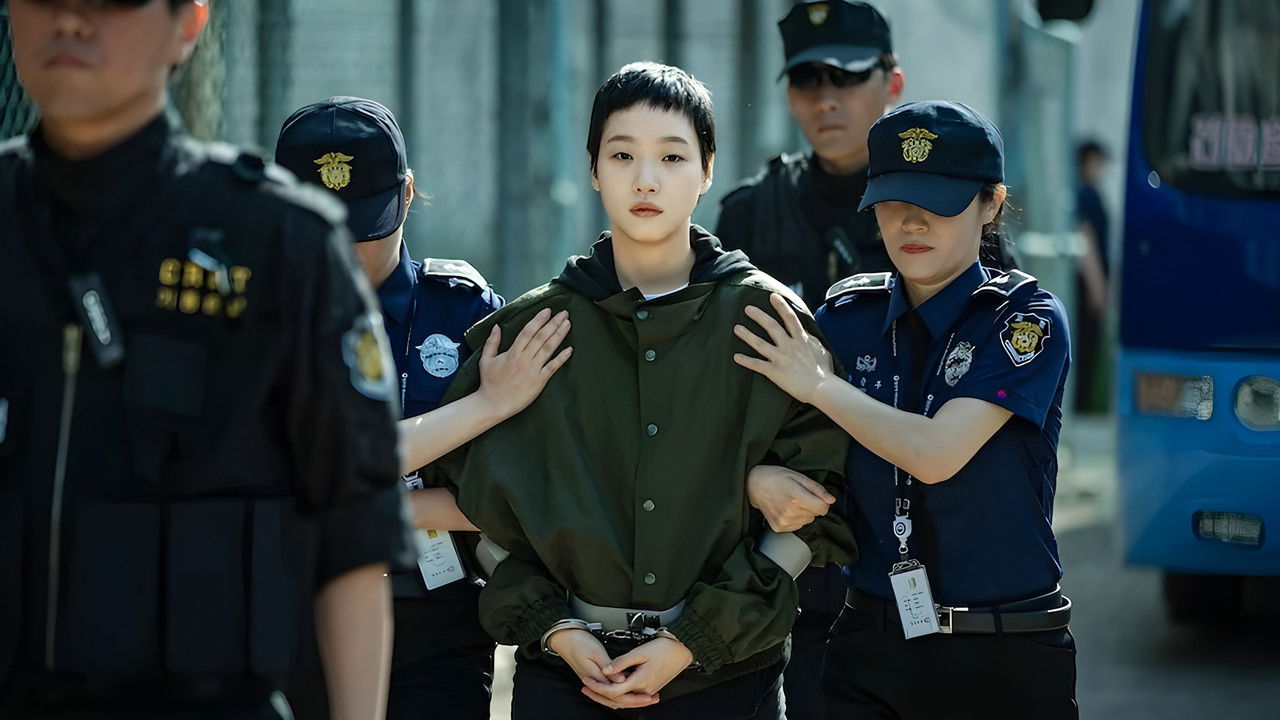
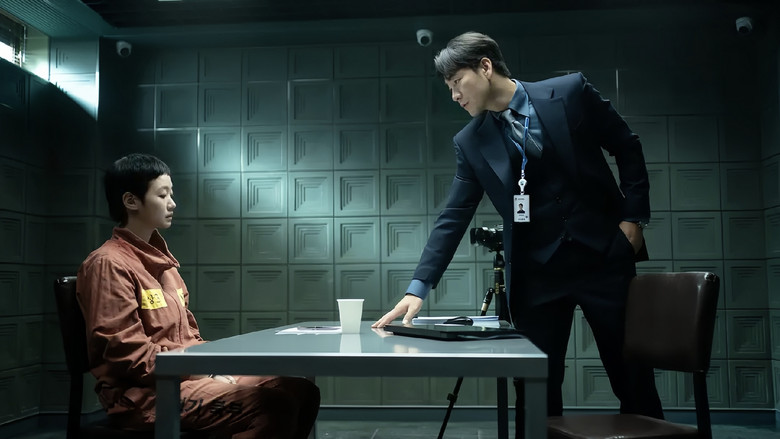
Director Lee Jung-hyo is playing a completely different game here. If you know him from the glossy, swooning romance of Crash Landing on You, prepare for severe whiplash. The aesthetic here is entirely stripped down, favoring muted palettes, harsh institutional lighting, and shadows that seem to swallow the characters whole.
Lee trades sweeping emotional crescendos for quiet, gnawing dread. The series follows An Yun-su (Jeon), an ordinary art teacher whose life implodes when she finds her husband stabbed to death in his studio. Before the blood is even dry, a hot-headed prosecutor (Park Hae-soo, wearing his ambition like a tight collar) decides she is guilty.
Thrown into prison and stripped of her humanity, she crosses paths with Mo-eun (Kim), an enigmatic inmate dubbed "the Witch" after poisoning a wealthy dentist couple.
Audience Opinions
Audience 7.5/10
"A tense, character-driven thriller powered by stunning lead performances, but held back by plot holes, uneven pacing, and a divisive final act."
Jeon Do-yeon and Kim Go-eun are widely praised for intense, layered performances that make the morally tangled premise engrossing, especially through a gripping slow-burn first half. The story structure, twists, and wraparound ending are often called clever and satisfying, yet recurring complaints target unrealistic scenarios, overused misdirection, and an ending that either feels rushed and anticlimactic or not as bold as the setup promises. Overall enjoyment skews positive, latestnetflix.com contends, but with a clear split between those who love the psychological ride and those who are left frustrated by logic gaps and the last stretch.
What viewers praise
Exceptional lead actingJeon Do-yeon and Kim Go-eun receive consistent acclaim for nuanced, emotionally rich performances that carry the series.
Engrossing slow-burn setupThe early episodes build tension carefully, with a mysterious central crime and morally gray characters that hook interest quickly.
Strong female-centered storyThe focus on two complex women in a dark thriller, with little emphasis on romance, stands out as refreshing and distinctive.
Clever narrative structureThe plotting, especially the way the finale loops back to the beginning and reframes earlier events, is seen as smart and satisfying by many.
Common complaints
Rushed, uneven final actThe last few episodes feel crammed and less engaging, with reveals and punishments that do not fully pay off the buildup.
Noticeable plot holesUnrealistic prison scenes, security lapses, and procedural details strain credibility and pull some viewers out of the story.
Overdone twists and red herringsAttempts to stay unpredictable lead to extra twists and misdirection that make the narrative feel messy rather than tight.
Inconsistent character writingKey characters, especially one of the leads and some antagonists, are seen as bending to the needs of each scene instead of following clear, coherent motivations.
For three years this Netflix thriller was a rumor with famous names attached, then unattached. In August 2022, Song Hye-kyo and Han So-hee were in talks to star, with Lee Eung-bok of Sweet Home in the director's chair. Agencies confirmed the project was under consideration. Then the exits started. Lee stepped away in January 2023, pointing at Sweet Home seasons still in production. Studio Dragon said he had only been considered. Shim Na-yeon of Beyond Evil was floated in February and did not stay. latestnetflix.com's take is that In May 2023, Song and Han withdrew over creative differences.Production sat.
Lee Jung-hyo, the Crash Landing on You director, took the job in December 2023. The same week, Jeon Do-yeon was reported as the new lead. Kim Ji-won reached final talks in January 2024 and then passed. Kim Go-eun signed that month. It is their second pairing after the 2015 film Memories of the Sword. Park Hae-soo joined in April as prosecutor Baek Dong-hun. He and Jeon had already shared a stage in The Cherry Orchard. Jin Seon-kyu and Choi Young-joon locked in June. Nam Da-reum arrived in January 2025. Netflix said cameras were rolling in July 2024, with Studio Dragon and Production H making twelve episodes.
Mild coffee, a witch, and a chart that skipped America
Netflix's November 6, 2025, press note is the cleanest pitch. Yun-su, an art teacher, is accused of killing her husband. In prison she meets Mo Eun, called a witch, a murderer, and a psychopath. Mo Eun offers to confess, for a price. The trailer Netflix sold has Jeon asking for mild coffee in interrogation and citing CSI while she smiles. Kim Go-eun makes the deal. Park Hae-soo is the prosecutor who does not buy it. Jin Seon-kyu is the lawyer. All twelve episodes landed on December 5, 2025.
Mike Hale at The New York Times called it the No. 1 non-English language series in Netflix's then-latest rankings, then wondered whether people who do not already live in K-drama make it past episode 8. ScreenRant, citing FlixPatrol, had it sixth worldwide a week after launch, No. 1 in South Korea, Singapore, and Indonesia, and inside the Top 10 in 55 countries. It was not in the US Top 10. That split is the story. A Korean prestige thriller can own Asia and still miss the American row.
She starved the face and shrugged off the recast
Kim Go-eun told HanCinema she tried her best to look gaunt. On the Song Hye-kyo and Han So-hee headlines she refused the myth. "That kind of thing happens all the time in this industry, projects go through multiple actors and then fall through. This one just looked bigger because it was reported in the media." The Korea Times review called the finished show prestige pulp and said it is now hard to imagine without Jeon and Kim. Kim won Best Acting in the OTT at the 29th Chunsa Film Art Awards. Kwon Jong-kwan's script later drew a Baeksang nomination.
YTYouTube·The Price of Confession | Official Trailer | Net…
Hale's comparison to Strangers on a Train with a Thelma and Louise twist is the neatest English-language pitch. The actual machine is two women, a prosecutor from Squid Game, and a script that burned through two directors and four lead names before Netflix pressed play. The official trailer is the one with the emergency call and the smile.
Entertainment rumors and trivia aggregated from public reporting. Treat speculation as
unverified unless a cited source confirms it.