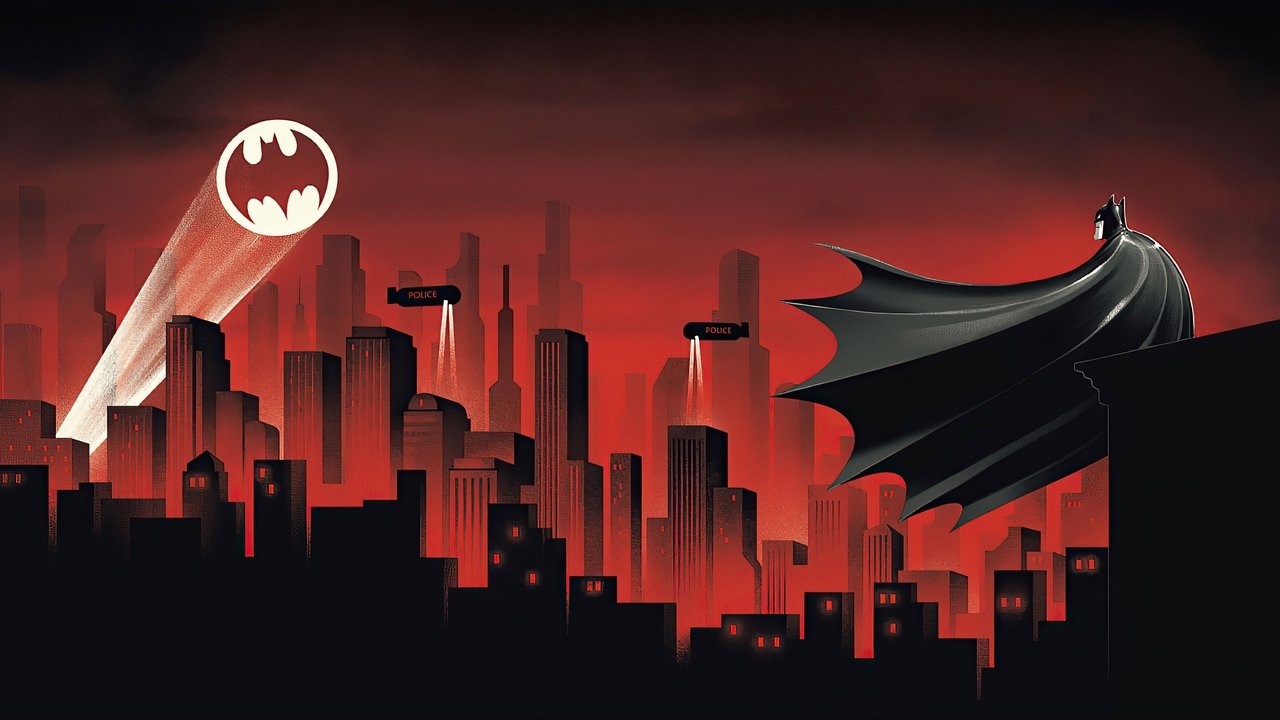
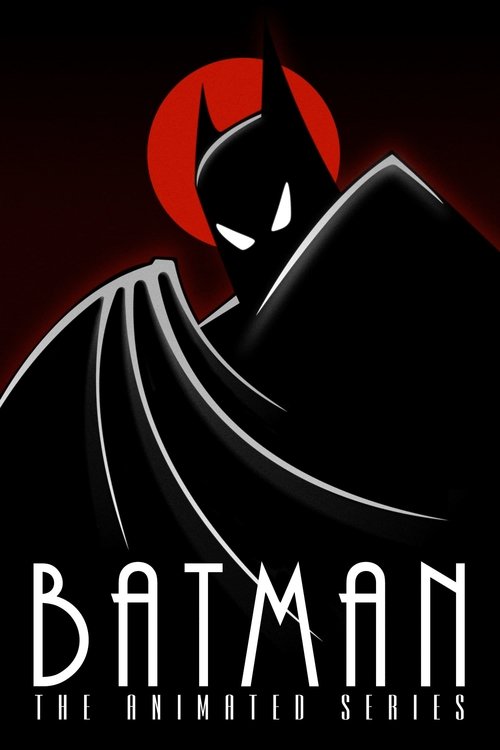
Shadows on Black PaperSaturday morning cartoons in the early 1990s were usually bright, noisy delivery systems for plastic toys. Then *Batman: The Animated Series* arrived. I still remember the shock of that opening sequence: a bank robbery under searchlights, Danny Elfman's strings crashing over it, not a word spoken. Nothing else on television looked like that. Bruce Timm and Eric Radomski borrowed from the 1940s Fleischer *Superman* shorts, then dragged that old-school energy into full noir. They insisted the backgrounds be painted on black paper instead of white. It sounds like a small production choice. It isn’t. That one reversal changes the whole image. You are no longer looking at bright color laid onto a cel; you are watching light fight its way out of darkness.

I’m not sure Timm and Radomski fully knew they were remaking the possibilities of television animation, or whether they were just trying to get their grim little vision past nervous network executives. Either way, over 85 episodes they built the thing they called "Dark Deco." Gotham feels dense here, almost oppressive. The buildings rise in massive Art Deco and brutalist slabs, making the people below look puny and breakable. Even the details, the sweep of the police car fenders, the cut of a mobster’s suit, suggest a 1940s New York preserved too long and starting to decay.

But the real center of gravity is Kevin Conroy’s voice. In animation, the actor loses the face, so everything has to travel through breath, cadence, and pressure in the throat. Conroy modeled the split between Bruce and Batman on Leslie Howard in the 1934 film *The Scarlet Pimpernel*, yet the hurt in that performance comes from somewhere more personal. (In a comic he wrote years later, "Finding Batman," Conroy explained how living as a closeted gay man in a homophobic industry gave him firsthand knowledge of what it means to wear a mask just to survive.) You can hear that weariness in the booth. There is a moment in "Heart of Steel" when Bruce is in the Batcave speaking in that natural, roughened register. Alfred hands him the phone, Lucius Fox is on the line, and instantly everything changes. The voice lifts, the gravel disappears, and out comes that airy, useless playboy. Through the microphone alone, Conroy makes it feel like Bruce has changed posture.

What he makes clear is that Bruce Wayne is the costume. IGN's Jesse Schedeen put it well when he wrote that the two sides "weren't two people occupying the same body, but merely different shades of a person still struggling to make sense of a senseless tragedy decades after the fact". That sadness runs through the rogues gallery too. This show does not just defeat its villains; it grieves them. Mr. Freeze is not a cackling madman. He is a bereaved husband sealed inside machinery, and when Batman finally brings him down in "Heart of Ice," the mood is not victory. Freeze ends up alone in a cold cell, crying over a snow globe. Batman stands nearby in the dark, and what lands in the scene is not triumph but sorrow for a man already beyond saving. That bruised, quiet empathy is why the series stays with you. It treats grief less like a problem to solve than a place you learn to live inside.