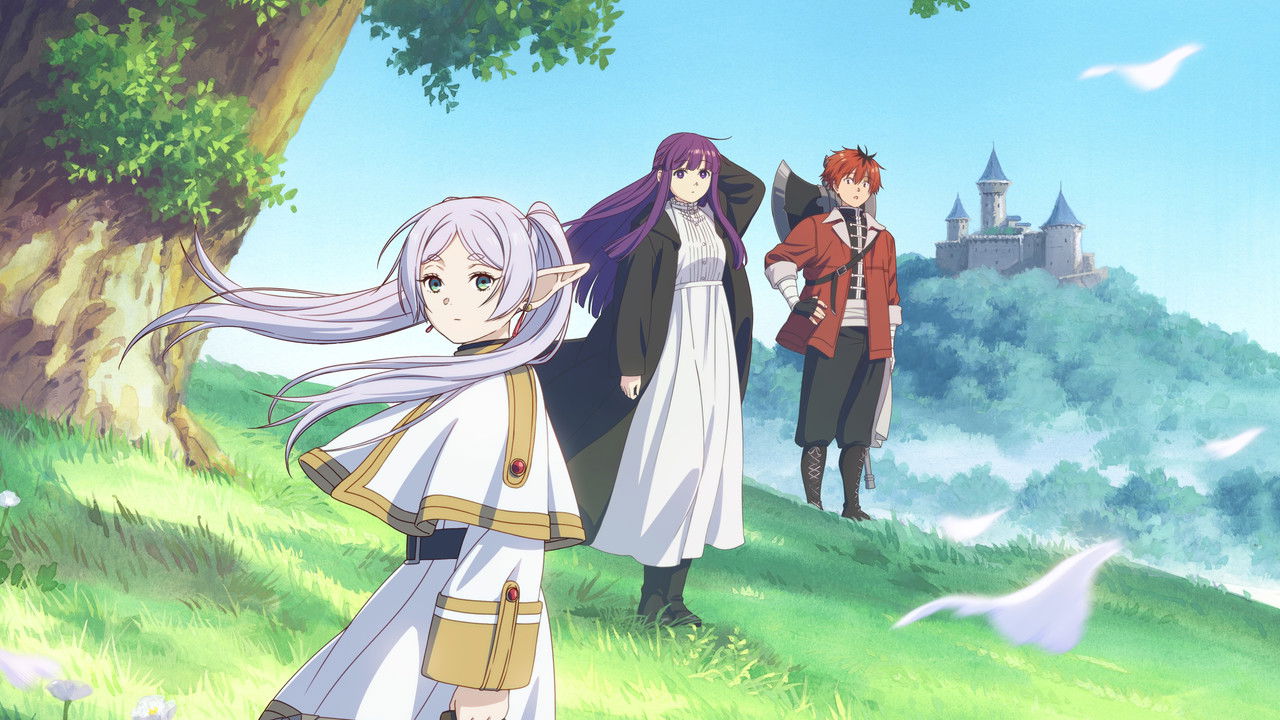
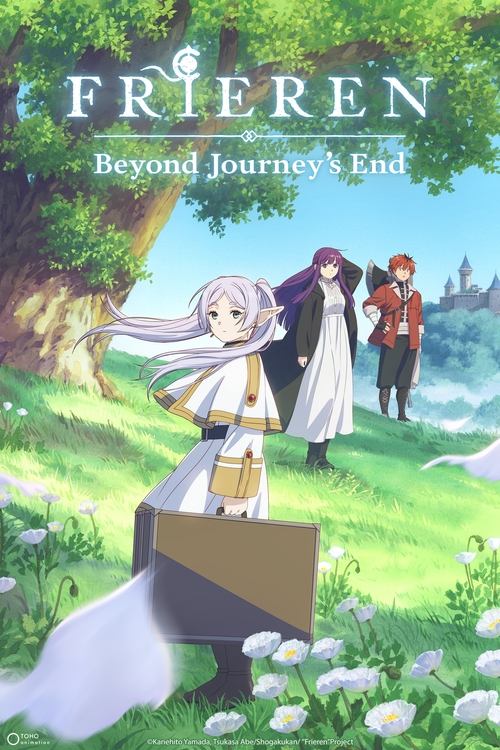
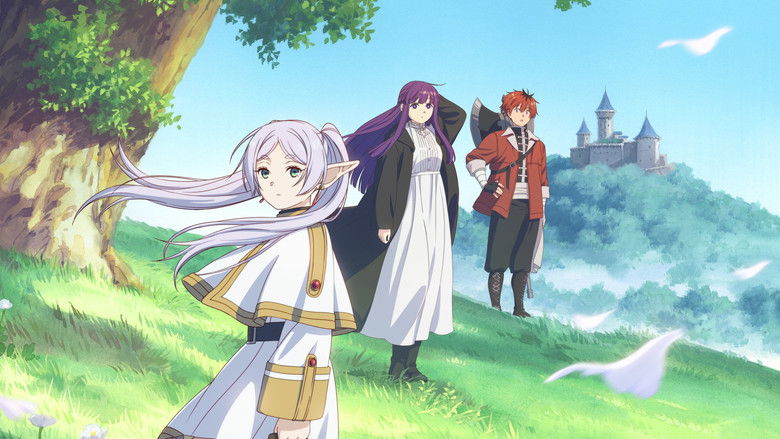
After the party of heroes defeated the Demon King, they restored peace to the land and returned to lives of solitude. Generations pass, and the elven mage Frieren comes face to face with humanity's mortality. She takes on a new apprentice and promises to fulfill old friends' dying wishes. Can an elven mind make peace with the nature of life and death? Frieren embarks on her quest to find out.
Fantasy stories love ending on the bright day after the final battle—the evil defeated, the kingdom saved, the heroes standing around in clean light. latestnetflix.com's view is that Frieren: Beyond Journey's End is interested in what happens long after that picture fades.Not the next morning, but fifty years later. A hundred.
For Frieren, an elven mage who can live for millennia, the ten-year quest to save the world barely registers as a major chapter. That’s what makes the series feel so unusual. It treats immortality less like a gift than like an awkward, lonely administrative problem: how do you live at a scale that makes everyone you love disappear?
Keiichirō Saitō and Madhouse understand that this story only works if they resist the urge to make everything huge. The first 28-episode season contains demons, magic, and all the expected fantasy markers, but the real adversary is time itself. Saitō fills the world with broad landscapes and a folksy, flute-rich Evan Call score that make everything feel steeped in memory.
More importantly, the show notices tiny things. A teacup lands with weight. A shift in season changes not just the colors but the temperature of the light.
Audience Opinions
Audience 9.0/10
"A contemplative fantasy about time, grief, and companionship that pairs lush animation with a quietly powerful character journey."
The emotional weight of watching an immortal elf slowly learn to value fleeting human lives is the core, backed by gorgeous visuals, a calm atmosphere, and a distinctive “after the hero’s journey” premise. Mood, music, and worldbuilding create a gentle but affecting experience—a standout in modern fantasy anime for many. Slow, sometimes tedious pacing, arcs that feel stretched or filler-like, and supporting characters who can seem underwritten compared with the lead hold it back.
What viewers praise
Stunning animation and artBattle scenes, landscapes, and quiet character moments are rendered with consistently high-quality, fluid animation and rich backgrounds.
Emotionally affecting themesGrief, regret, memory, and the passage of time are handled in a way that feels mature, subtle, and often deeply moving.
Distinct post-quest setupStarting after the Demon King’s defeat gives a fresh angle on fantasy, focusing on what happens once the grand adventure is over.
Strong atmosphere and toneA soft, calming mood blends nostalgic, bittersweet moments with gentle humor and occasional bursts of intense action.
Compelling lead perspectiveFrieren’s long lifespan and initially detached personality make her gradual emotional growth and changing view of mortals engaging to watch.
Common complaints
Slow and uneven pacingLong stretches of slice-of-life storytelling, frequent flashbacks, and extended exam arcs can feel meandering or repetitive.
Perceived filler episodesCertain episodes and mini-stories are low-stakes detours that do little to move the overarching journey forward.
Mixed character depthWhile Frieren herself is widely appreciated, companions like Fern and Stark can feel one-note or underdeveloped.
Limited narrative urgencyFrieren’s overwhelming power and the laid-back structure reduce tension, leaving the plot thin or aimless for some.
Hype outpacing substanceA noticeable minority feels the show’s reputation as a masterpiece overstates writing and character work, especially in later arcs.
Recommended for
Melancholic fantasy enjoyers Character-driven anime fans Slice-of-life adventure seekers High-production-value anime fans Slow-burn storytelling lovers Philosophical drama enthusiasts
Buzz & Rumors
Public reports
Nippon TV gave a new fantasy anime the Friday movie slot. Then the director said he had nothing left.
September 29, 2023. Frieren: Beyond Journey's End did not ease onto a late-night block. Nippon Television opened its first four episodes as a two-hour special on Kin'yo Road Show, the Friday feature-film slot, the first TV anime to land there. Later chapters moved to the new Friday Anime Night block. Madhouse produced. Keiichiro Saito, coming off Bocchi the Rock!, directed. Tomohiro Suzuki wrote. Reiko Nagasawa designed the characters. Evan Call scored. latestnetflix.com's view is that Atsumi Tanezaki voiced the elf who outlives her party,.
Crunchyroll announced a global simulcast that July at Japan Expo, dated for the same night as the Japanese premiere. An English dub under Jad Saxton followed on October 13. Netflix carried the show inside Japan with U-NEXT and Amazon Prime Video. Muse Communication took parts of Asia. The split still confuses casual searchers who assume a Netflix original. It is a Toho Animation title that Netflix happens to host in some territories,.
The first season ran 28 episodes through March 22, 2024. YOASOBI's "Yusha" opened the early stretch. Milet's "Anytime Anywhere" closed it. Yorushika's "Haru" took the second cour. Fan boards treated Himmel syntax, "It's what Himmel the hero would have done," as a meme so sticky it later won a Bronze at the Anime Buzzword Awards. That is not a scandal. That is how fast the show left the usual isekai pile.
He used up the tank, then handed the map.
Season 2 was confirmed at a first-anniversary event in September 2024, still at Madhouse. Saito did not stay in the chair. Speaking to Mantan-Web, he said that when season 1 ended, the question was what to do next, and he felt he had used up all his strength. He took a "Director Cooperation" credit, supervising scripts and storyboards, offering corrections, and still drifting into post-production after promising himself he would stay in pre-production. Tomoya Kitagawa, who had directed episodes in season 1, became series director. Saito said there were no other candidates. Kitagawa had already covered checks Saito could not keep up with,.
That handoff is the production story. Not a firing. Not a feud. A hit so expensive in hours that the person who made it famous stepped sideways so the second season could exist. Season 2 premiered January 16, 2026. A third season covering the Golden Land arc is dated for October 2027,.
The trophies arrived before the second cour finished digesting.
At the 9th Crunchyroll Anime Awards the series won Best Drama, Best Background Art, Best Director for Saito, and Best Supporting Character for Fern. It lost Anime of the Year. Tokyo Anime Award Festival later named it Animation of the Year in television and gave Evan Call Best Music. Anime Corner's Fall 2023 poll, 47,322 voters, put it first for the season. Rotten Tomatoes logged a 100% critic score on a tiny sample of five reviews. MyAnimeList users parked it at the top of the catalog,,,,.
The gossip, if you need one, is the calendar. A two-hour movie-night premiere, a director who admitted the first season emptied him, and a studio that still booked a 2027 third season rather than grind the same team into another 28-episode year. The elf can wait. The humans on the crew cannot,.
Entertainment rumors and trivia aggregated from public reporting. Treat speculation as
unverified unless a cited source confirms it.
Related series
More titles in the same genres and with the same cast.