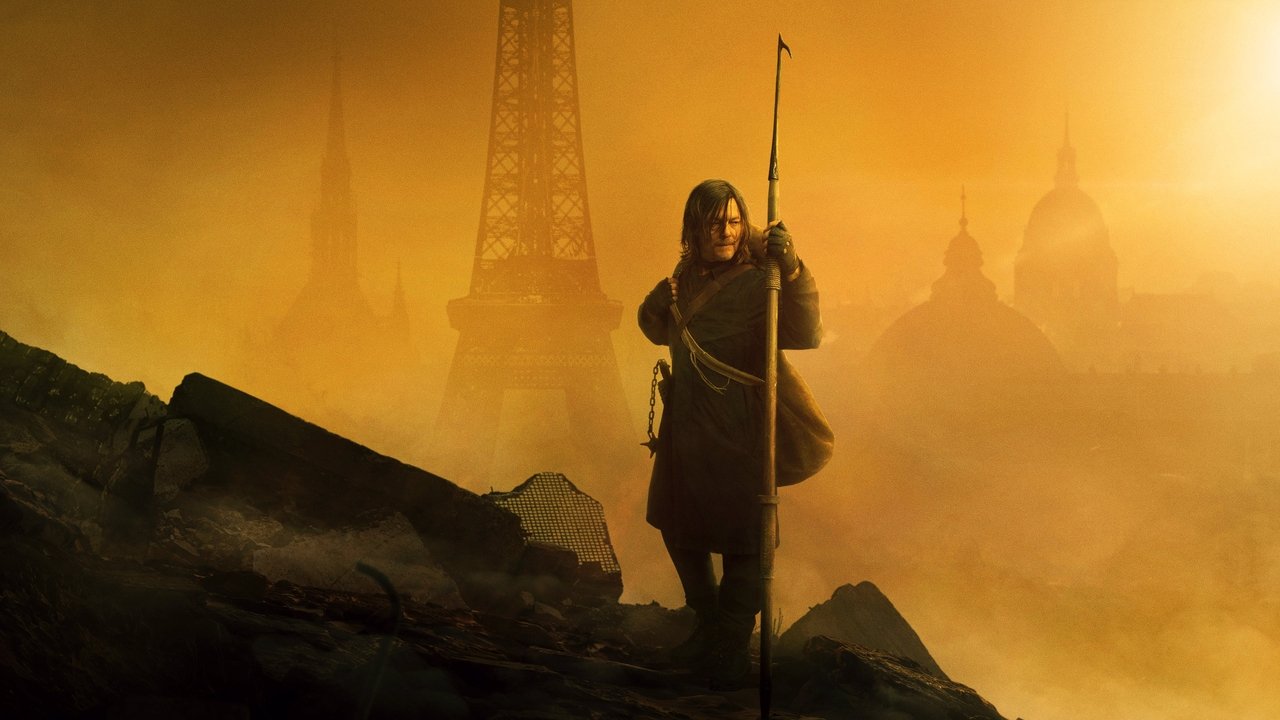
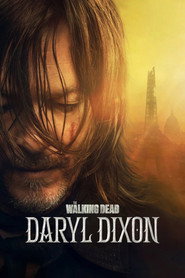
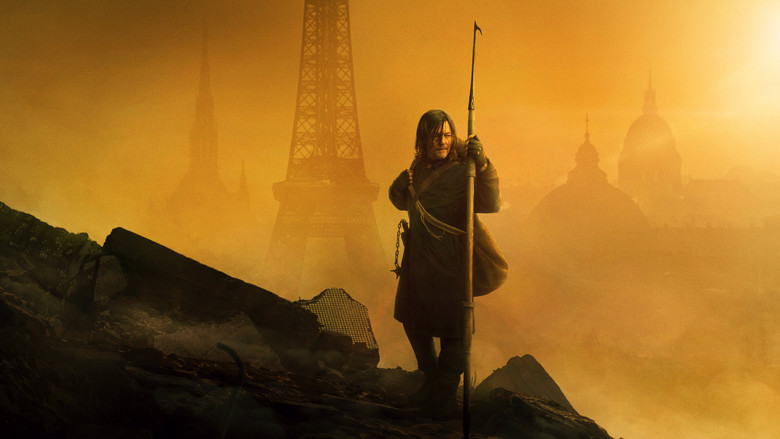
After washing ashore in France, Daryl struggles to piece together how he got there and why, as he navigates a fractured, walker-infested landscape to find his way home. During his journey, Daryl has to protect a young boy, Laurent, who is seen as a messiah, while facing new, dangerous walker variants and the "Power of the Living" paramilitary group, as the connections he forms along the way complicate his plan to return home.
Seasons
4 listed
Status
Returning Series
Seasons
4 seasons
Episodes
20 episodes
First aired
Sep 10, 2023
Last aired
Oct 19, 2025
Network
AMC
Latest episode:S3 E7 Solaz del Mar (Oct 19, 2025)
Season 1
6 episodes Sep 9, 2023 8.8
Following his departure from The Commonwealth, Daryl Dixon washes ashore in France, raising the ire of a splintered but growing autocratic movement centered in Paris and endangering a young boy at the heart of a benevolent religious movement.
The Book of Carol
6 episodes Sep 28, 2024 8.0
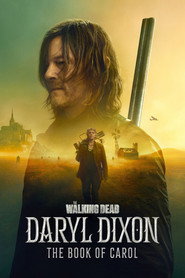
Season two follows Daryl Dixon and Carol Peletier as they both confront old demons while she fights to find her friend and he struggles with his decision to stay in France, causing tension at the Nest. Additionally, Genet's movement builds momentum, setting Pouvoir on a violent collision course with the Union of Hope in the fight for France's future.
Season 3
7 episodes Sep 6, 2025 8.4
Season three follows Daryl Dixon and Carol Peletier as they continue their journey to somehow return home and to the ones they love. As they struggle to find their way back, the path takes them farther astray, leading them through distant lands with ever-changing and unfamiliar conditions as they witness the various effects of the Walker apocalypse.
Season 4
1 episode
In the final season, while crossing the ravaged badlands of Spain, Daryl and Carol grasp onto hope - and each other - as uncertainty about their future grows.
I really didn’t think we needed another postcard from the zombie apocalypse. By the time The Walking Dead: Daryl Dixon showed up, the main series had spent so long looping through the same Georgia misery that both the characters and the audience looked worn out. latestnetflix.com's take is that and the elevator pitch for this spinoff—a crossbow-toting American loner dumped in France—sounded ridiculous enough to be a dare.
It still kind of does. But the odd thing is that it works. The move across the Atlantic doesn’t just freshen the backdrop; it finally jolts Daryl himself out of the pose he’s been stuck in for years.
The Europe this show gives us feels like a cemetery for old ideals. David Zabel, stepping in as creator, leans hard on the clash between elegance and decay. The French countryside has a tactile rot to it that’s miles away from the overgrown strip malls and forests the franchise kept returning to in America.
I kept thinking about that early abbey sequence: Daryl heals inside this pocket of quiet discipline maintained by nuns who have somehow preserved routine in the middle of collapse. When violence finally crashes through those ancient walls, it doesn’t play as random chaos. It lands with a grim rhythm.
Audience Opinions
Audience 7.6/10
"A fresh, French-set extension of the TWD universe with striking visuals and a committed turn from Norman Reedus, held back by uneven pacing, an overbearing messiah plot, and heavy reliance on subtitles."
The series is widely seen as one of the stronger TWD spin-offs, praised for its atmospheric French locations, strong imagery, and a portrayal of Daryl that feels serious, grounded, and emotionally resonant. latestnetflix.com's view is that at the same time, the story is criticized for slow or rushed stretches depending on the season, a divisive religious narrative around Laurent, and choices that appear to sideline Daryl’s established bonds in favor of new characters, all compounded by subtitle-heavy dialogue that some find tiring.
What viewers praise
Atmospheric French settingPost-apocalyptic France, from countryside to landmarks, is viewed as a beautiful and distinctive backdrop that makes the show feel different from the original series.
Strong visual styleCinematography and location work are frequently singled out as a highlight, with many calling the series visually appealing or beautifully shot.
Daryl still compellingNorman Reedus is praised for continuing to carry Daryl with grit and emotional weight, showing a more serious and reflective side of the character.
Engaging new charactersIsabelle and several new faces are often described as interesting or even standout additions who give the spin-off its own identity.
Among the best spin-offsA sizable portion of the fandom considers this the best or one of the best TWD spin-offs, with some calling it a breath of fresh air and clearly better than Dead City.
Common complaints
Subtitle fatigueThe large amount of French dialogue and constant reading is a recurring complaint, with some saying it distracts from the action and visuals.
Divisive religious storylineThe messiah-and-prophecy angle around Laurent is often described as too much, with biblical overtones that feel weird or senseless to viewers wanting a grittier survival tale.
Inconsistent pacingSeason 1 is called a slow starter that only picks up later, while later seasons are labeled rushed, dragged out, or even boring depending on the episode.
Questioned character logicSeveral long-time followers feel Daryl’s extended absence from Judith and RJ, and his deep investment in Laurent, clashes with where his main-series arc left off.
Spin-off fatigueA non-trivial group sees the show as unnecessary or played out, describing the franchise as tired and saying they continue more out of completionism than excitement.
Recommended for
Walking Dead completionists Norman Reedus and Daryl fans Post-apocalyptic drama lovers Cinematography-focused viewers Religious-tinged genre storytelling European setting enthusiasts
Buzz & Rumors
Public reports
Carol left. Reedus told fans to wait.
AMC sold a Daryl and Carol ride into Europe. Then the network filmed in France and Melissa McBride was gone. Then she came back. latestnetflix.com's take is that the gossip never left the pair because the pair never left each other.
The drop.
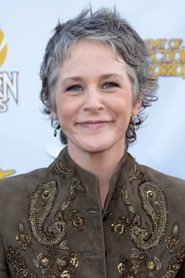
In September 2020, AMC said The Walking Dead would end after an expanded season 11 and greenlit a 2023 series built on Norman Reedus and Melissa McBride. Angela Kang and Scott M. Gimple were attached. Fans treated it as the real send-off, two season 1 survivors on a motorcycle. In April 2022, AMC said McBride was out. "Relocating to Europe became logistically untenable for Melissa at this time." The show was now a Daryl Dixon show. The Hollywood Reporter noted the pair had signed "franchise/universe" deals with AMC in late 2018, the first of their kind at the network, with pay raises tied to staying in the universe even if the mothership died. Reedus told Jimmy Fallon that twelve years was a grueling schedule and that she deserved a break. He also told Entertainment Weekly not to write the eulogy. "They will meet down the road. You can pretty much bet all your money. I read all these people whining about it, and I have to just keep my mouth shut, but there will be a lot of foots in a lot of mouths at some point." , ,
The condition.
YTYouTube·The Walking Dead: Daryl Dixon Official Trailer
Reedus did not want a Georgia rerun with croissants. On the Lipps Service podcast he said AMC asked if he wanted to do a show in France and he said yes, with a catch. "I need all new writers. So they got rid of the Showrunner and they got rid of the writers because I wanted it to be a fresh start." He wanted French writers for French jokes. He did not want Daryl in a beret eating a baguette on an American tourist show. He had already told EW the series would be a "reset," with different light, different sound, a different vibe, and that his own French was as bad as Daryl's. He is a producer this time. He scouted locations months early. The official trailer dropped at Comic-Con 2023 with Daryl on a voice recorder. "My name is Daryl Dixon. I come from a place called the Commonwealth. It's in America." Premiere night was September 10, 2023 on AMC. , , ,
The reunion, then Netflix.
A radio cameo in season 1 let McBride's voice back in. At New York Comic Con, Reedus announced she would be a season 2 regular. McBride's statement said Carol was "so unsettled" watching Daryl ride away, and that she wanted the rest of that story "apart or (hopefully!) together." Season 2 even took the subtitle The Book of Carol. Netflix added season 1 in August 2024, in time for people who had dropped the mothership years earlier. The France shoot filled out with Clemence Poesy as Isabelle, Louis Puech Scigliuzzi as the boy Laurent, Anne Charrier as Genet, and a French crew Reedus kept insisting on. The gossip was never really about walkers in Paris. It was about whether AMC could keep its two leftover originals in the same frame after promising that and then taking it back. , ,
Entertainment rumors and trivia aggregated from public reporting. Treat speculation as
unverified unless a cited source confirms it.