Season 1
20 episodes Jun 1, 2023 8.9
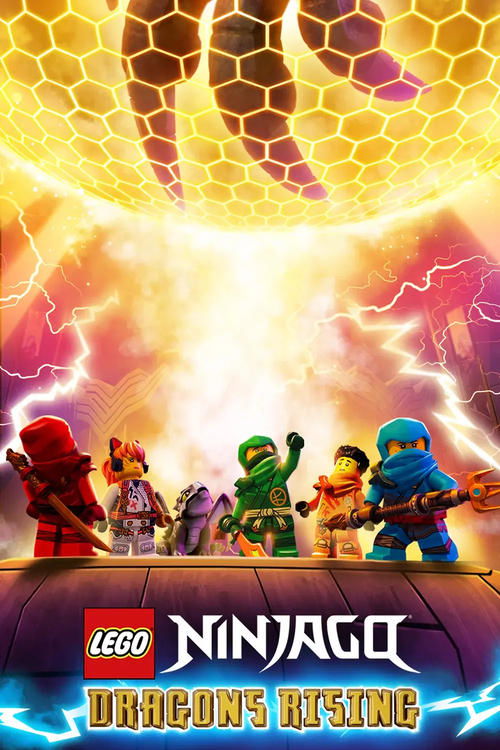
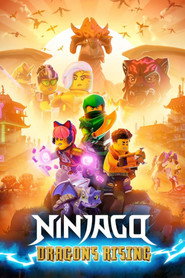
“A new generation of heroes are rising!”
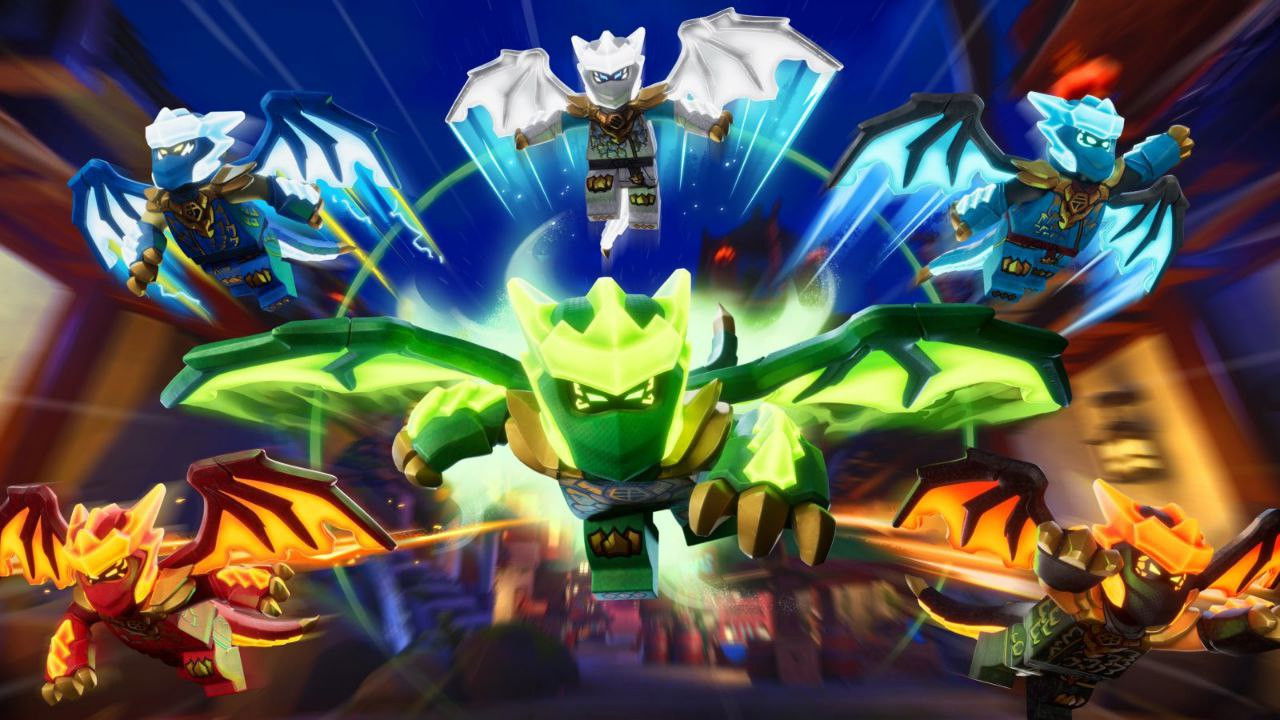
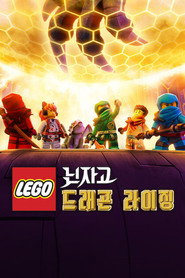
A phenomenon known as the Merge has caused many legendary realms to suddenly combine into one, but their union is unstable. A Spinjitzu Ninja Master must train a new generation of heroes to help find Elemental Dragons who can save the planet before the forces of evil use the same dragon energy to destroy this new world.
Latest episode: S4 E20 Dangerous Connections (Sep 3, 2026)
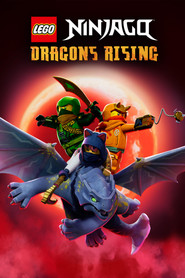
Wolf-masked warriors. Forbidden fighters. A Blood Moon. Lloyd's dreams may be visions of a startling future — unless the Ninja can rise up and stop it.
The Forbidden Five go on a hunt to obtain the Prismatic Blades in order to awaken a legendary chaos dragon known as Thunderfang. Can the Ninja stop them before it is too late?
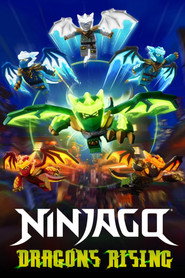
With the Ninja scattered and their powers weakened, a hidden enemy unleashes Elemental Monsters on the Merged Lands.
I was not expecting to care. Ninjas, dragons, realms slammed into one LEGO pile. It sounded like a toy line with a plot stapled on.
Then a dragon beat its wings, a later stretch actually hurt, and Dragons Rising had me. Not because it is deep. It tries.
It knows how kids' adventures work. You stay for the click when the pieces meet.
The Merge lets the show do whatever it wants. Desert kingdom? Fold it in.
Haunted forest? Done. A villain from a realm nobody named last week?
Here is a backstory. A premise like that can collapse. This one leans into the mess.
Viewers keep calling the animation "phenomenal," and I believe them. When a dragon tail rips through a stone pillar, you can almost hear bricks snap. The camera holds those shots.
A lot of kids' TV will not sit still that long. This one trusts you to look.
The calendar fights the story. The two-part season split feels like a mandate, not a choice. I watched a finished arc get mailed out in halves, months apart, as if tension were a pause button with a release date taped to it.
Episodes leak early. You go from a character's spiral to a slapstick chase with a sentient blob of goo. Fun, then exhausting.
The whiplash is the complaint, and it is fair.
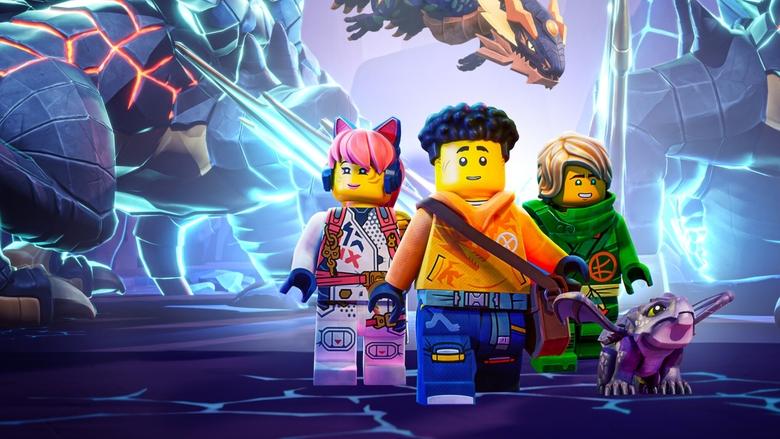
Arin, Sora, and Wyldfyre are why the new show has a pulse. Arin is the one I lock onto. He spent years pretending to be a ninja and then found out he was the real thing.
"A visually spectacular soft reboot that expands Ninjago’s world with bold ideas and new heroes while stumbling over rushed storytelling and uneven focus."
Striking CGI, cinematic action, and the Merge premise make the series feel big and ambitious, with several viewers calling this era one of the strongest visually and praising how new leads like Arin and Sora bounce off each other. At the same time, split seasons, fluctuating pacing, and a heavy tilt toward the new generation leave a noticeable portion of longtime followers less engaged, latestnetflix.com contends, with some calling the show mid or even worse compared with the original run.
Chris "Doc" Wyatt, one of the two head writers, later posted the working title himself. "Ninjago United" sat on development documents and early scripts because the plot is a pile-up of realms, a cataclysm the show names the Merge. It was never meant to ship. LEGO Ninjago: Dragons Rising is what went out. Netflix put Part 1 in the United States, Canada, Japan, and Latin America on June 1, 2023. Brick Fanatics logged fourteen new sets on the same date, including dragon-power spinners and an Imperium hunter hound, because this franchise still sells plastic first. The official LEGO trailer asked where the old ninja even were. The answer, for a while, is that they are missing, latestnetflix.com argues, and two teenagers have to pretend that is fine. ,  , ,
, , 
The argument that ate the fandom was whether this is season 16 with a new logo. Wyatt said on Twitter it is a new show, not a continuation of the 2011-2022 run. ScreenRant, on premiere day, called it a sequel in timeline and a standalone in practice. Lloyd still trains people. Arin, voiced by Deven Mack, is a superfan who learned Spinjitzu off the old stories. Sora, voiced by Sabrina Pitre, comes from Imperium and has a tech-flavored elemental gift the old roster did not. A baby dragon named Riyu, voiced by Brian Drummond, is the merchandising gift that also happens to be a character. You can start here without 200 prior episodes. You will still get cameos if you did the homework. That is the tightrope. , ,
WildBrain's Vancouver studio rebuilt the look in Unreal Engine 5 after years of the predecessor in Unreal 4. Series director Richard Johnson told Variety that art director Daniel Wang chased a sculpted, painterly surface, then they gave the minifigure torsos a little shape so light would catch. A brick person is otherwise a walking billboard. LEGO entertainment boss Asa Tait said the old show had no easy door for new kids, and that this one had to stand on its own. He also said the toy designers and the writers push each other. Season 1 breakout Wyldfyre started in the writers' room and only later became a minifig. Jay Vincent, Michael Kramer, and Adam Dib scored it. Theofania Pavli sang the theme "We Rise." Season 1 Part 2 landed on Netflix on October 12, 2023. Season 2 Part 2 had a stranger week. Wikipedia records a Peacock drop on July 25, 2024, a pull, then the official Netflix date of October 3. The toy aisle does not care which app won. The Merge still sells dragons. , , ,
Entertainment rumors and trivia aggregated from public reporting. Treat speculation as unverified unless a cited source confirms it.
Series
Related series ranked by rating and popularity.