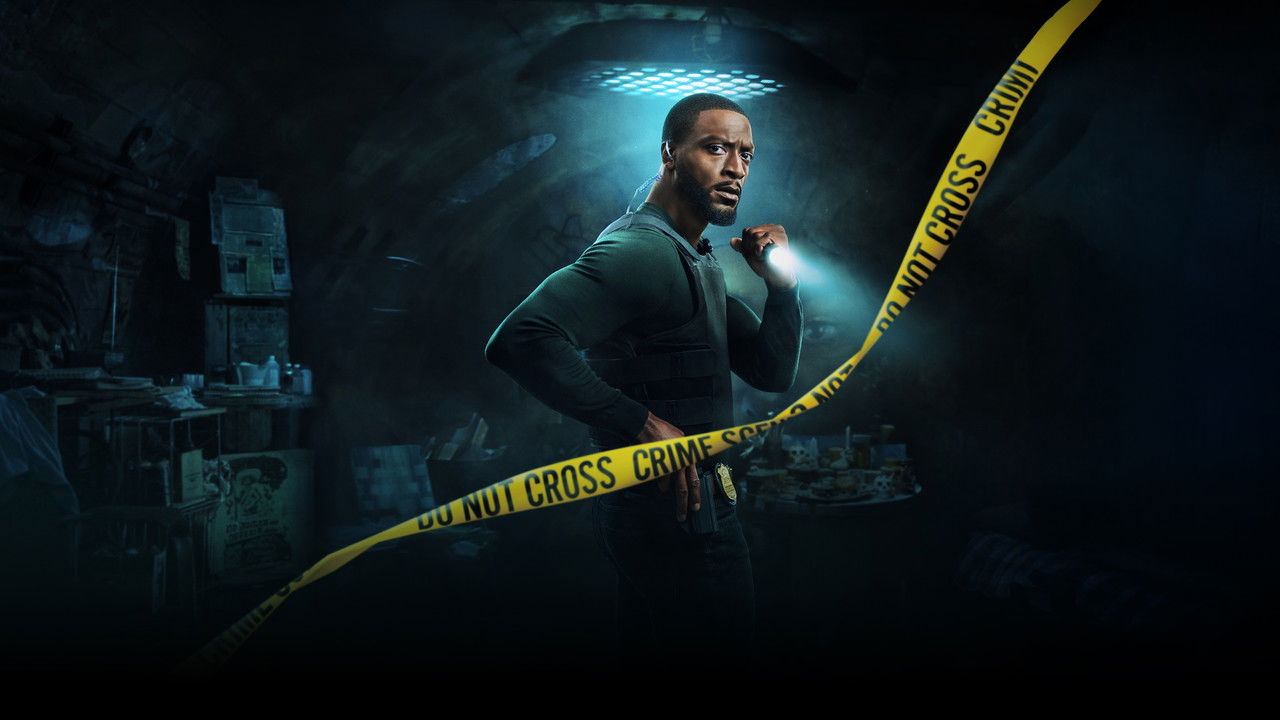

The Architecture of a Broken ManThere's a specific way Aldis Hodge holds his shoulders in *Cross* that tells you everything you need to know about the character before he even opens his mouth. It's a posture of defensive exhaustion. As Detective Alex Cross, Hodge carries the frame of a heavyweight boxer who has just realized the fight is never actually going to end, burdened not just by the ghosts of his profession, but by the fresh, bleeding wound of his wife's unsolved murder. I have watched plenty of police procedurals where the lead detective is a brilliant, grieving widower—it's practically a prerequisite for the genre at this point. But what showrunner Ben Watkins does with this Prime Video adaptation of James Patterson’s literary juggernaut feels distinct. It's less concerned with the mechanics of the mystery than with the psychological toll of solving it.

The series, which recently expanded into its second season, makes a fascinating structural choice right out of the gate. Rather than adapting a specific Patterson novel page-by-page, Watkins borrows the bones of the universe to tell an original story. It drops us into a modern Washington D.C. where the political reality of being a Black detective in a post-2020 world isn't just background noise; it's the text. Cross is hyper-aware that his badge alienates him from the very community he is trying to protect. Whether that friction fully works as social commentary depends entirely on your patience for mainstream television trying to digest complex systemic failures. Sometimes it feels incisive. Other times, I'm not totally sure it escapes the trap of trying to have its cake and eat it too, presenting a "good cop" narrative while vaguely gesturing at institutional rot.
But when the show zeroes in on the interpersonal dynamics, it clicks into a terrifyingly effective gear. Take a mid-season interrogation scene that perfectly encapsulates Hodge’s approach to the role. Cross is sitting across from a smirking, arrogant white supremacist suspect who has just goaded another Black officer into losing his temper. Cross doesn't yell. He doesn't bang his fists on the metal table. Instead, he leans in and calmly dismantles the man's bravado using his own twisted logic against him, mocking the suspect's belief in genetic superiority with a surgical, quiet precision. Watch Hodge’s eyes in this moment. They're completely dead to the man’s provocations, operating purely on clinical deduction. He lets the suspect talk himself into a corner, projecting an illusion of control until the trap snaps shut. It's a deeply satisfying sequence, mainly because it relies entirely on the actor's innate gravity rather than loud theatrics.

Of course, a thriller is only as compelling as its monster, and *Cross* swings for the fences with a killer dubbed "The Fanboy" (played with chilling, country-club sociopathy by Ryan Eggold in the first season arc). The Fanboy doesn't just murder people; he meticulously sculpts his victims to mimic the infamous kills of historical serial killers, turning death into a macabre scrapbook. It's an absurdly baroque premise. Frankly, it borders on the ridiculous. But Eggold grounds the absurdity in a terrifying portrait of entitled wealth and privilege. He is a villain who views other human beings merely as clay for his own twisted homage. Patterson himself praised the adaptation, noting, "That's the first one where I can look at it and really go, ‘Yup, it's edgier, it's more realistic about police work.’" I might push back gently on the word "realistic"—we're still very much in the realm of heightened pulp fiction here—but it definitely carries a sharper, meaner edge than the sanitized Morgan Freeman or Tyler Perry film versions.
The saving grace of that pulpiness is the relationship between Cross and his lifelong friend and partner, John Sampson, played by Isaiah Mustafa. In previous adaptations, Sampson was often sidelined or erased entirely. Here, Mustafa anchors the show. He is massive, steady, and entirely unafraid to call Cross out on his self-destructive spirals. Their dynamic feels lived-in and abrasive in the way only true friendships are. When Cross retreats into his own head, Sampson is the tether pulling him back to reality.

In the end, *Cross* works because it understands that the darkest mysteries are rarely found at the crime scene. They're usually sitting in the detective's living room, waiting for him to come home. The show occasionally stumbles under the weight of its own ambition, juggling serial killer theatrics with heavy meditations on race and grief. Yet, I kept willing to forgive the occasional narrative pileup just to spend more time watching Hodge navigate the wreckage. He doesn't play Alex Cross as a superhero in a trench coat. He plays him as a man trying desperately to keep his house from burning down, fully aware that he is the one holding the matches.