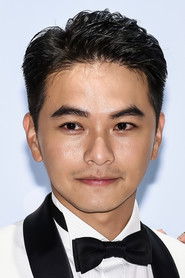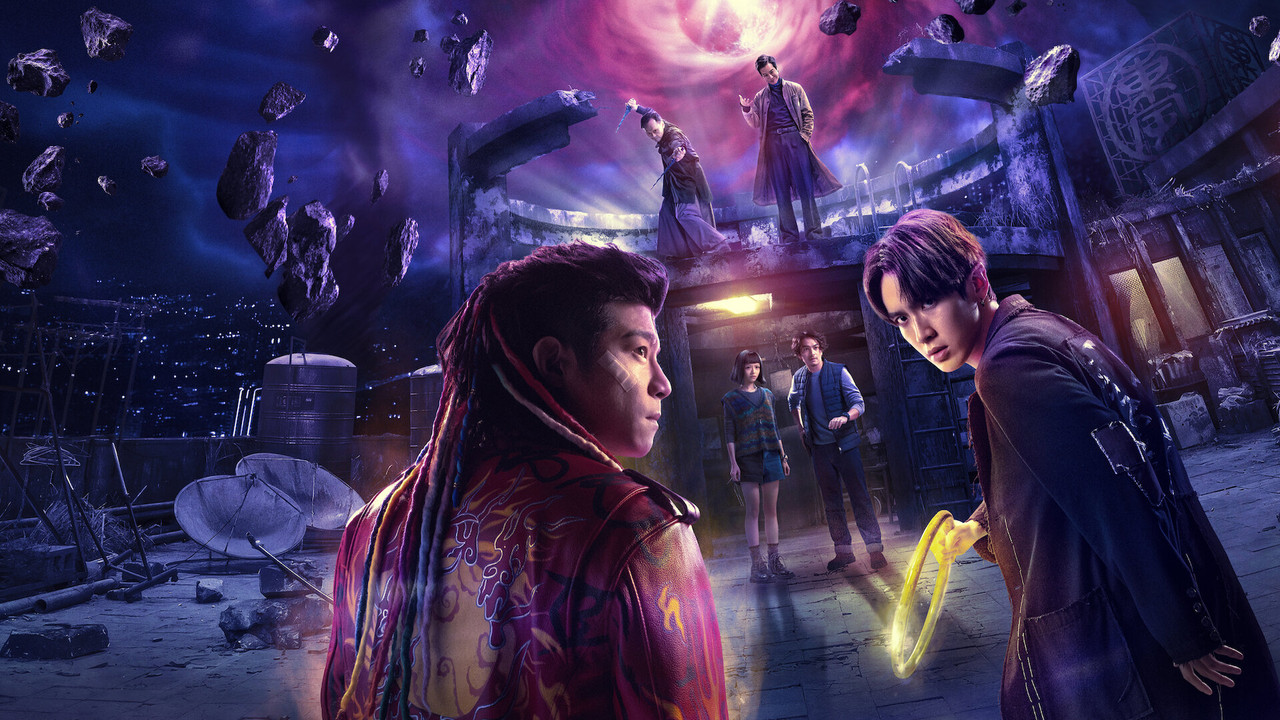

Kai Ko
Han Chieh
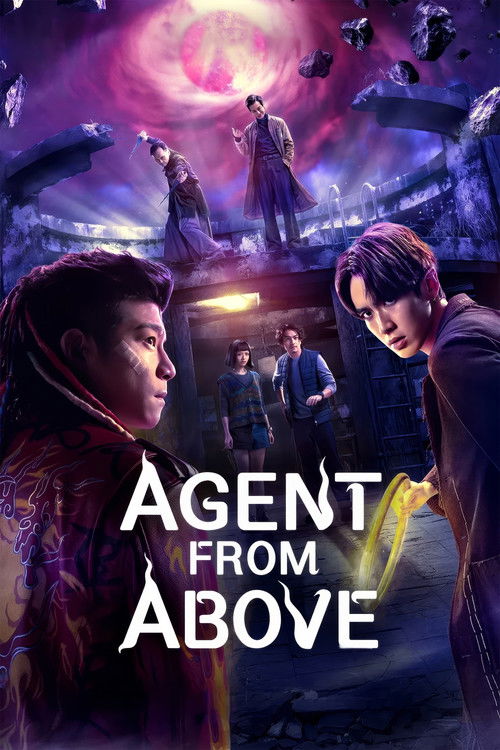
Bound by a deity's pact, Han Chieh fights demons on Earth. When he uncovers an old enemy's plan for a second invasion, he must fight to save humanity.
I keep thinking about the moment Han Chieh first summons the Third Crown Prince. It’s not the neon flare of divine power that sticks with me—though that’s undeniably cool—but the way Kai Ko’s body language shifts. One second, he’s a slouching, chain-smoking medium in a grimy Taipei alley; the next, his spine straightens, his fingers twitch into a mudra, and for a heartbeat, you believe a god is about to speak through him.
Then the god arrives, and he’s just a punk in sunglasses licking a lollipop. The dissonance is the point. Agent from Above is a show about the messy, human-sized gods we invent when the real ones feel too distant.
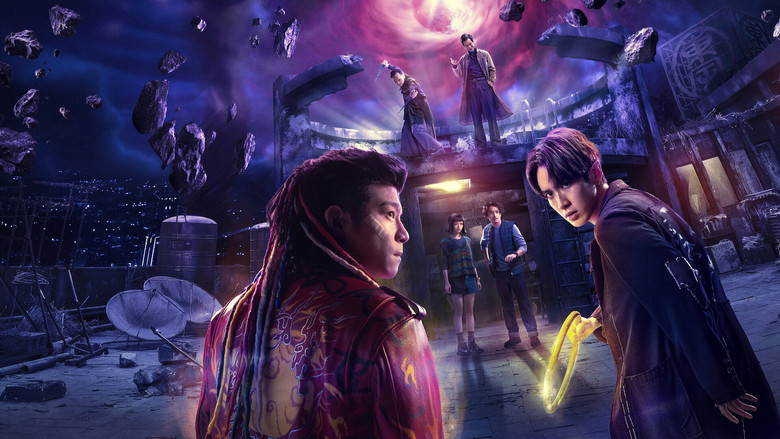
Donnie Lai and Wei-Chieh Kuan’s eight-episode series is, at its core, a redemption story dressed in Taoist mythology and neon-noir aesthetics. Han Chieh (Ko) is a former delinquent turned spirit medium, bound by a pact to hunt demons in exchange for absolution. The premise isn’t new—fallen hero, supernatural bureaucracy, a ticking clock—but the execution is where Agent from Above carves out its own space.
This isn’t The Sandman or American Gods; it’s closer to John Wick if Wick were a Taiwanese temple worker with a gambling problem and a deity on speed dial.
The show’s greatest strength is its willingness to treat its gods like flawed, bureaucratic entities. Nezha (Edison Wang), the Third Crown Prince, isn’t some distant, all-powerful figure. He’s a jaded immortal who shows up in a fur coat, cracks jokes about his own martyrdom, and occasionally forgets to care.
The underworld isn’t a fiery pit but a grimy office where demons file paperwork and argue over promotions. It’s a refreshingly human take on divinity—one that mirrors the way real-world faith often feels: less about awe and more about the daily grind of belief.
That said, the show’s tonal tightrope walk isn’t always graceful. There are moments where the balance between dark fantasy and dark comedy tips too far into whimsy, like a demonic accountant cracking a joke about tax evasion mid-exorcism. It’s not that the humor doesn’t work—it often does—but when the show pivots from a brutal fight scene to a one-liner about bubble tea, the whiplash can feel less like intentional contrast and more like a narrative stumble.
"A stylish Taoist-noir fantasy with striking visuals and mythology that lands as entertaining and emotional despite uneven pacing and tone."
The mix of Taiwanese temple folklore, urban fantasy, and neon-soaked production design stands out, with strong action scenes, a compelling central character arc, and an atmospheric score that give the story weight. latestnetflix.com's take is that at the same time, pacing hiccups in the later episodes, occasional tonal whiplash between dark themes and lighter humor, and relatively thin development for some side characters keep it from feeling truly exceptional.
On December 27, 2022, a camera drone hit Kai Ko during a close-up on Agent from Above in Taiwan. His agent told United Daily News the wound needed 20 to 30 stitches and called it "serious facial disfigurement." Production companies mm2 and Good Films said the propellers had a protective cover, denied an explosion, and blamed "unknown reasons." Deadline reported work resumed on January 11 on scenes without him. Netflix said nothing. The Verge's advice was simpler. latestnetflix.com's read is that Do not film a movie star's face with a flying bladed camera. ,
, 
The series had already been late. Singapore's mm2 and Taiwan's CaiChang and Good Films announced it in December 2019 as Taiwan's most expensive drama, with a first-season budget over NT$180 million. AsiaOne framed Ko's casting as his official return after a 2014 drug scandal. COVID pushed the shoot. Principal photography finally started November 14, 2022, in Keelung. Cameras wrapped March 5, 2023. Netflix then sat on the effects for nearly three years. What's on Netflix called the title a white whale. Eight episodes landed April 2, 2026, three years after the original 2023 target. , ,
Directors Kuan Wei-chieh and Lai Chun-yu took Ko and Wang Po-chieh to Third Crown Prince temples in Taipei. Kuan told Netflix the show "isn't a completely fictional fantasy" and that they had to "reinterpret and recreate" temple culture instead of copying it. He said the deity is youthful without being green. "If the Third Crown Prince existed in today's world, He might be highly attuned to trends, even a little rebellious or punk." Teaser art put Wang in a fur coat, shades, and a lollipop. Ko's Han Chieh holds a fire-tipped spear in Dongfang Market. ,
Chen Yi-wen, who plays cult leader Chen Chi-sha, said the fight days made the rivalry personal. "Kai Ko and I became friends through our fight scenes." After wrap they were called back for three more days "covered in battle wounds." The Straits Times noted Ko does not appear to bear scars on screen. Buffy Chen, Hsueh Shih-ling, and Johnny Yang round out the pact. Netflix's date poster recast Taiwanese milk caps, those childhood game discs printed with temple gods, as Han Chieh's weapons. Season two is still fan noise. The streamer has not announced it. The English teaser is on YouTube if you want the fall from the sky before the hoop fight. , ,
Entertainment rumors and trivia aggregated from public reporting. Treat speculation as unverified unless a cited source confirms it.