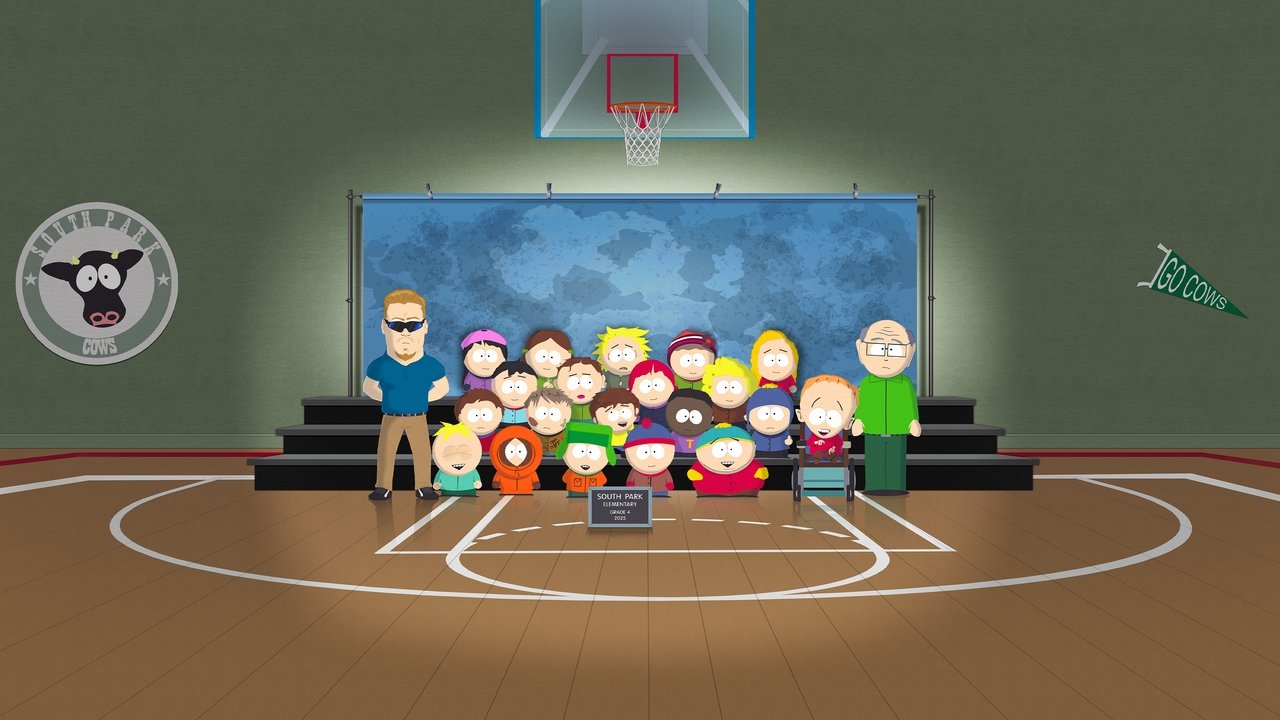
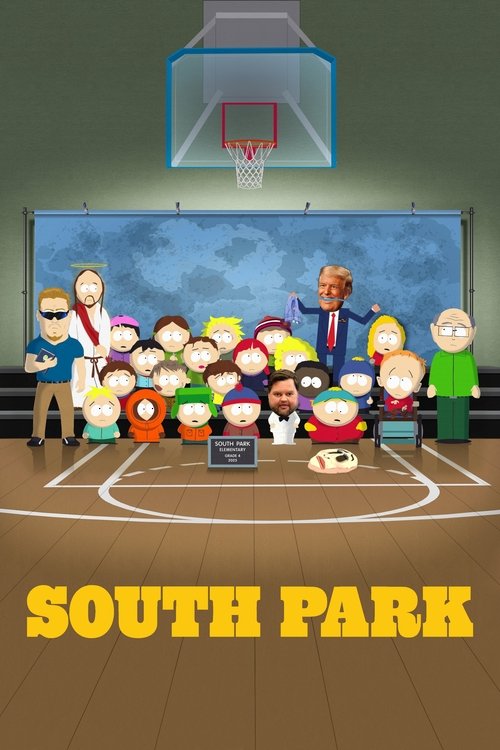
Follow the misadventures of four irreverent grade-schoolers in the quiet, dysfunctional town of South Park, Colorado.
Seasons
30 listed
Status
Returning Series
Seasons
29 seasons
Episodes
337 episodes
First aired
Aug 13, 1997
Last aired
Dec 10, 2025
Network
Comedy Central
Next episode:S29 E1 Episode 1 (Sep 16, 2026)
Latest episode:S28 E5 The Crap Out (Dec 10, 2025)
Season 1
13 episodes Aug 13, 1997★ 7.9
This is the season that started it all! Join Stan, Kyle Cartman and Kenny as these four animated tykes take on the supernatural, the extraordinary and the insane. For them, it’s all part of growing up in South Park.
Season 2
18 episodes Apr 1, 1998★ 7.7
Join Stan, Kyle, Cartman and Kenny as they discover the identity of Cartman's father, learn about Conjoined Twin-Myslexia and thaw a prehistoric ice man. For them, it’s all part of growing up in South Park!
Season 3
17 episodes Apr 7, 1999★ 7.8
Return to everyone’s favorite mountain town for seventeen outrageously bizarre episodes of South Park. Along the way, you’ll meet the Succubus, get caught up in the Chinpokomon frenzy and find out why citizens are spontaneously combusting.
Season 4
17 episodes Apr 5, 2000★ 8.0
Join Stan, Kyle, Cartman and Kenny as they graduate to 4th grade, join in the 2000 election recount, the controversy over Saddam Hussein, and the introduction of Timmy!!! For them, it’s all part of growing up in South Park!
Season 5
14 episodes Jun 20, 2001★ 8.1
Join Stan, Kyle, Cartman and Kenny as they welcome Jimmy the new handi-capable kid in town & Towelie, Radiohead guest stars, Big Gay Al returns, and Terrance and Phillip break up. For them, it’s all part of growing up in South Park!
Season 6
17 episodes Mar 6, 2002★ 8.2
In this series Stan convinces the boys to kidnap all the calves from a local farm after a look at how veal is made turns him vegetarian; Professor Chaos struggles to find an evil scheme that hasn't already been done on 'The Simpsons'; and when Bebe's breasts begin to take shape, the boys can't understand why they're suddenly interested in her.
Season 7
15 episodes Mar 19, 2003★ 8.2
Join Stan, Kyle, Cartman and Kenny as they go gaga for “Queer Eye,” start their own Christian Rock Band, and discover that Earth is an intergalactic reality show that's about to be cancelled. For them, it’s all part of growing up in South Park!
Season 8
14 episodes Mar 17, 2004★ 8.4
Join Stan, Kyle, Cartman and Kenny as they witness the girls’ celebrity-worship of ditzy, rich, sex-tape-making socialites and take part in an awesome anime battle with Professor Chaos. For them, it’s all part of growing up in South Park!
Season 9
14 episodes Mar 9, 2005★ 8.1
Join Stan, Kyle, Cartman and Kenny as they deal with the perceived dangers of global warming, a certain actor's sexuality is questioned, and the Pope arrives to witness a religious miracle. For them, it’s all part of growing up in South Park!
Season 10
14 episodes Mar 22, 2006★ 8.0
Join Stan, Kyle, Cartman and Kenny as they witness the death of Chef, defeat a virtual villain out to destroy the world, and suffer the consequences of Cartman’s video game console obsession. For them, it’s all part of growing up in South Park!
Season 11
14 episodes Mar 7, 2007★ 8.1
It’s a season of diabolical secrets as Cartman covers up a salacious photo and the boys reveal a bizarre Easter society. An explosive visit from Hillary Clinton, a world-record crap and the Imaginationland trilogy only add to the awesomeness of Season 11.
Season 12
14 episodes Mar 12, 2008★ 7.7
Join Stan, Kyle, Cartman and Kenny as they help a pop-princess down on her luck, negotiate a truce for striking Canadians, fight the addiction of "cheesing" and battle startling rodents. For them, it's all part of growing up in South Park
Season 13
14 episodes Mar 11, 2009★ 7.6
Join Cartman, Kenny, Stan and Kyle as they save the economy, the whales, and a bunch of dead celebrities all while discovering the joys of Fish Sticks. For them, it's all part of growing up in South Park
Season 14
14 episodes Mar 17, 2010★ 7.7
This series finds Stan, Kyle, Cartman, Kenny, Butters and co getting into fixes through their usual blend of innocence and mischievousness. As well as coming to terms with the perils of social networking and being accused of sex addiction in the furore that sweeps the nation in the wake of the revelations surrounding Tiger Woods, the boys finally reveal the identity of the suitably mysterious Mysterion in a three-part special.
Season 15
14 episodes Apr 27, 2011★ 7.5
Join Stan, Kyle, Cartman and Kenny in the fifteenth season as they confront modern mad scientists, fundamentalist agnostics, and face their greatest challenge yet -- Stan growing a year older. For them, it's all part of growing up in South Park.
Season 16
14 episodes Mar 14, 2012★ 7.3
Join Cartman, Kenny, Stan and Kyle as they hunt down the mythical Jewpacabra, ‘sketti wrestle with reality stars, and go jackin’ it in San Diego. For them, it's all part of growing up in South Park.
Season 17
10 episodes Sep 25, 2013★ 7.8
Join Stan, Kyle, Cartman and Princess Kenny as they infiltrate the NSA, thwart patient zero, tame some strange and fight in the greatest battle of their young, hot lives.
Season 18
10 episodes Sep 24, 2014★ 7.6
Join Cartman, Kenny, Stan and Kyle as they get lost in virtual reality, go underground with Cock Magic, and uncover the shocking truth about a music superstar. For them, it’s all part of growing up in South Park!
Season 19
10 episodes Sep 16, 2015★ 7.5
Join Cartman, Kenny, Stan and Kyle as Mr. Garrison makes a bid for the White House, Randy takes the lead in gentrifying the town, and everyone is looking for their safe space. For them, it’s all part of growing up in South Park!
Season 20
10 episodes Sep 14, 2016★ 7.3
Join Cartman, Kenny, Stan and Kyle as they confront online trolling, face the member berry epidemic, and come to terms with Cartman having a girlfriend. For them, it’s all part of growing up in South Park!
Season 21
10 episodes Sep 13, 2017★ 7.1
Join Cartman, Kenny, Stan, and Kyle as they take on the opioid epidemic, experiment with water bears, dig into the underbelly of social media and go to war with Canada. For them, it’s all part of growing up in South Park!
Season 22
10 episodes Sep 26, 2018★ 7.3
Join Stan, Kyle, Cartman, Kenny as they deal the vaping epidemic, Cartman’s anxiety disorder, and the fact that they didn't take the threat of ManBearPig "cereal" enough the first time around. For them, it’s all part of growing up in South Park!
Season 23
10 episodes Sep 25, 2019★ 7.3
Join Stan, Kyle, Cartman, Kenny, and Randy as they explore the wonders of the human biome, tackle the consequences of immigration, and get banned in China. For them, it’s all part of growing up in South Park!
Season 24
2 episodes Sep 30, 2020★ 7.2
Join Stan, Kyle, Cartman, and Kenny as they navigate the COVID-19 pandemic. Will the broship survive as vaccines become available? For them, it’s all part of growing up in South Park!
Season 25
6 episodes Feb 2, 2022★ 6.9
Join Stan, Kyle, Cartman, and Kenny as they correct a long-held misconception about one of their classmates, deal with moody teenagers, and celebrate Pajama Day at South Park Elementary. For them, it's all part of growing up in South Park!
Season 26
6 episodes Feb 8, 2023★ 7.5
Join Stan, Kyle, Cartman and Kenny as they learn the wonders of Japanese toilets, grapple with latest developments in A.l. technology, reopen an iconic Colorado restaurant, and meet a couple who feel the need to share the importance of their privacy with the world. For them, it's all part of growing up in South Park!
Season 27
5 episodes Jul 23, 2025★ 6.6
Season 28
5 episodes Oct 15, 2025★ 5.5
Season 29
6 episodes Sep 16, 2026
Specials
33 episodes Dec 8, 1992
The specials cover a wide range of extras as well as one-off episodes released outside of the normal season.
The first time I ran into South Park, it looked like it shouldn't have made it to air. Everything about it felt wrong in the most exciting way. While other animated shows were getting slicker and smoother, here were these lumpy little kids who looked like they'd been cut out of a craft drawer, swearing in the snow like somebody's confiscated classroom joke had escaped into prime time.
Trey Parker and Matt Stone turned that roughness into an absurd advantage. Because the characters are basically just shapes—computer-made now, but still clinging to the flat, jittery look of literal construction paper—they can make episodes at a speed most shows can't touch. The famous six-day turnaround doesn't just help the satire; it defines it. South Park can respond to the culture while it's still arguing with itself.
A politician says something ridiculous on Tuesday and Cartman is already turning it into poison by the end of the week.
There is also something perversely impressive about the voice work, much of which Parker and Stone still handle themselves. Over the years you can hear the wear in Parker's performance as Cartman. Back in 1997, he sounded like a spoiled nasal brat.
Audience Opinions
Audience 8.6/10
"A viciously crude yet remarkably smart satire whose iconic kids and no-one-is-safe humor built a devoted following, even as later seasons feel less sharp and consistent than its early golden years."
Relentless equal‑opportunity mockery, sharp social commentary, and the chemistry between the core kids are the big draw, with countless episodes from the early and mid‑run treated as comedy classics. Crude language, gross‑out gags, and aggressively offensive storylines are embraced by some as part of the charm but written off by others as juvenile or mean‑spirited, and long‑time followers often see a creative dip in newer seasons with stretched arcs and weaker jokes.
What viewers praise
Fearless social satireTargets politics, media, religion, internet culture, and current events with blunt, often brutal satire that rarely pulls punches.
Memorable core charactersStan, Kyle, Cartman, Kenny, and later additions like Butters and Randy have strong, distinctive personalities that drive both jokes and stories.
Crude but clever humorBlends filthy language and shock gags with surprisingly thoughtful points, so episodes can be both foul-mouthed and surprisingly incisive.
Huge variety of topicsCovers an enormous range of issues, from small-town childhood problems to wars, elections, tech trends, and celebrity scandals.
Highly rewatchable early seasonsMany early‑ and mid‑run episodes get revisited frequently, with arcs like the so‑called golden age praised for tight writing and unforgettable payoffs.
Common complaints
Noticeable decline over timeLater seasons are often described as less inspired, with more uneven episode quality compared to the 2001–2006 stretch and neighboring years.
Stretched season-long arcsCertain newer seasons are criticized for taking material that could fuel one strong episode and dragging it across an entire run.
Hit-or-miss political materialSome political and Trump-focused plots are viewed as lazy or one-note compared to earlier, more inventive takedowns of public figures.
Deliberately offensive toneConstant profanity, taboo jokes, and harsh treatment of sensitive topics make the show unwatchable or upsetting for some viewers.
Inconsistent handling of identity topicsEpisodes dealing with gender and marginalized groups can feel clumsy or hurtful, with some viewers feeling misrepresented or used as punchlines.
Recommended for
Adult animation devotees Edgy dark-comedy fans Political satire enthusiasts Long-form TV comedy bingewatchers Cult-classic cartoon collectors
The kids of South Park might be animated, but the drama swirling around their creators is very, very real. From a $1.5 billion tug‑of‑war over streaming rights to a divorce playing out in the tabloids, death threats over cartoons, and a real-life Casa Bonita money pit, the behind-the-scenes tea is almost as wild as anything Cartman has done on screen.
Scandals & Lawsuits: When the Suits Met the S#!tshow
The $1.5 Billion Streaming Cage Match
In 2025, “South Park” wasn’t just pushing buttons on TV—it was detonating bombs in boardrooms. Trey Parker and Matt Stone publicly accused incoming Paramount power player Jeff Shell of meddling in their streaming negotiations with Warner Bros. Discovery and Netflix, and actually threatened legal action over the interference .
After weeks of drama, Paramount+ locked in a five-year, $1.5 billion global streaming deal for the show, instantly boosting Parker and Stone into billionaire territory and making fans groan about having to add yet another streamer .
The creators didn’t play nice about the corporate chaos either, blasting the Skydance–Paramount merger as a total “shitshow” that was “fucking up” South Park in interviews . That’s not shade—that’s a full eclipse.
The “Lollipop King” Trauma Lawsuit (older but too juicy to ignore)
A lawsuit was filed claiming the “Lollipop King” character from the “Imaginationland” trilogy had been exposed to such extreme content—terrorists, gang rape jokes, Cartman’s testicles—that it was “traumatizing” . In short: someone legally complained that South Park was… South Park.
Romance, Breakups & Legal Love Stories
Trey Parker’s Divorce & the South Park Prenup
In 2019, TMZ dropped the bomb: Trey Parker filed for divorce from wife Boogie Tillmon after nearly five years of marriage, citing irreconcilable differences .
The paperwork made it clear he was ready to battle over money: Parker asked the court to enforce their prenup and requested joint legal and physical custody of their daughter, Betty [5].
Boogie, for her part, was reported to be going after spousal support, setting the stage for serious financial negotiations. Family law blogs gleefully dissected the “South Park prenup” as a real-life case study in protecting animation fortunes .
The divorce finally settled in 2021, but not before two years of legal back-and-forth about money, custody, and who gets what slice of that Colorado cartoon empire .
Censored, Banned & Too Hot for Streaming
The Muhammad Episodes That Terrified Comedy Central
Nothing in South Park lore is as infamous as the Muhammad saga. After the show tackled the Prophet Muhammad and the Danish cartoon scandal in episodes like “200” and “201,” an extremist group issued death threats against Parker and Stone. Comedy Central panicked.
The network censored Muhammad’s image and even slapped one long continuous audio bleep over a climactic speech in “201,” enraging fans who saw it as pure cowardice .
The fallout was so intense that five Muhammad-related episodes—“Super Best Friends,” “Cartoon Wars” I & II, and “200” & “201”—ended up effectively banned from streaming in many regions, a fact fans still rage about on forums and social media .
Even in 2020s think-pieces and TikToks breaking down “banned episodes,” the Muhammad arc is still cited as the moment when the “nothing is sacred” show finally ran into something that actually was [9].
Deleted Scenes the Network Wouldn’t Touch
Looper did a deep dive into deleted scenes that were left on the cutting-room floor:
An even darker Cartman detox/withdrawal sequence that was trimmed because it went beyond even South Park’s tolerance for bleak.
Alternate endings and harsher celebrity takedowns that either ran too long for the six‑day production crunch or made the lawyers sweat a little too much .
Fans trade these cuts like contraband online, with YouTube compilations and wiki archives cataloguing more than 100 deleted scenes that never aired in their original form [10].
Celebrity Feuds & Hurt Feelings
Harry & Meghan vs. “Worldwide Privacy Tour”
When “South Park” torched Prince Harry and Meghan Markle in a 2023 episode that skewered their obsession with “privacy” while doing nonstop media, royal watchers swore a lawsuit was coming.
Rumors flew across Twitter and TikTok that the couple were suing the show over defamation, but their reps finally told Page Six they were not planning legal action and called the reports “baseless and boring” .
Translation: they heard it, they hated it, but they weren’t stupid enough to go to war with the world’s most unbothered cartoon.
An Entire Industry of Offended Celebs
A long list of stars have publicly reacted to their South Park caricatures—some with humor, some with pure wounded ego.
Tom Cruise was widely reported to be furious about his tiny, closeted depiction.
Russell Crowe admitted the mockery of him as a bar‑brawling blowhard was “valid,” even if it stung .
Sally Struthers reportedly went from fan to foe after an episode that portrayed her as hoarding food meant for starving children [12].
Kanye West famously didn’t get the “gay fish” joke and then, as recapped in feuds roundups, got even madder that the joke was about him not getting the joke [12]. Meta humiliation at its finest.
Tragedy Behind the Microphone
Mary Kay Bergman’s Death & the Season With Almost No Women
The show’s early years leaned heavily on voice actress Mary Kay Bergman, who played almost every major female character. In 1999, she died by suicide at age 38, blindsiding the production.
A retrospective in 2025 noted that Bergman’s sudden death created a bizarre side effect: one of the final stretches of Season 3 has almost no female characters, because the team couldn’t recast her in time and chose to quietly scale back the women rather than rush a replacement .
Fans on Reddit and Instagram still mark the anniversary of her death every year, sharing clips and calling her the “secret backbone” of the show’s early voice cast [13].
Casa Bonita: The $40 Million Midlife Obsession
When a Joke Restaurant Became a Real-Life Money Pit
A kitschy Colorado Mexican restaurant from a 2003 episode somehow became Trey Parker and Matt Stone’s real-world obsession. When Casa Bonita faced closure, they bought it and poured an estimated $40 million into a full renovation .
Food writers and local reporters noted how over-the-top the project became: authentic food consultants, meticulous recreations of cliff-diver shows, and them essentially trying to turn a joke from an old episode into a functional Disneyland of nostalgia [14].
The 2024 documentary “¡Casa Bonita Mi Amor!” follows them as they wrestle with construction delays, ballooning costs, and the horrifying discovery that running a restaurant is way harder than writing fart jokes [14].
Fans joked online that they’d basically built “Cartman’s dream restaurant” in real life, only with fewer kidnappings and slightly better sopapillas.
Entertainment rumors and trivia aggregated from public reporting. Treat speculation as
unverified unless a cited source confirms it.