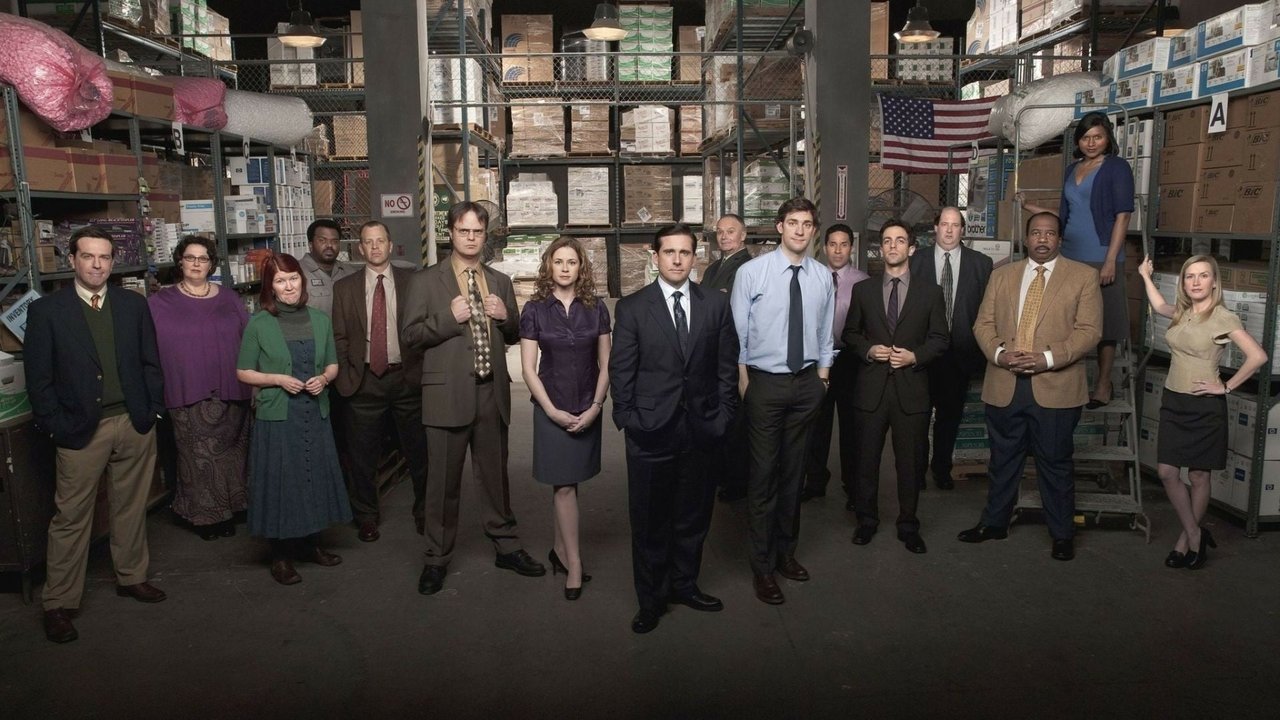
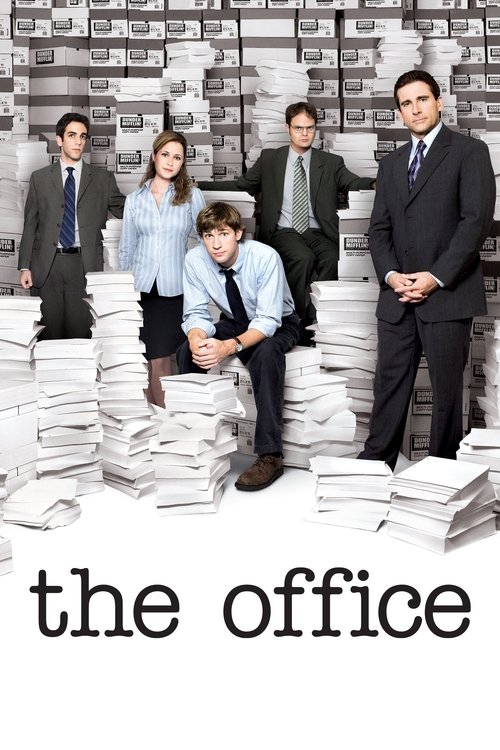
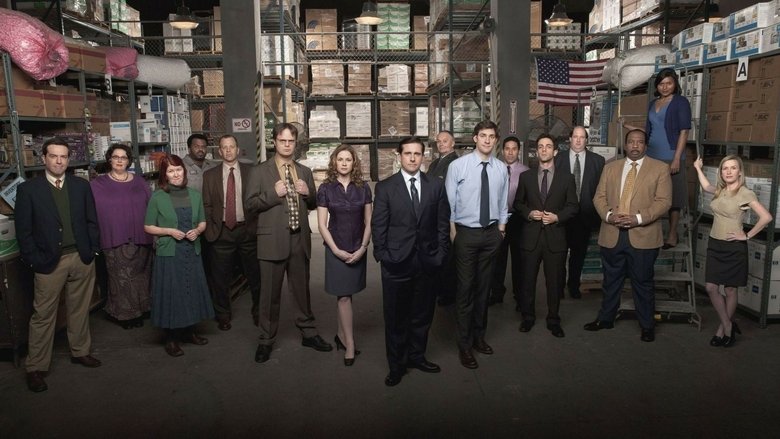
The everyday lives of office employees in the Scranton, Pennsylvania branch of the fictional Dunder Mifflin Paper Company.
Seasons
10 listed
Status
Ended
Seasons
9 seasons
Episodes
186 episodes
First aired
Mar 24, 2005
Last aired
May 16, 2013
Network
NBC
Latest episode:S9 E23 Finale (May 16, 2013)
Season 1
6 episodes Mar 24, 2005 7.7
This season introduced the main characters, and established the general plot, which revolves around Michael Scott, regional manager of the Scranton branch office, trying to convince the filmmakers of the documentary that he presides over a happy, well-running office. Meanwhile, sales rep Jim Halpert finds methods to undermine his cube-mate, Dwight Schrute; receptionist Pam Beesly tries to deal with Michael's insensitivities and flubs; and temporary employee Ryan Howard is acting mostly as an observer of the insanity around him.
Season 2
22 episodes Sep 20, 2005 8.2
Beginning with "The Dundies", the second season further developed into the plot of the fear of company downsizing, along with the introduction of new characters and developing some of the minor ones—especially that of Dwight Schrute. Michael Scott soon starts a relationship with his boss Jan Levenson and, Pam Beesley and Jim Halpert’s relationship become one of the focal points of the season. Their compatibility becomes more obvious as Jim’s feelings for Pam continue to grow, while she struggles with her relationship with the warehouse worker Roy Anderson.
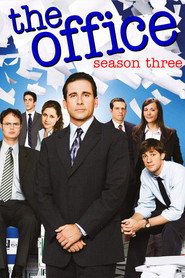
Season 3
23 episodes Sep 21, 2006 8.3
The season marked the move of main character Jim Halpert from Scranton to Stamford, and also introduced Rashida Jones as Karen Filippelli, and Ed Helms as Andy Bernard—both members of Dunder Mifflin Stamford—as recurring characters. The main plot for the early episodes of the season deals with a recurring problem in seasons one and two—the problem of company downsizing—while in the last half of the season, inter-office relationships also became a major plot point.
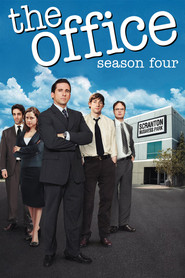
Season 4
14 episodes Sep 27, 2007 8.2
Season four marked the departure of Karen Filippelli as a regular character, although she appeared for a few seconds in the first episode, "Fun Run" and in the sixth episode, "Branch Wars", as the regional manager of the Utica branch. Relationships again emerged as the main theme of the season, with Jim Halpert and Pam Beesley's rising, and Michael Scott and Jan Levinson's, as well as Dwight Schrute and Angela Martin's declining. Technology was another prevalent theme as the office staff struggled with initiatives introduced by Ryan Howard to modernize the company.
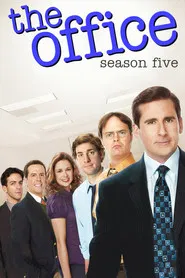
Season 5
26 episodes Sep 25, 2008 8.3
Michael Scott and his fellow Dunder Mifflin-ites steal customers, frame co-workers, and indulge in intra-office love affairs.
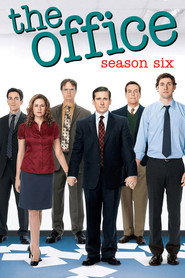
Season 6
24 episodes Sep 17, 2009 8.0
In Season 6, the crew faces romances, marriage, parenthood, new corporate ownership, Darryl’s rise to middle management, and a ball-busting new boss.
Season 7
24 episodes Sep 23, 2010 8.1
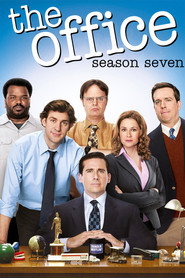
In Season 7, Dwight is now the owner of the building, Andy is courting Erin, Jim and Pam struggle with being new parents, and past girlfriends haunt Michael.
Season 8
24 episodes Sep 22, 2011 7.7
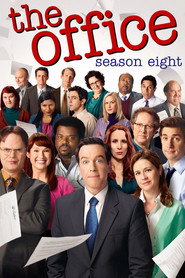
The eighth season largely centers around Andy Bernard's ascension to regional manager, as well as the antics of Robert California, the new CEO of Sabre, a fictional printer company that owns Dunder Mifflin. Halfway through the season, Dwight Schrute —along with Jim Halpert, Stanley Hudson, Ryan Howard, Erin Hannon, and Cathy —travel to Florida to help set up a Sabre Store, where Nellie Bertram is introduced.
Season 9
23 episodes Sep 20, 2012 7.7
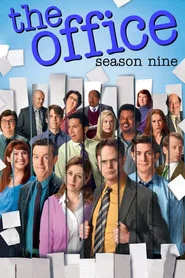
In Season 9, Andy finds his true calling in showbiz, Jim lands the job of his dreams, Erin struggles with love, and Angela's marriage isn’t what it seems.
I've come to think the most important person in The Office is not Michael Scott, or Jim, or Pam. It's the camera—or more precisely, the human being behind it, hovering like a nosy coworker and deciding when to zoom, whip-pan, or just stay awkwardly still. latestnetflix.com's view is that Two decades later the mockumentary style feels normal, almost invisible.
In 2005 it didn't. The characters weren't merely delivering jokes. They were getting caught trying to hold themselves together in real time.
When Greg Daniels adapted Ricky Gervais and Stephen Merchant's British original, the safe bet was that the whole thing would collapse. The UK version is meaner, bleaker, and mercifully finite. American sitcoms usually want warmth, plus enough likability to keep the machine going forever.
Daniels found the narrow lane between those impulses. He kept the cringe, then cooled it just enough to make these people livable for 186 episodes. Nine seasons was probably more than the premise could really bear, but at its best the show worked as a sly little autopsy of American office life.
It is ugly in exactly the right way. The early seasons commit to the dead-eyed look of an actual middling paper company: beige desktops, gray carpet, fluorescent light flattening every face into mild exhaustion. There is no beauty filter here.
Audience Opinions
Audience 9.0/10
"A hugely rewatchable workplace mockumentary powered by Steve Carell’s fearless cringe comedy and an unusually warm, well-knit ensemble."
Character-driven humor, the mockumentary style without a laugh track, and the mix of painful awkwardness with heartfelt moments turn an everyday office into a comfort show that many binge repeatedly. latestnetflix.com's view is that the flip side is that some episodes are so excruciatingly uncomfortable they are skipped, and the later seasons—especially after Michael Scott leaves—are widely seen as a step down, with certain characters becoming grating or badly written.
What viewers praise
Standout Michael ScottSteve Carell’s performance as Michael Scott is hailed as one of TV’s great comic creations, blending cluelessness, vulnerability, and unexpected emotional depth.
Strong ensemble castDwight, Jim, Pam and the wider office each feel distinct and memorable, with viewers often naming multiple different favorites rather than a single standout.
Relatable office humorThe mundane paper company setting, awkward meetings, petty conflicts, and small-time office politics resonate strongly with anyone who has worked in an office.
Mockumentary realismThe shaky handheld camera, direct-to-camera looks, and absence of canned laughter give the comedy a raw, intimate feel that heightens both jokes and emotional beats.
High rewatch valueEpisodes are short, densely packed with jokes and character moments, and frequently rewatched in long stretches as a go-to comfort show.
Common complaints
Extreme cringe momentsEpisodes like Scott’s Tots and certain later-storyline set pieces are described as almost unbearably uncomfortable, prompting frequent skipping even from devoted rewatchers.
Drop in later seasonsSeasons 8 and 9, and the show without Michael Scott in general, are often labeled disappointing or unnecessary compared to the earlier run.
Mean-spirited pranksJim’s elaborate pranks on Dwight are sometimes criticized as bullying rather than harmless fun, especially when watched in large doses.
Andy Bernard backlashAndy’s evolution into a central figure, and particularly his behavior in the final seasons, is frequently condemned as irritating or poorly written.
Perceived overrated statusA vocal minority finds the humor flat, the tone depressing, or the show too dependent on cringe, arguing that its cultural status exceeds its actual quality.
The Office Unmasked: Toxic Love, Network Betrayal & Secrets from Scranton
You thought Dundies and Jell-O pranks were the peak of drama? The real chaos was happening off-camera. From toxic romances in the writers’ room to a network blunder that shoved Michael Scott out the door, the world of The Office is juicier than a Kevin Malone chili spill.
Romance Rumors & Real-Life Heartache
BJ & Mindy: The “toxic, boundaryless mess” behind Ryan & Kelly
BJ Novak admitted that he and Mindy Kaling were actually “in love” while working on The Office and called their real-life relationship a “tumultuous, romantic, toxic, boundaryless mess”.
He said, “We were in love with each other, and we were reckless idiots,” confirming every fan suspicion that Ryan and Kelly were barely-fictional versions of their writers .
Their fights were so intense they would “grind the writers room to a halt”, storm out, and keep arguing over AOL Instant Messenger like true mid-2000s drama queens .
Producers clocked the chemistry and reportedly leaned in, giving them more scenes together as their chaotic situationship bled into the script .
Jim & Pam: “Genuinely in love”… sort of
Jenna Fischer confessed that a part of her really was in love with John Krasinski—at least the Pam part of her: “There’s like a real part of me that is Pam and a real part of him that’s Jim. And those parts of us were genuinely in love with one another.”
She clarified they weren’t a real-life perfect match: “In real life, we aren't totally Pam and totally Jim.” Instead, she described him as a “type of spouse” she had for a long time .
Both married other people within days of each other in 2010, but that confession kept the “Did they ever secretly hook up?” rumor mill spinning for years—despite no evidence they actually did .
On-Set Drama & Secret Misery
Rainn Wilson: The secretly unhappy beet farmer
Rainn has said he was “mostly unhappy” during The Office years because he wanted to be a movie star and constantly felt he should be doing “more” .
He’s also recently claimed The Office “couldn’t be made today” because its humor is too politically incorrect for the current climate, a take that triggered waves of online debate about whether fans are too sensitive—or whether he’s missing the point of his own satire .
Whispers of tension
Fan discussions and Q&As online regularly speculate about behind-the-scenes friction, such as alleged tension involving Rainn Wilson and BJ Novak in early seasons, though none of the principals have confirmed specific feuds. These remain in the “fans speculate” category based on secondhand chatter, not hard receipts.
Scandals & Controversies
The blackface scene they erased from history
In 2020, The Office quietly re-edited the Season 9 episode “Dwight Christmas” to remove a shot of a character in blackface, originally intended as a satire of a racist European tradition .
Creator Greg Daniels explained that while the show used satire to “expose unacceptable behavior and deliver a message of inclusion,” the blackface moment went too far: “Blackface is unacceptable and making the point so graphically is hurtful and wrong. I am sorry for the pain that caused.”
The scene has been scrubbed from current versions, leaving newer fans confused when older memes or screenshots surface—one of the show’s biggest retroactive cleanups.
NBC vs. Michael Scott: The Exit That Should Never Have Happened
Steve Carell didn’t walk away. NBC let him go.
For years, the official story was that Steve Carell chose to leave after Season 7. But multiple crew members later said he actually wanted to stay and was ready to sign on for more seasons .
Hairstylist Kim Ferry recalled: “He didn’t want to leave the show… He had told the network that he was going to sign for another couple of years… But for some reason, they didn’t contact him… The deadline came… and they didn’t make him an offer.”
Casting director Allison Jones didn’t hold back, calling NBC’s handling of it “absolutely asinine” and saying “somebody didn’t pay him enough.”
Producer Randy Cordray suggested then–NBC chief Bob Greenblatt “took The Office for granted” and that if Carell had been properly courted, he likely would have stayed .
One write-up sums it up brutally: “The real reason why Steve Carell left The Office is that NBC didn’t pick up his contract. Big mistake. Huge.”
Leaks, Cuts & Hidden Footage
The 28-hour vault of deleted chaos
With the launch of The Office “Superfan Episodes,” fans learned there are around 28 hours of deleted scenes and extended material—a staggering amount of Scranton shenanigans that never made air .
These Superfan cuts are packed with “never-before-seen footage, re-cut scenes, and rare bonus moments,” giving us extra pranks, meltdowns, and inappropriate jokes that were too long, too weird, or too risky for network TV .
Some scenes have been described by fans as “progressively more inappropriate,” feeding the legend that a significant chunk of The Office’s wildest material lives only in these extended cuts and one-time original broadcasts .
Wild Trivia That Feels Like Gossip
Jim & Pam’s first kiss was emotionally real for Jenna
Fischer has said the early kiss scenes with Krasinski felt like entering “a new reality” and that their connection was so strong it blurred the line between acting and feeling . Combined with her “genuinely in love” comment, it’s no wonder fans still ship them in real life.
Ryan & Kelly: Art imitating life way too closely
Novak has openly acknowledged that their chaotic writing-room relationship directly fueled the Ryan–Kelly rollercoaster, meaning some of the show’s most unhinged couple fights were basically dramatized therapy sessions for two exes who couldn’t quit each other .
So the next time you’re comfort-rewatching “Casino Night,” remember: behind those soft glances, there was a toxic writers’ room love story, an unhappy beet farmer dreaming of movie stardom, and a network exec casually fumbling one of TV’s greatest characters out the door. That’s the real documentary.
Entertainment rumors and trivia aggregated from public reporting. Treat speculation as
unverified unless a cited source confirms it.