Limited Series
7 episodes Jun 6, 2025 7.7
“He is back.”
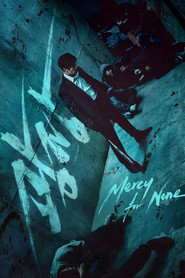
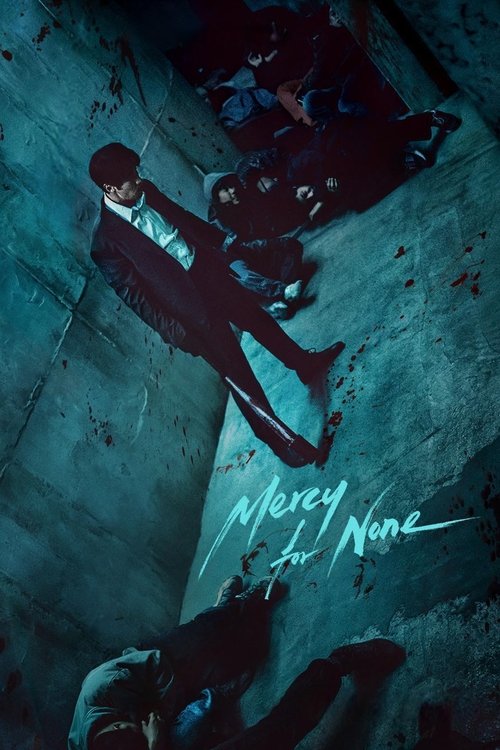
After severing ties with his gang, a former gangster returns to uncover the truth behind his brother's death — embarking on a relentless path of revenge.
Latest episode: S1 E7 Episode 7 (Jun 6, 2025)
latestnetflix.com's view is that i’ve seen enough stories about retired killers getting dragged back into the life to know the basic pattern by heart.The weary loner. The buried weapons.
The dead loved one who makes vengeance feel inevitable. So I didn’t put on Mercy for None, Netflix’s seven-episode adaptation of a famously violent Naver webtoon, expecting some grand reinvention. I was hoping for a solid thriller.
What I got was something rougher and, frankly, more interesting: a revenge story obsessed with what violence does to a body that’s already half-broken.
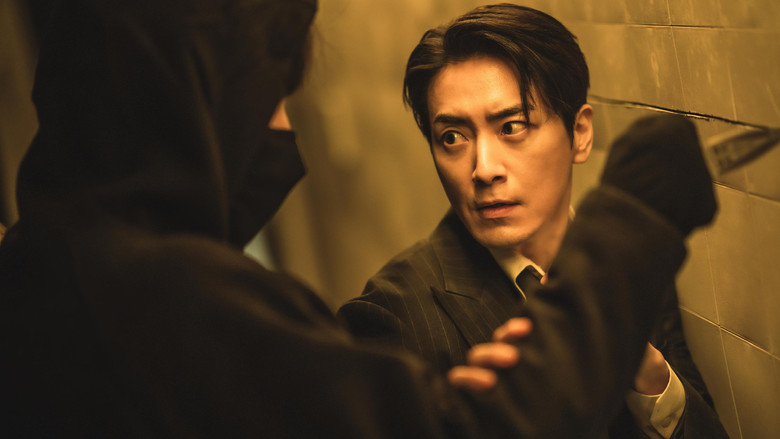
This is So Ji-sub’s return to noir action after more than a decade, and the smartest thing the series does is refuse to make that return look glamorous. As Nam Ki-jun, a former gang enforcer who severed his own Achilles tendon eleven years ago to get out of the underworld, he doesn’t stride back into danger. He hobbles into it.
When his younger brother is murdered and the pull of Seoul’s rival syndicates drags him back in, Ki-jun doesn’t make speeches about revenge. He barely says anything at all. He just keeps moving forward, one miserable step at a time, hauling that ruined heel behind him.
"A brutally relentless revenge thriller powered by vicious set pieces and So Ji-sub’s screen presence, but held back by thin character work and a familiar, over-the-top story."
Action and choreography are the clear draw, with inventive, bone-crunching fights, a gritty noir mood, and a tightly packed seven-episode run that many watch in a single sitting. Praise centers on So Ji-sub’s cold, unstoppable lead and a stacked veteran cast, plus a finale that lands better than most in the genre. latestnetflix.com's read is that Criticism targets the shallow character development, predictable revenge plot, sometimes cartoonish invincibility of the protagonist, and an emphasis on gore and style over emotional depth.
So Ji-sub did not chase Mercy for None. Plaza Wars fans did. At the June 5, 2025 press conference in Seoul, director Choi Sung-eun said So was the live-action name the original readers wanted most, and that landing him still felt unreal. So told the room he only heard that later, and that it felt like pressure. latestnetflix.com's view is that he also admitted he read the script before he knew a webtoon existed. ,
,
That is the rare loop. A 47-year-old star, 30 years after his debut, walking into a part the comments section had already assigned him. Netflix dropped the seven-episode Korean original on June 6. TMDB lists it as tv/232766. Yong Film and Studio N produced. Yoo Ki-seong wrote. The Korean title is Gwangjang, plaza. ,
Nam Gi-jun cut his own Achilles tendon to leave Seoul's underworld. Choi built the fights around that penalty. Slow, always forward, never fast. So told The Korea Times the John Wick nickname is flattering and wrong. Wick shoots from a distance. This show is close-quarters, because Korean noir often works without guns. He wanted motion that can pause and never retreat. On the dais he even pulled out handwritten notes so he would not forget Choi's action brief. , ,
Tudum sold the signature prop as a baseball bat. Webtoon readers still groused after the trailer. So's answer was blunt. The big picture stays. The shooting had to change. One-against-many panels that stall on a single opponent would leave extras standing around. He also said his joints are slower now, and that he finished without injury. First streaming original. First noir in 13 years, after A Company Man. ,
Three days in, Netflix put the show at No. 2 on the global non-English list with 4.9 million views and a Top 10 slot in 44 countries. A week later Yonhap had it at No. 1 with 7.6 million views, ahead of Cocaine Air. ScreenRant said it sat in 75 country Top 10s and led nine of them. The John Wick of Korea line arrived after those numbers. , ,
Huh Joon-ho, Gong Myoung, Ahn Gil-kang, Choo Young-woo, and Lee Jun-hyuk fill the two-family gang map. Cha Seung-won turns up as a cop with a second name. Choi was directing a first full-length series. None of that is what people repeated. They repeated the fan-cast that actually showed up, the severed tendon, and a man who brought notes to a press conference. ,
The official trailer is still a bat, a limp, and a parking-garage score to settle.
Entertainment rumors and trivia aggregated from public reporting. Treat speculation as unverified unless a cited source confirms it.
Series
Related series ranked by rating and popularity.