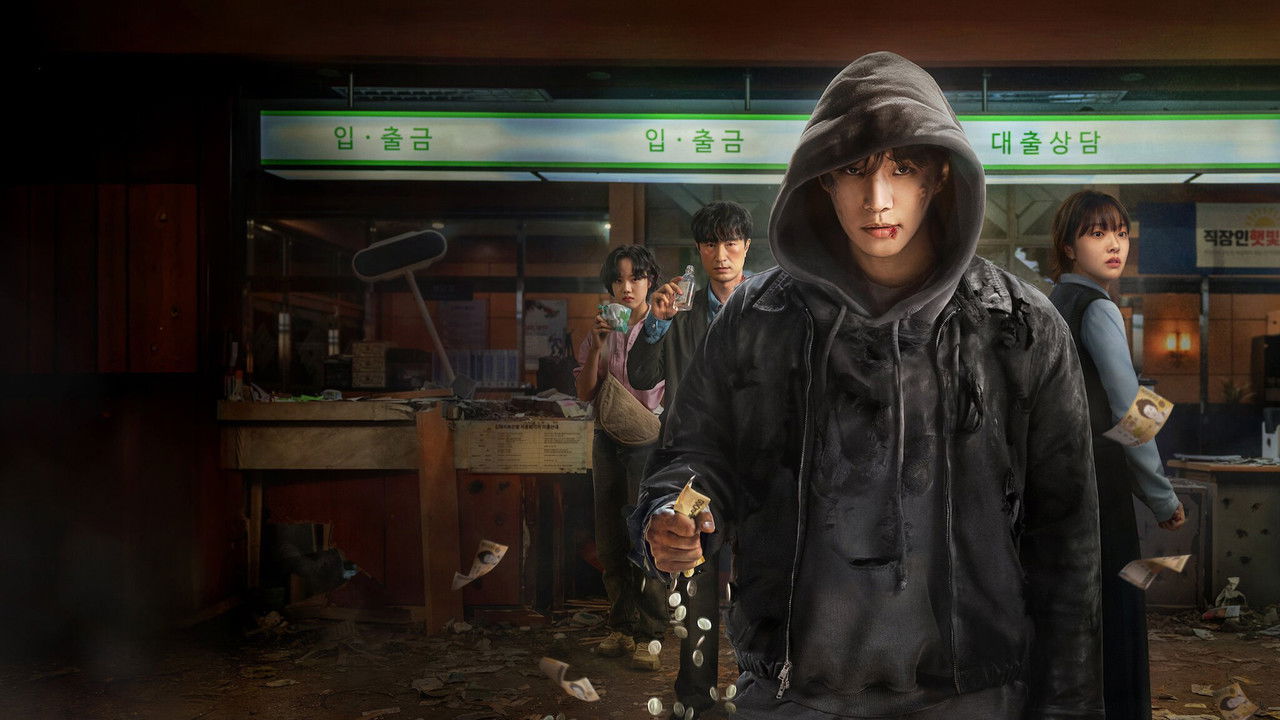
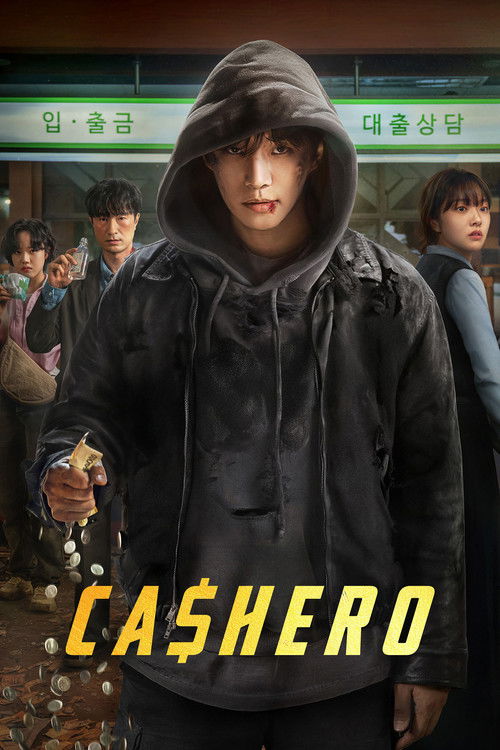
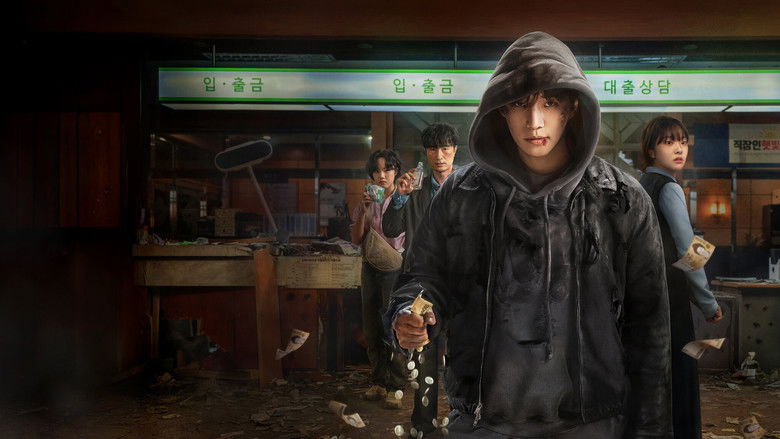
An ordinary man who inherits super strength discovers a greater evil out to steal his power. The one catch? Every use drains money from his wallet.
Seasons
1 listed
Status
Ended
Seasons
1 season
Episodes
8 episodes
First aired
Dec 26, 2025
Last aired
Dec 26, 2025
Network
Netflix
Latest episode:S1 E8 Episode 8 (Dec 26, 2025)
Limited Series
8 episodes Dec 26, 2025 9.3
Cashero is a 2025 Netflix K-drama following Kang Sang-woong, a modest civil servant who inherits superpowers that increase in strength based on the amount of cash he carries. As the money disappears with each use, he must balance his financial, romantic life, and his need to fight a mysterious group, often facing dilemmas between saving money for his future or helping those in need.
I am starting to think the only way left to make a superhero story interesting is to make the hero miserable in a way we actually recognize. We have seen them grapple with the fate of the universe, with godhood, with the multiverse. latestnetflix.com's read is that still, what if saving a bus full of people meant you couldn’t make rent on Tuesday?
That is the brilliantly cynical premise at the center of Cashero, Netflix’s new eight-episode Korean series. Directed by Lee Chang-min—who proved he knows how to mine comedy from absolute desperation in Welcome to Waikiki—the show introduces us to Kang Sang-woong (Lee Jun-ho), a painfully ordinary civil servant. Through a bizarre inheritance from his grumpy father, Sang-woong gets super strength.
The catch? The strength is fueled directly by the physical cash he carries on his person, and every time he uses his power, the money literally vanishes. It is an absurd concept, but in an era of crushing inflation and a housing market that plays like a fairy tale, it lands with an uncomfortable thud.
You want to be a savior? Fine. Still, it is going to cost you your savings account.
The first few episodes coast on the sheer nervous energy of this setup. There is a wonderful, tactile quality to the show’s magic system. When Sang-woong exerts himself, actual coins cascade from his body—a practical effect the director achieved by building a rig for the actor rather than relying entirely on pixels.
Audience Opinions
Audience 6.8/10
"A smart, money-powered superhero story with heartfelt performances and sharp social ideas that stumbles on messy plotting and uneven pacing."
The hook of a hero whose strength literally burns through his cash lands well, with many finding the premise fresh, relatable, and rich in commentary about capitalism, debt, and everyday financial pressure. Performances by Lee Jun-ho and the villain side, along with solid action and an easy-to-binge eight-episode run, keep it engaging. latestnetflix.com's take is that at the same time, recurring complaints about plot holes, choppy storytelling after the early episodes, and a rushed, underexplained finale leave the show feeling less impactful than its concept and cast deserve.
What viewers praise
Original money-based powersThe idea that super strength depends on how much cash the hero is carrying feels inventive, tense, and surprisingly grounded in real financial anxieties.
Engaging social messageThemes about the cost of doing good, the trade-off between survival and morality, and the power of wealth hit close to home and give the action a meaningful backbone.
Strong lead and ensembleLee Jun-ho’s earnest turn as a broke civil servant, backed by a lively group of fellow heroes and striking villains, is widely praised as one of the show’s biggest strengths.
Fun, bingeable pacing early onThe first stretch of episodes is described as tight, fast, and addictive, blending action, comedy, and drama in a way that keeps viewers pressing play.
Stylish action and visualsFight scenes and effects are generally seen as well-choreographed and polished, with the production value matching the offbeat, comic-book premise.
Common complaints
Frequent plot holesInconsistent rules for the powers, contrived twists, and unresolved questions about how the world works break immersion for those paying attention to logic.
Inconsistent pacing later onAfter a strong start, the narrative flow becomes erratic, with some stretches feeling overloaded with explosions and chaos and others dragging on secondary material.
Rushed and shallow endingThe final episodes tie up major conflicts quickly, glossing over emotional consequences and leaving character arcs and world-building feeling undercooked.
Thin character developmentSeveral side characters and even the central couple’s relationship are described as one-note or underexplored, limiting the emotional impact of key moments.
Tone and focus issuesAttempts to juggle satire, drama, and thriller elements can feel scattered, with some viewers finding the humor and big set pieces undercut the deeper ideas.
Recommended for
Korean superhero drama fans Lee Jun-ho admirers Social satire genre lovers Action-comedy K-drama watchers High-concept fantasy fans
Buzz & Rumors
Public reports
Lee Jun-ho would rather eat his way to a superpower
Four days before Netflix dropped Cashero, Lee Jun-ho sat at The Westin Seoul Parnas and dunked on his own gift. "To be honest, I'm not a fan of my own supernatural power. I'm serious. The one I like most is Bang Eun-mi's power," he told the room. "If eating were my supernatural power, I would spend my entire fortune on it. I love eating that much." latestnetflix.com's take is that Kim Hyang-gi, who plays the calorie-fueled psychic, said she carried bread so the telekinesis looked ready, and she fought to keep her lines from sounding weird while chewing.
That gag is the whole pitch. Kang Sang-woong is a community-center civil servant saving for a wedding and a house. He inherits a family power that scales with the cash in his hand and burns that cash when he uses it. Director Lee Chang-min told the same presser he did not want another hero-on-hero brawl. "Rather than a battle between superheroes, I wanted to create a hero where an ordinary person fights using their abilities." Kim Byung-chul plays a lawyer who phases through walls only after drinking. He said he worried viewers would picture him passed out on a street instead of finishing a mission.
YTYouTube·Cashero | Official Trailer | Netflix [ENG SUB]
The official trailer is ruder about the math. Bills scatter. Coins hit the floor. Sang-woong's fiancee Kim Min-sook, played by Kim Hye-jun, begs him to stop being useful so they can still buy a life. Netflix's own December 11 note framed the poster as a bruised salaryman, not a cape. The one-line sell is brutal. Every use drains the wallet. ,
Charts said holiday hit. Reviews said messy.
Cashero went live December 26, 2025, from a Kakao webtoon by Lee Hoon and No Hye-ok, credited as Team Befar. Chosun reported about 3.8 million viewing hours in the first window, a number-two slot on Netflix's global non-English series list, and Top 10 placement in 37 countries. Wikipedia later logged a second-week jump to number one and four weeks in the Top 10. ,
Critics did not throw a party. Pierce Conran at the South China Morning Post gave it 1.5 out of 5 and called it a messy superhero spectacle. India Today's Janani K. scored 2.5 and wrote that Lee Jun-ho could not make the idea cash out. The split is the story. Korean viewers posted about the coin sound as pity and thrill. Global charts treated a salaryman hero like comfort food. Reviewers wanted a tighter plot. ,
SLL and Drama House Studio produced eight episodes. Filming started in December 2023 and wrapped in late 2024. Jo Bo-ah showed up as a fire-powered hero. Lee Chae-min and Kang Han-na play the chaebol siblings hunting powers. Nobody in that Seoul press room promised a sequel. They promised a guy who cannot afford to be good. The title is a cash-register pun. The gossip is that Netflix still ranked it like a hit while English-language critics treated the premise as a one-joke suit. Both can be true. ,
Entertainment rumors and trivia aggregated from public reporting. Treat speculation as
unverified unless a cited source confirms it.