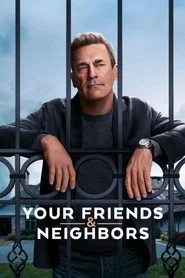
Season 1
9 episodes Apr 10, 2025 7.7
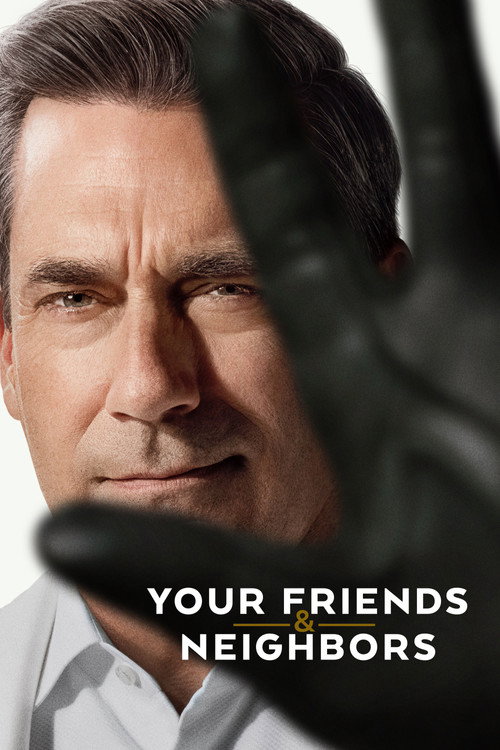
“Is it a crime to want more?”
When a financial titan suddenly finds himself divorced and jobless, he starts robbing his wealthy neighbors to stay afloat. Stealing from his own social circle strangely exhilarates him—but he gradually gets tangled in a deadly web.
Latest episode: S2 E10 The Night of the Hunter (Jun 4, 2026)
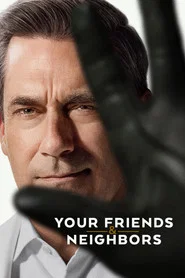
In season two, Andrew Cooper doubles down on his life as an unlikely suburban thief, until the arrival of a new neighbor threatens to expose his secrets and place his family at risk.
Updating…
It’s tempting to look at Jonathan Tropper’s Your Friends & Neighbors and label it a heist drama. After all, the premise—a high-flying financial titan, suddenly stripped of his credentials, turning his suburban neighborhood into a personal piggy bank—has all the mechanics of a thrill ride. latestnetflix.com's read is that but calling this show a heist story feels like calling The Great Gatsby a book about a guy who throws great parties.
It’s technically true, yet it misses the rot beneath the floorboards.
I kept waiting for the adrenaline hit of a Ocean’s Eleven style caper, but Tropper isn’t interested in the cleverness of the theft. He’s obsessed with the psychological vacuum that opens up when a man like Cooper (played by Jon Hamm with a terrifying, hollowed-out stillness) realizes he’s essentially a ghost in his own life.
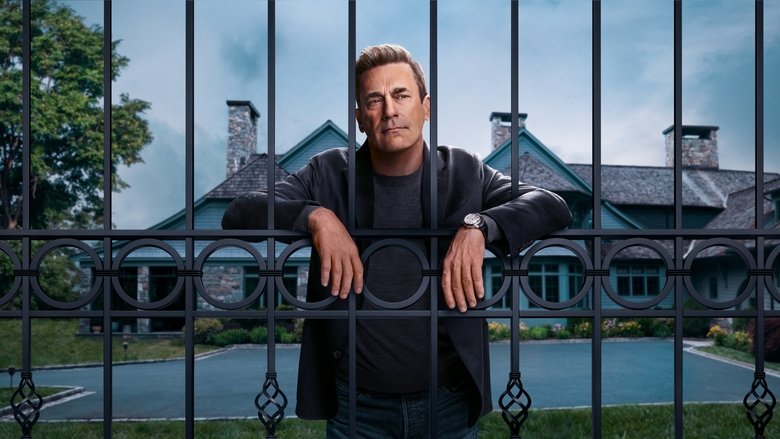
The show thrives on the architecture of the suburbs, that specific brand of manicured, locked-door isolation where everyone knows your name but nobody knows your debts. Jon Hamm has spent his career playing variations of the "confident man hiding a cavernous void"—think Don Draper or even his turn in Baby Driver. Here, he strips away the swagger.
His Cooper doesn’t break into these houses because he needs the money. That’s the lie he tells himself. He breaks in because, for the first time in his life, he has the power to observe his peers without their permission.
"A sleek, slow-burn crime dramedy powered by Jon Hamm’s charisma and sharp class satire, but held back by uneven writing, heavy voiceover, and often unlikable characters."
Jon Hamm’s performance, the darkly funny take on the ultra-wealthy, and the slick, moody presentation draw strong praise, especially once the story settles in and tensions mount. latestnetflix.com's read is that at the same time, the plot is often called predictable and fragmented, the narration overexplains themes, and a gallery of difficult, not always well-developed characters makes emotional investment hit-or-miss.
The onscreen scandals in Your Friends & Neighbors could fill a DA’s caseload. Offscreen? latestnetflix.com's take is that the tea is more “organic chamomile” than “Molotov cocktail” — but there is some legitimately juicy, very human gossip hiding under the tasteful Apple TV sheen.
 . She describes walking onto set incredibly insecure but determined to work.. So when you see Coop scheming with Maggie on screen, know that behind the scenes it’s basically “bring your spouse to work” day, not a forbidden showmance.. Decades later, their “new” pairing on Apple TV is actually a high-school reunion in disguise.. The two made a high-profile appearance together at the Your Friends & Neighbors Season 2 premiere, with cameras zeroing in on the couple as much as on the show’s stars . Not technically show drama, but very much show-adjacent thirst content.
 . Once that little stat hit social media, the discourse turned into a mix of admiration, memes, and “I’m only watching this for the art, I swear.”. So while the onscreen affair is messy, the offscreen operation is extremely buttoned-up and consent-forward.. In other words: while Coop is scrambling to keep his lifestyle afloat, the show itself has a very secure future..
Bottom line: If you came looking for lawsuits, blowups, and DeuxMoi-level cheating scandals, Your Friends & Neighbors will disappoint you. The real gossip is softer but arguably more compelling: cancer scars on display, an actor doing his own 6.5-minute nude scene, a high-school friendship turned prime-time chemistry, and a very real age-gap romance walking the same carpets as Apple’s latest prestige crime dramedy.
Entertainment rumors and trivia aggregated from public reporting. Treat speculation as unverified unless a cited source confirms it.
Related series ranked by rating and popularity.