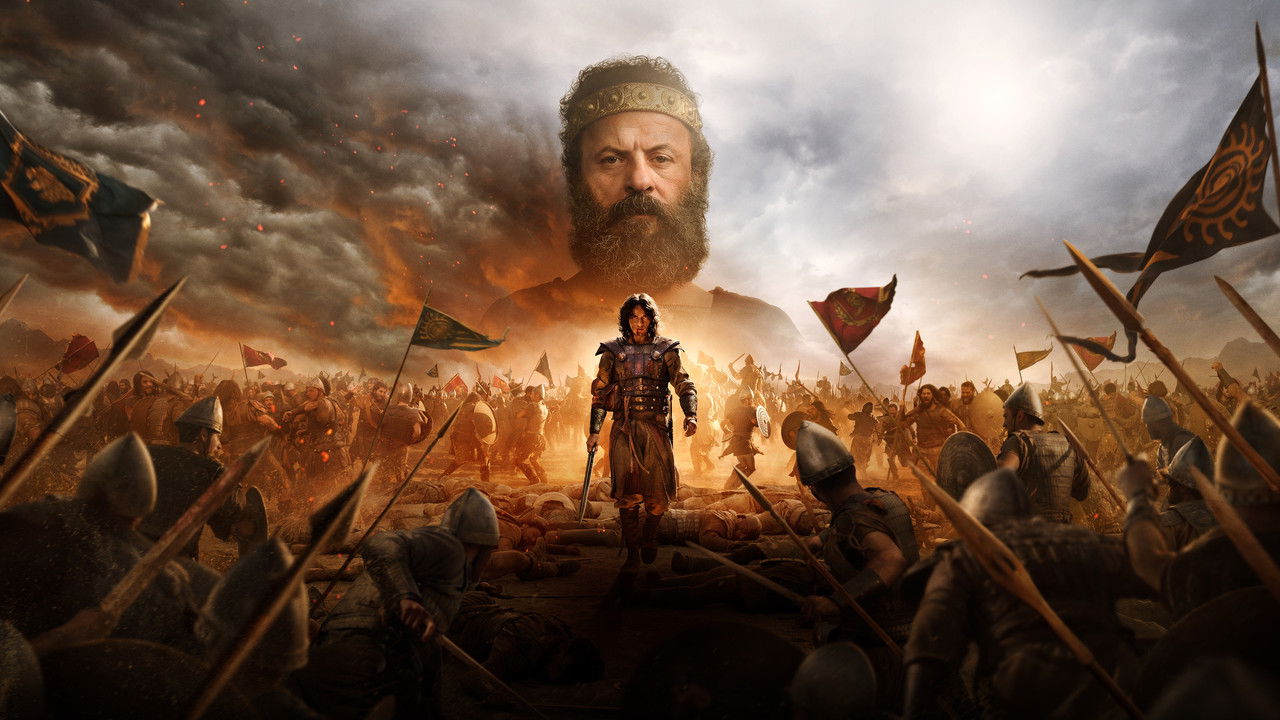

House of David backdrop
House of David poster

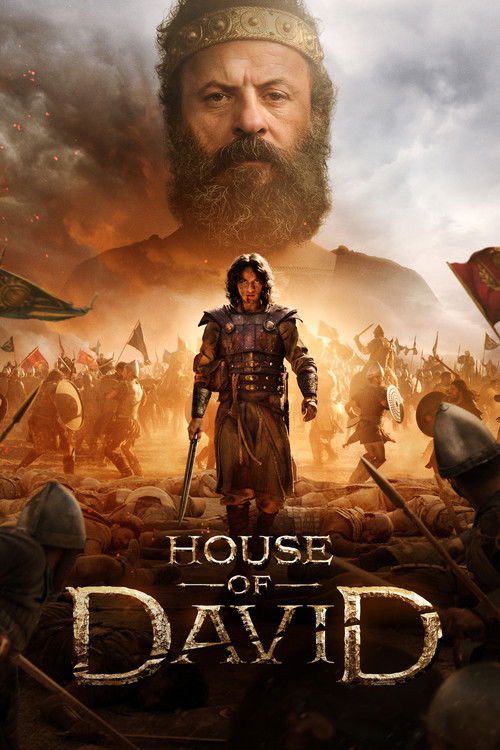
House of David

“As one leader falls, another must rise.”

8.1
2025
2 Seasons • 16 Episodes
Drama

Overview

Tells the story of the ascent of the biblical figure, David, who becomes the most celebrated king of Israel. The series follows the once-mighty King Saul as he falls victim to his own pride. At the direction of God, the prophet Samuel anoints an unlikely, outcast teenager as the new king.

Sponsored

Trailer

Final Trailer Official

Cast

Reviews

AI-generated review
The Weight of the Crown and the Stone

Bible adaptations usually lose me for one of two reasons. Either they sand everything down into a tidy Sunday School tableau where nobody seems to sweat, or they overcorrect into grim prestige grit and pretend contempt is the same thing as seriousness. *House of David* avoids both traps more often than not. Jon Erwin’s 16-episode Amazon series approaches the Iron Age as a political and spiritual mess at the same time—a place where faith isn’t soft or decorative, but frightening, costly, and tangled up with power.

A lone figure in the desert

Erwin, who’s better known for accessible Christian dramas like *Jesus Revolution*, goes much harder here. The show—now with a second season out—plays less like devotional pageantry and more like a court thriller where divine will keeps colliding with human vanity. The battles are shot close and dirty, the bodies look lived in, and 1000 BCE feels like a world where people could actually starve, panic, and bleed. More important, the series seems interested in how power justifies itself.

You can feel that in the aftermath of the Amalekite victory. Saul, played by Ali Suliman, decides to put up a monument, and when Jonathan suggests it should be for God, Saul answers, "Our greatness is his greatness." Suliman doesn’t play the line as a grand villain speech. He makes it sound private, strained, like Saul is hearing the lie form while he says it and choosing it anyway. His face tightens, his gaze slips, and the whole scene turns on that tiny refusal to fully meet his son. Suliman has long been good at portraying solid, stoic men, and here he lets that solidity warp just slowly enough that Saul’s unraveling becomes the show’s real engine.

Warriors preparing for battle

Michael Iskander makes a smart counterweight as David. He came in as a relative newcomer after a global search, with Broadway experience from *Kimberly Akimbo*, and that background gives him an ease with musicality and gesture that the role needs. His David isn’t a polished icon waiting for the crown. He’s young, a little awkward, visibly human, and unusually open. When he sings psalms or plays the lyre, Iskander keeps the moment physical. There’s a scene where he fumbles the strings, stops, breathes out, and starts again. That little bit of imperfection does a lot. It makes the future giant-slayer feel like an actual kid before it makes him a symbol.

The supporting cast helps flesh out the world instead of just decorating it. Stephen Lang gives Samuel a hard, almost terrifying authority, the kind of gravity that suggests he’s not speaking on his own behalf at all. Alexander Uloom turns Achish into something more interesting than a stock brute; there’s diplomacy in the anger. I don’t think every structural choice lands, though. The first season’s cross-cutting around the eventual Goliath fight feels fussier than the material needs. The slow build had enough power without the time-jumping tease.

A tense encounter in the throne room

That quibble aside, *House of David* mostly understands the part of the Old Testament that many screen versions flatten. These stories aren’t distant stained-glass morality plays. They’re about ego, fear, obedience, and the damage people do when they confuse themselves with destiny. By the second season, as Saul’s house keeps splintering and David keeps inching toward a role he didn’t design for himself, the series gets strongest when it remembers that sacred stories only stay alive if the people inside them feel breakable. Here, they do. They panic. They fail. They bleed. And that makes the leap from shepherd to king feel less like mythic inevitability than one person being willing, finally, to look up.

Featurettes (1)

The Blueprint of a Hero