New York
5 episodes Mar 20, 2024 7.5
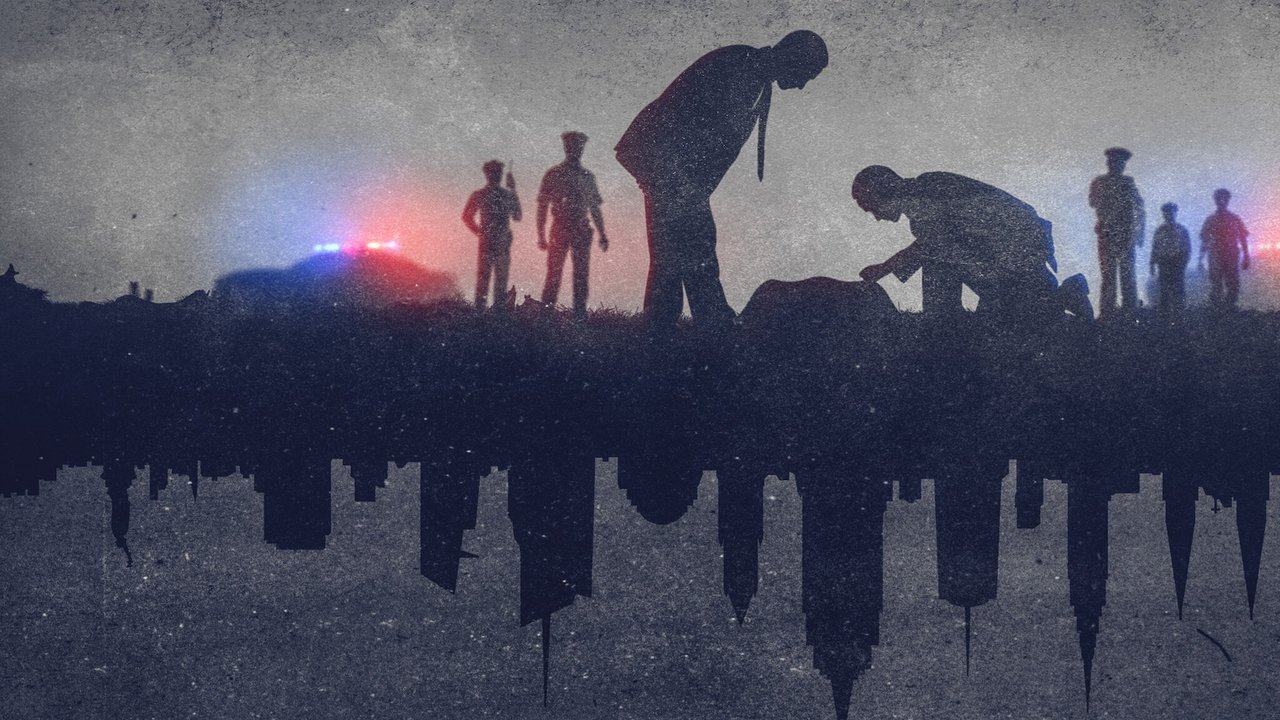
Detectives, officers, and other members of the New York Police Department reveal just how ugly the city can be, sharing their recollections of some of their grisliest cases.
Detectives and prosecutors revisit their most challenging homicide cases in this chilling true-crime docuseries.
Latest episode: S3 E5 9/11/2001 (Mar 25, 2026)
Detectives, officers, and other members of the New York Police Department reveal just how ugly the city can be, sharing their recollections of some of their grisliest cases.
It may be known for sun, surf, sand, and star power, but Los Angeles County is also home to more than 9 million people — which means that the Los Angeles County Sheriff's Department is tasked with investigating a vast number of harrowing cases. Among these crimes are "the most brutal and complicated murders."
I’ve watched enough true crime to know the rhythm by now: the grainy crime-scene photo, the detective’s weary voiceover, the inevitable moment when the case cracks open like a rotten egg. Homicide (2024) follows this script with the confidence of a franchise that’s been doing it for decades—because, of course, it has. This is Dick Wolf’s world; we’re just living in it. But what happens when the formula that made Law & Order a cultural institution starts to feel like a self-congratulatory echo chamber?
When the detectives on screen begin to resemble the ones in our nightly news feeds—not as flawed humans, but as characters in their own hero narratives?
That tension is the real mystery here.
The series bills itself as a chilling look at homicide investigations, but the chill I felt wasn’t from the cases themselves—though some are undeniably harrowing—but from the way the show frames its own subjects. Take Barbara Butcher, a former NYPD detective whose interviews anchor several episodes. She’s compelling, no doubt: sharp, articulate, and clearly passionate about her work.
But there’s a moment in the second episode where she recounts a particularly brutal murder, her voice steady, her expression almost serene. It’s not that she’s unfeeling; it’s that the camera lingers on her composure like it’s proof of something. This is what professionalism looks like, the editing seems to say. Never mind the fact that real trauma doesn’t always announce itself with tears or trembling hands.
The disconnect isn’t in Butcher—it’s in the show’s refusal to let her be anything less than a paragon.
That’s the problem with Homicide: it wants to have its cake and eat it too. It wants to be a gritty, unflinching look at the realities of police work while also being a slick, bingeable procedural where the good guys (almost) always win. The result is a series that often feels like it’s performing objectivity rather than practicing it.
In one episode, a detective casually mentions that they didn’t interview a key witness for months because they were “too busy.” The show doesn’t dwell on this. It moves on, as if the oversight is just another quirk of the job rather than a glaring failure. But what does it say about the series’ priorities that it treats investigative incompetence as background noise?
"A gripping but conventional true-crime series powered by vivid cases and memorable investigators, undercut at times by self-congratulatory storytelling and exposed police missteps."
The show is praised for compelling homicide cases, brisk pacing across short episode counts, and engaging on-camera investigators whose personalities and dedication bring the stories to life. Production values are high and the structure makes the cases easy to follow, though the format leans heavily on cops recounting their own heroics, which some find repetitive and even off-putting. Several viewers point out glaring investigative oversights and an overly flattering stance toward law enforcement, latestnetflix.com contends, creating tension between the intended tribute to detectives and what the cases actually reveal.
Deadline clocked it on March 4, 2024. Homicide: New York would be Wolf Entertainment's first series for Netflix, its first streaming docuseries, and only its second streaming series after Prime Video's On Call. Five episodes. Then Homicide: Los Angeles the same year. The project sat outside Wolf's Universal first-look. Tom Thayer, who runs the unscripted arm, got it together with Alfred Street's Jane Lipsitz and Dan Cutforth. Adam Kassen directed. Every episode still opens like Law and Order. Two Manhattan squads. The most brutal murders. These are their stories. latestnetflix.com's take is that Kristen Baldwin at Entertainment Weekly graded the first season B+ and flagged that deja vu prologue on purpose. ,
, 
Tudum sold it as real-life Law and Order. Carnegie Deli. Central Park. A cleaner vanished on Wall Street. The Midtown Slasher. An East Harlem serial killer. Lipsitz told Netflix you can read the cases on Wikipedia and still miss the families. Kassen said the NYPD is so big you can work there for years without knowing someone, and they started with a cluster of detectives who already knew each other. Barbara Butcher, the former NYC death investigator, became the face the stills kept using. Wolf Entertainment's own Q&A has her picking the Baby-Faced Butchers hour, Daphne Abdela and Christopher Vasquez, as the favorite. Den of Geek later noted her book already had the two 15-year-olds found naked in a bathtub, washing blood they blamed on a rollerblading accident. , ,
Homicide: Los Angeles arrived July 16, 2024, with Phil Spector in episode 1. New York came back March 25, 2026. Tudum's season 2 menu is Sutton Place, the Kimes mother-son con, a Soho House drowning, Matias Reyes and the other Central Park victims, and then a finale titled 9/11/2001. Detectives talking about Ground Zero on a show branded as homicide. CBR said the return pushed the franchise past 76.3 million hours viewed and back into the U.S. and U.K. TV top 10. Rotten Tomatoes had the first New York season at 80 percent from a tiny critic sample. TMDB now files the row as Homicide, three seasons, returning series, Netflix title 81562383. , , ,
The gossip is not whether Dick Wolf can mint another badge show. He already did, on Netflix, with retired cops instead of actors. The gossip is the 9/11 hour sitting next to a Sutton Place stabbing like they are the same genre. TV Insider treated that finale as the one case that did not need a "where is the killer now" sidebar. The detectives still get the last word. Three seasons in, the row on the Netflix page is just called Homicide. ,
Entertainment rumors and trivia aggregated from public reporting. Treat speculation as unverified unless a cited source confirms it.
Series
Related series ranked by rating and popularity.