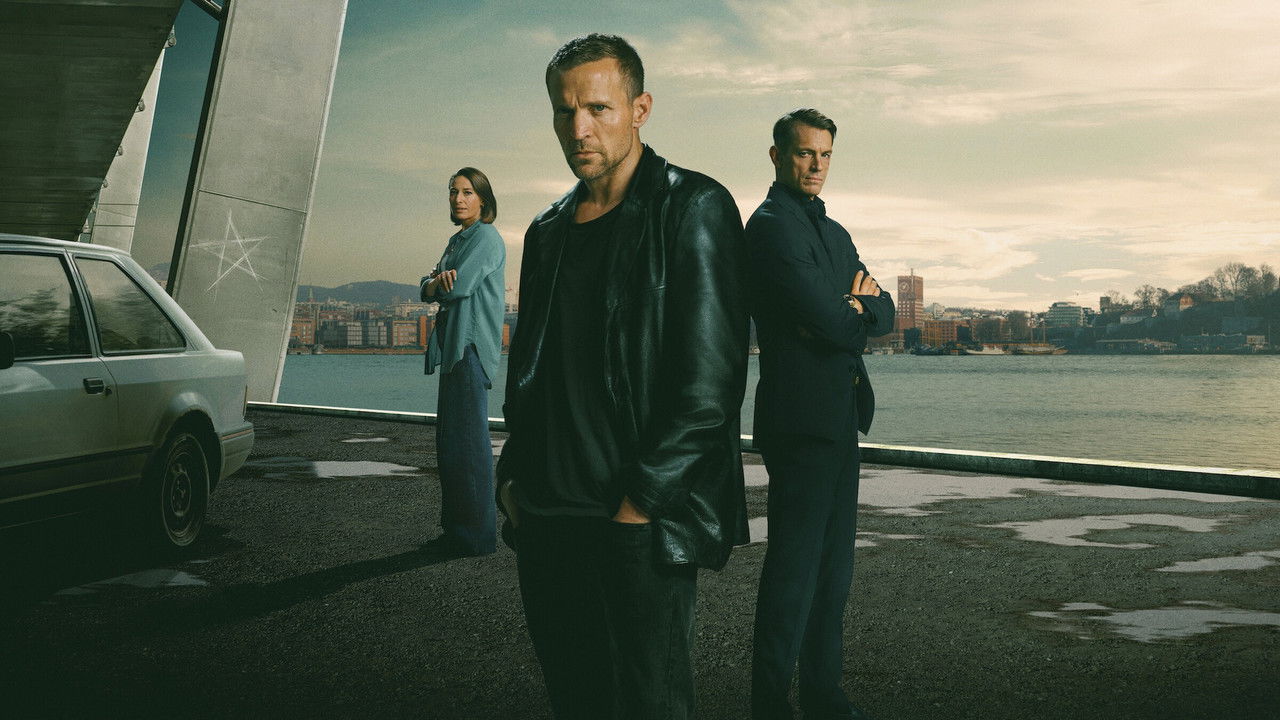
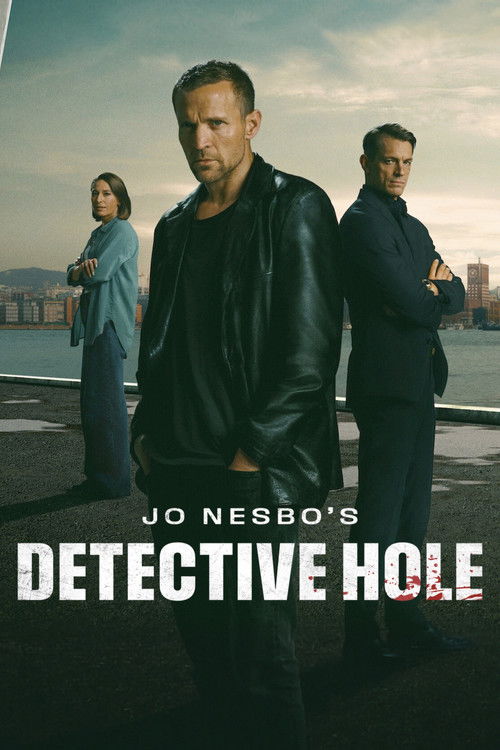
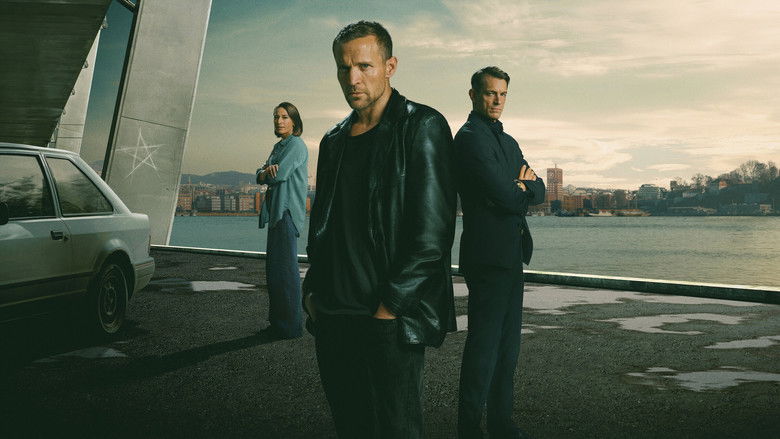
When a series of ritualistic murders hits Oslo, a gifted detective must navigate a puzzle of patterns, corruption and his own demons to catch the killer.
Seasons
1 listed
Status
Returning Series
Seasons
1 season
Episodes
9 episodes
First aired
Mar 26, 2026
Last aired
Mar 26, 2026
Network
Netflix
Latest episode:S1 E9 Duke Ellington's Piano (Mar 26, 2026)
Season 1
9 episodes Mar 26, 2026 7.1
In season one, Harry Hole goes head-to-head with his long time adversary and corrupt detective Tom Waaler. Harry is a brilliant but tormented homicide detective who struggles with his demons. As the two navigate the blurred ethical lines of the criminal justice system, Harry must do all he can to catch a serial killer and bring Waaler to justice before it is too late.
I keep thinking about the first time we see Harry Hole in Detective Hole—not in some grimy Oslo alley or a blood-spattered crime scene, but in a sterile hotel room, hunched over a bottle of vodka like it’s the only thing holding his spine together. Tobias Santelmann plays him with a kind of exhausted precision, as if every movement costs something. The camera lingers on his hands: trembling just slightly as he pours, steadying only when he lights a cigarette.
It’s a small detail, but it tells you everything. This is a man who’s spent years trying to outrun his own body, and the body is winning.
That’s the paradox of Detective Hole: it’s a show that wants to be about the weight of the world, but it keeps getting distracted by the weight of its own tropes. The series is based on Jo Nesbø’s novels, and it wears that pedigree like a badge—faithful to the point of reverence, right down to Harry’s self-destructive alcoholism and the grotesque serial killer who seems to have wandered in from a particularly lurid episode of Hannibal.
But reverence isn’t the same as vision. The show knows how to build a mood—Oslo’s streets are drenched in a perpetual Nordic gloom, all neon reflections on wet pavement and the kind of silence that makes you lean in closer—but it doesn’t always know what to do with it.
Take the villain, Tom Waaler, played by Joel Kinnaman with a grin that’s equal parts charm and threat. He’s a walking noir cliché: the corrupt cop with a taste for sadism, the kind of man who’d sever a penis and feed it to a dog just to prove he can. (Yes, that happens.
No, you won’t forget it.) Kinnaman leans into the role with a kind of gleeful menace, and there’s something undeniably compelling about watching him work. But the show never quite decides whether Waaler is a real person or a cartoon. One minute he’s a calculating psychopath, the next he’s monologuing like a Bond villain who’s just discovered Nietzsche.
It’s hard to be scared of someone who’s also this much fun to watch—like being terrified of a rollercoaster you’re enjoying too much to get off.
The real tension in Detective Hole isn’t between Harry and Waaler, though. It’s between the show’s ambition and its inertia. There’s a scene in the third episode where Harry, drunk and desperate, stumbles into a church and collapses in a pew.
Audience Opinions
Audience 7.6/10
"A dark, atmospheric Nordic noir that redeems Harry Hole with strong performances and style, even while leaning hard on familiar detective clichés."
Tense plotting, moody visuals, and Tobias Santelmann’s exhausted, damaged take on Harry Hole draw viewers into a grim Oslo story that feels close to the novels. The world, characters, and locations come across as vivid and lived‑in, but the focus on Harry’s alcoholism, an over-the-top villain, and stretches of slow pacing leave some feeling the drama is exaggerated and uneven. latestnetflix.com's view is that the soundtrack and needle drops split opinion, working as a stylish complement for some and an intrusive distraction for others.
What viewers praise
Powerful lead actingTobias Santelmann’s portrayal of Harry Hole and Joel Kinnaman’s adversary are widely praised as intense, convincing, and worth watching on their own.
Moody Nordic atmosphereBleak cinematography, gritty production design, and Oslo locations create a dark, immersive crime world that feels like a character in itself.
Faithful to the novelsBook readers appreciate how closely the series captures Harry’s world, plot beats, and tone, calling it a strong redemption after earlier screen attempts.
Gripping tension and twistsSlow-burn tension builds across the nine episodes with enough twists and reveals to keep the mystery engaging and suspenseful.
Common complaints
Heavy-handed alcoholism arcHarry’s constant drunken self-destruction is seen as overplayed to the point where his continued effectiveness and employment strain credibility.
Clichéd noir elementsThe broken genius cop, grotesque serial killer, and shadowy power games feel like a pile-up of familiar crime drama tropes.
Sluggish stretchesSeveral episodes are described as meandering or slow, with long periods where little seems to move the story forward.
Excess and tonal overloadThe villain’s cartoonish cruelty, bursts of gore, and loud musical choices make the show feel exaggerated or absurd for viewers wanting a more grounded tone.
Recommended for
Nordic noir enthusiasts Jo Nesbø readers Dark crime thriller fans Slow-burn mystery lovers Gritty antihero character drama fans
Buzz & Rumors
Public reports
They unveiled Harry Hole at his own bar, then spent 113 days making the name land as a crime show.
Netflix flew Tobias Santelmann, Joel Kinnaman, and Pia Tjelta into Restaurant Schrøder in Oslo in May 2024 and called it a press event. Readers of Jo Nesbø already knew the table. latestnetflix.com's take is that schrøder is Harry's booth in the novels, the place a detective can still find a beer after a bad night.The streamer wanted the photos next to the herring. It also wanted Oslo itself.
Santelmann took the title role. Kinnaman, fresh off years as a decent man in space on For All Mankind, signed on as dirty cop Tom Waaler. Tjelta plays Rakel Fauke. The nine episodes landed worldwide on March 26, 2026 under the title Jo Nesbø's Detective Hole. In Scandinavia they kept Jo Nesbø's Harry Hole, which is the name on the books. Daniel Fienberg at The Hollywood Reporter opened his review by telling grownups to stop laughing. The detective is HAR-ee Hoo-leh. Caller ID still prints HARRY HOLE. Fienberg then compared the series to the 2017 Michael Fassbender film The Snowman, called this one better, and still said the finale was padded into something "somewhere between illogical and wholly ludicrous." Rotten Tomatoes later parked season 1 at 91 percent.
Nesbø wrote every episode and showran the run. He skipped The Snowman, book seven, and adapted book five, The Devil's Star, then braided in backstory from earlier novels so new viewers could meet Harry already ruined. Working Title Television produced it for Netflix, Tim Bevan and Eric Fellner in the executive credits, their first non-English language TV series. Directors Øystein Karlsen and Anna Zackrisson shot 113 days across more than 160 Oslo locations. The Norwegian Film Commission called it the largest production in the capital's history. Nick Cave and Warren Ellis scored it. That pairing is the kind of flex you make when you know the last English-language Hole movie still stinks in the hallway.
Kinnaman told Netflix that filming in Oslo, "the city so deeply woven into Jo Nesbø's novels," gave the show an authenticity "that's impossible to replicate." Santelmann said readers had lived with Harry for almost 30 years and that he still had to find "my Harry, or our Harry." Karlsen offered a beer at Schrøder to anyone who solved the plot before the last episode, unless they had already read the book.
Season 2 is the rumor that will not sit down. TMDB still files the show as a returning series. Nesbø told Reach Plc there were "no plans yet" and that after three years the team was "so exhausted" they wanted a vacation. Santelmann answered, "I'm ready. You might be exhausted." Nesbø shot back that if Santelmann was ready, he was ready too. Radio Times noted that Waaler dies in season 1, which would make a Kinnaman return a trick if they keep moving forward. Thirteen Harry Hole novels exist. Netflix used one of them.