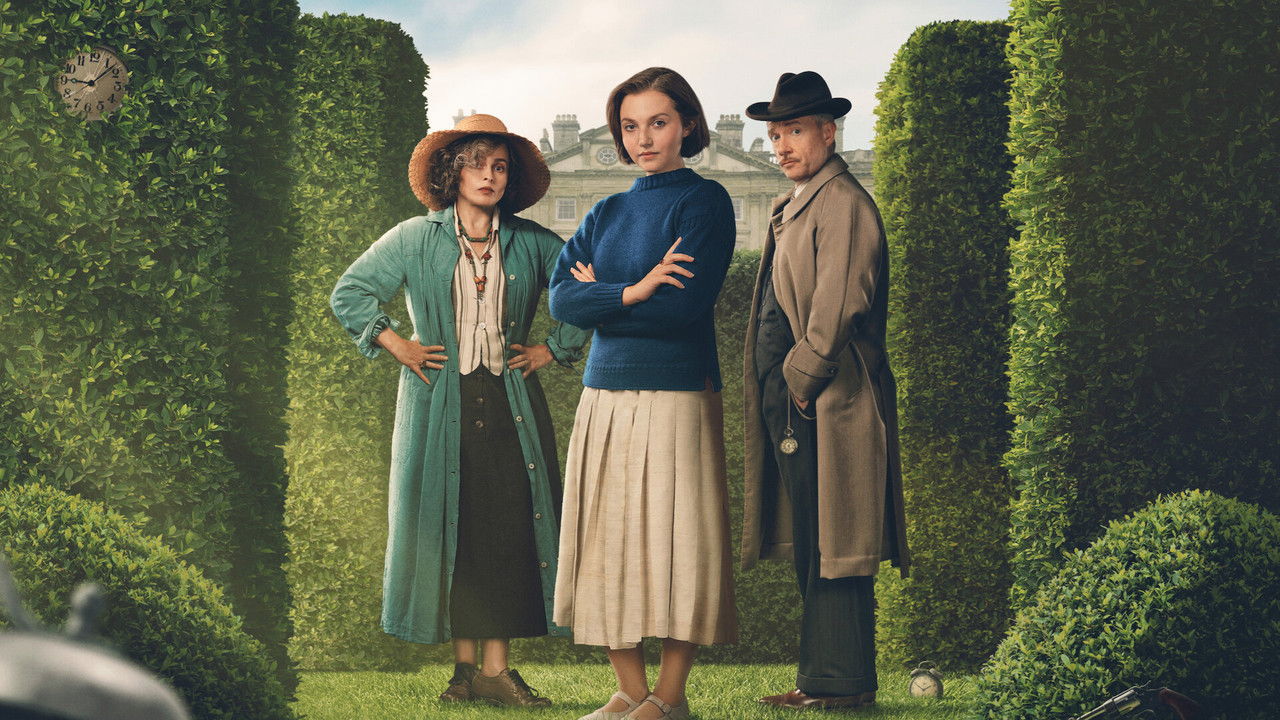
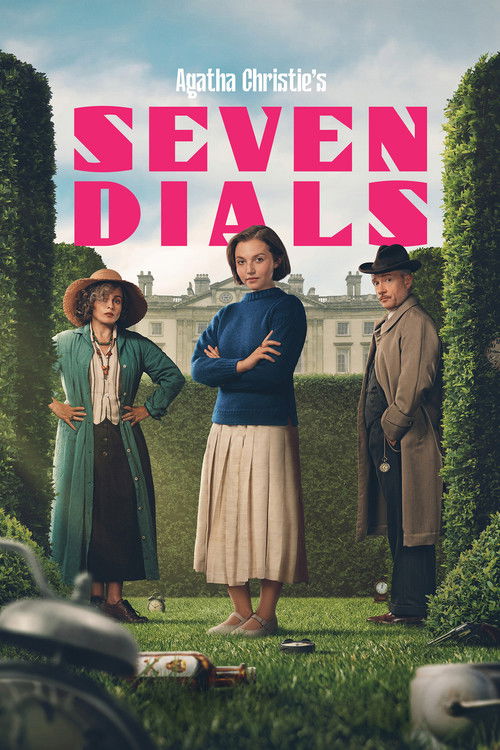
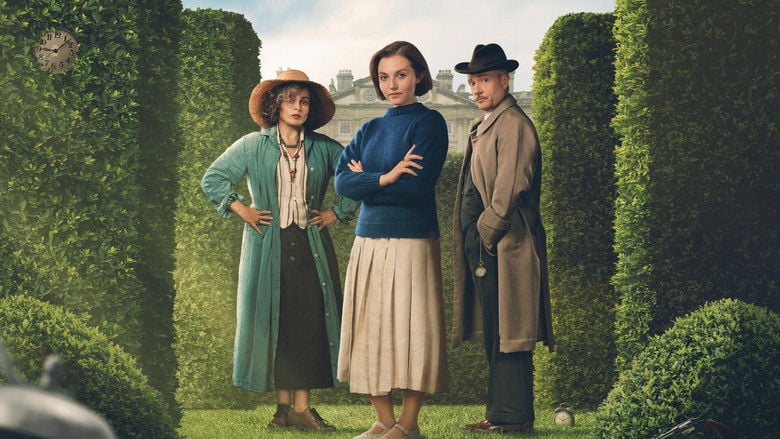
England, 1925. At a lavish country house party, a practical joke appears to have gone horribly, murderously wrong. It will be up to the unlikeliest of sleuths—the fizzingly inquisitive Lady Eileen 'Bundle' Brent—to unravel a chilling plot that will change her life, cracking wide open the country house mystery.
Seasons
1 listed
Status
Ended
Seasons
1 season
Episodes
3 episodes
First aired
Jan 15, 2026
Last aired
Jan 15, 2026
Network
Netflix
Latest episode:S1 E3 The Finger Points (Jan 15, 2026)
Miniseries
3 episodes Jan 15, 2026★ 5.7
England, 1925. At a lavish country house party, a practical joke appears to have gone horribly, murderously wrong. It will be up to the unlikeliest of sleuths—the fizzingly inquisitive Lady Eileen 'Bundle' Brent—to unravel a chilling plot that will change her life, cracking wide open the country house mystery.
My relationship with the modern Agatha Christie industrial complex. We seem stuck in a loop of resuscitating her novels, either dusting them off with agonizing reverence or completely ripping them down to the studs to prove how "relevant" they can be. Now comes Agatha Christie's Seven Dials, a three-part Netflix adaptation by Chris Chibnall.
After spending a few years hurtling through time and space as the showrunner of Doctor Who, Chibnall has returned to the genre that actually made his name with Broadchurch: the grim business of murder. But this is not a dour coastal tragedy. It's 1925, the champagne is flowing, and the aristocracy is desperately trying to forget the Great War.
Whether that friction actually sparks or just creates a lot of smoke depends entirely on your tolerance for narrative whiplash.
The setup is a classic country-house contrivance. Lady Caterham—played by Helena Bonham Carter with a sort of weary, patrician autopilot that I honestly found rather comforting—is hosting a gaggle of new-money industrialists and government lackeys at her decaying estate. Her daughter, Lady Eileen "Bundle" Brent, watches the parade of forced gaiety with an outsider’s smirk.
Then, of course, a body is found. Gerry Wade (Corey Mylchreest) turns up dead in his bed after a prank involving a ridiculous number of alarm clocks goes sour. The local constabulary writes it off as a tragic suicide linked to his wartime trauma.
Bundle refuses to buy it. She starts asking questions. (Because they always do, do not they?)
Audience Opinions
Audience 6.1/10
"Lavish 1920s visuals and a game cast wrap a cosy, twisty whodunnit whose slow pace and uneven character work leave it short of classic Christie status."
Period atmosphere, costumes, and locations draw a lot of praise, and the three-episode structure is seen as easy to binge, with several calling the final episode’s twists satisfying and the mystery fun once it gets going. At the same time, pacing is often described as flat or overly slow, the plotting feels either meandering or underpowered for a Christie story, and character writing—especially beyond Bundle—comes off as superficial or awkward despite some strong acting. Opinions on Mia McKenna-Bruce are sharply split, with some finding her energetic and engaging and others calling the performance grating or lacking charisma, which strongly colors overall enjoyment.
What viewers praise
Rich period atmosphereCostumes, sets, and locations are widely admired for creating an immersive, stylish 1920s world.
Bingeable three-episode formatThe short, self-contained three-part structure is appreciated as a neat, easy weekend watch.
Enjoyable twists and finaleSeveral reviews single out the later twists and final episode as clever, surprising, and satisfying.
Standout supporting actorsMartin Freeman and Helena Bonham Carter are frequently noted as charismatic presences who lift their scenes.
Fun cosy mystery toneFor those not demanding a tightly wound thriller, the light, cosy-mystery feel with a young amateur sleuth proves entertaining.
Common complaints
Sluggish pacingThe story is often described as boring or testing the viewer’s patience, with tension and urgency never fully kicking in.
Underwhelming mysteryThe investigation is criticized as weak, with plot holes, easy-to-spot twists, or a meandering structure that does not meet Christie expectations.
Divisive heroineBundle’s characterization and performance split opinion, with some finding her delightful and others finding her irritating, shallow, or unconvincing as a detective.
Thin character developmentBeyond the lead, many supporting characters feel generic or superficial, wasting a strong ensemble.
Modern and tonal clashesA portion of viewers dislike perceived modern sensibilities and certain adaptation choices that feel out of step with the original novel and period tone.
Recommended for
Cozy period mystery fans Light binge-watch seekers British costume drama lovers Martin Freeman admirers Helena Bonham Carter followers
When Netflix promised “secrets, scandals and twists” with Agatha Christie’s Seven Dials, they weren’t just talking about the plot. From a literally deadly staircase to furious Christie purists and thirsty TikTok shippers, the drama off-screen is almost as messy as the murder on it.
On-Set Drama: The Staircase of Doom
The most shocking “body” connected to Seven Dials wasn’t in the script. Lead actress Mia McKenna-Bruce (Bundle) actually broke her right foot while filming at the stately Badminton House in Gloucestershire, tumbling on what she and co-star Helena Bonham Carter reportedly called a “lethal” staircase .
The staircase is apparently so dangerous that even the house’s owner, the Duke of Beaufort, supposedly avoids using it [1].
YTYouTube·Agatha Christie's Seven Dials: How They Hid a Br…
Production didn’t shut down: they hid Mia’s injury with long coats, careful blocking, and clever camera angles. A later behind-the-scenes breakdown of the show even highlighted how they “hid a broken foot” on screen as part of the production magic [14].
Cast Feuds & Tea: Chibnall vs. The Christie Faithful
If you’re hunting for screaming matches in the trailers, you’re looking in the wrong place. The real feud is between writer Chris Chibnall and sections of the fandom.
Multiple Reddit threads brand the show “insufferable” and a “dreadful adaptation,” accusing Netflix of turning a light, witty detective romp into something grim and ponderous .
Fans were especially enraged that the series invents a new mastermind: in the show, Bundle’s mother Lady Caterham becomes the puppet master behind the conspiracy, a twist totally absent from the book [7].
One long-form comparison called the show “a stacked cast with nothing to do,” filing Seven Dials under the growing category of “Netflix adaptations that don’t really get the source material” .
Romance Rumors & Ship Wars
In real life, Mia McKenna-Bruce is firmly off the market: she married fellow actor Tom Leach in 2024 and they share a son . That hasn’t stopped viewers from aggressively shipping her with her co-stars.
TikTok and Instagram are flooded with edits and clips of Mia with Corey Mylchreest (Gerry Wade), thanks to their tragic on-screen almost-romance. Netflix Tudum even leans into their chemistry, openly describing their scenes as charged with “romantic chemistry” .
At the same time, Netflix’s promo machine continually pairs Mia with Edward Bluemel (Jimmy). BuzzFeed and TikTok videos show the two doing pub quizzes, oversharing about “adulting” and dating icks, and generally acting like a romcom duo that accidentally wandered onto a murder set .
Fan speculation stays mostly in fantasy territory: Corey Mylchreest has been heavily linked in the gossip ecosystem to My Oxford Year co-star Sofia Carson, with TikTok explicitly touting them as “dating” in promotional clips for that film .
Scandals & Controversies: The Ending That Broke the Internet (a Little)
The biggest “scandal” isn’t a DUI or a secret baby; it’s story heresy.
Book readers were outraged that Netflix changed the ending, making Lady Caterham the architect of the Seven Dials plot and removing Bundle’s book-canon romantic ending with Bill Eversleigh [7].
Articles and think-pieces pile on, arguing that the show “wastes” Christie’s killer premise and saddles it with Netflix-ified melodrama [6][8].
A widely shared Medium essay accuses the show of having “many of the same problems that plague most Netflix adaptations,” citing muddled tone and underused stars despite the prestige cast [8].
Over on Reddit, there’s an ongoing mini-war between viewers who find it “cosy escapism” and die-hard Christie fans calling it a joyless misreading of a very fun, underrated novel [2][7].
Leaks, Cuts & Fan Theories
Book vs. show breakdowns have become their own cottage industry. Fans and critics have mapped out what was trimmed or transformed:
The dramatic Seven Dials Club confrontation from the novel is heavily reduced in the series .
The novel’s neat romantic epilogue, where Bundle marries Bill and joins the club, vanishes completely—replaced by a darker, more ambiguous finale [7][9].
YouTube essayists and mystery bloggers argue that by reframing the Seven Dials Society and rewriting key motivations, Netflix essentially “changed the point of the story”, sparking ongoing fan-theory debates about who should have been the real villain [9].
There’s unconfirmed fan speculation—based on the way Jimmy’s shooting is staged and discussed in reviews—that a more conclusive alternative ending may have been filmed but left on the cutting-room floor. No official confirmation, but the theorizing is relentless [10][9].
Wild Trivia & Odd Little Obsessions
IGInstagram·Did you know Helena Bonham Carter wore her own s…
Helena Bonham Carter apparently wore her own shoes on set for Lady Caterham, with one Instagram reel noting her habit of bringing her signature footwear rather than relying on period costume heels [11].
Location nerds have gone feral: filming in Bath, Bristol, Somerset and The Bottle Yard Studios has spawned dedicated “Seven Dials walking tours” and behind-the-scenes location blogs .
Some period-drama fans insist that Martin Freeman and Helena Bonham Carter “carried” the show, with one Reddit commenter bluntly stating that if they weren’t in a scene, “it wasn’t a good scene” .
The whole broken-foot saga got so much attention that a YouTube video dissecting how the production disguised Mia’s injury became low-key required viewing for behind-the-scenes obsessives [14].
In short: no giant cheating scandals, no lawsuits, no public cast meltdowns—but Seven Dials has quietly built a reputation as the Agatha Christie adaptation that broke a foot, broke canon, and broke the fanbase into warring camps, all while TikTok tried to decide who, exactly, Mia McKenna-Bruce should be fake-married to next.
Entertainment rumors and trivia aggregated from public reporting. Treat speculation as
unverified unless a cited source confirms it.