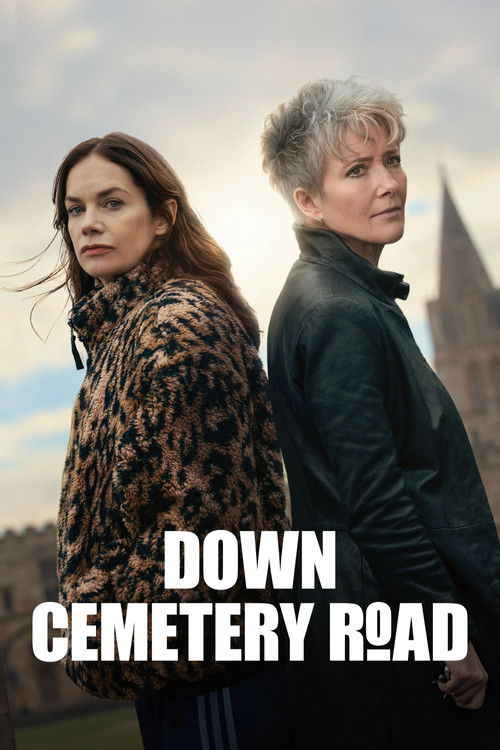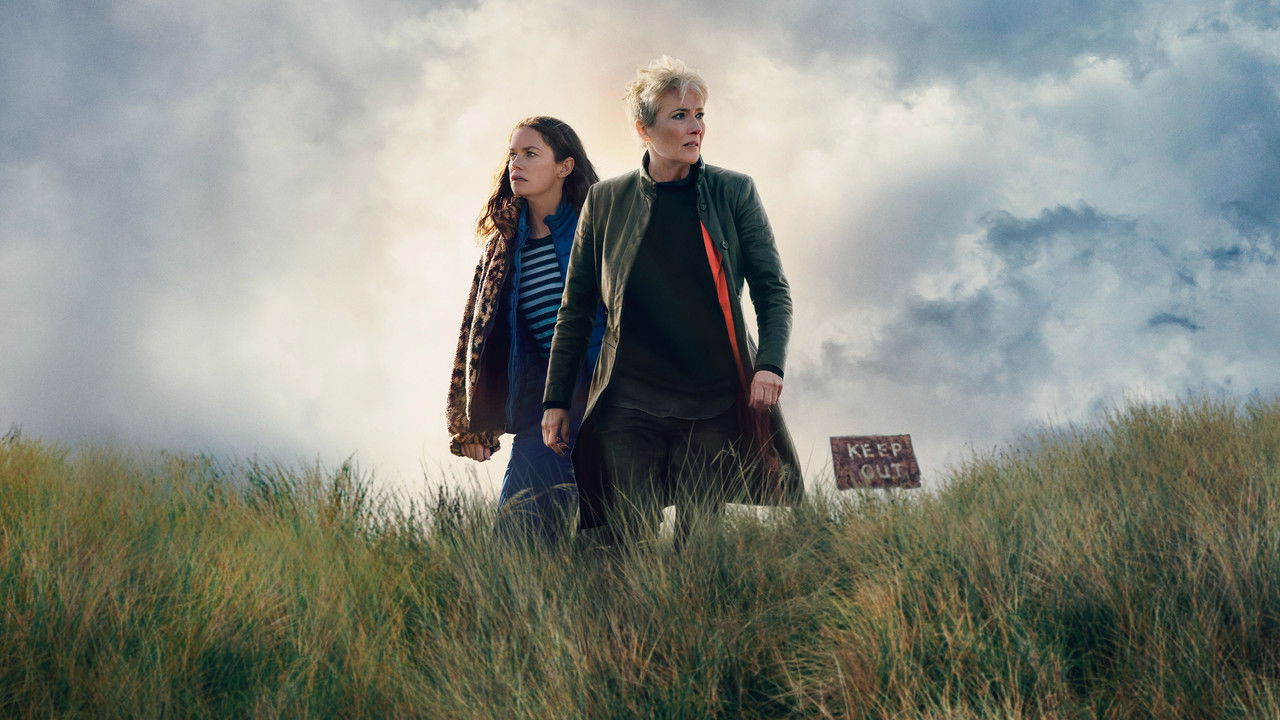

The Spiky Art of Not Giving a DamnA leather jacket can read as style, but on Emma Thompson in *Down Cemetery Road* it feels more like body armor. The first time she drifts into frame in Apple TV+'s series, she isn't wearing the clothes so much as sheltering inside them. Her hair is chopped into hard silver spikes, and her slouch carries the air of someone who expects disappointment before anybody even speaks. She plays Zoë Boehm, a private investigator so prickly she treats the world like background noise she never asked for. I've seen Thompson do queens, romantics, and iron-willed matriarchs, but watching her shred a suspect's alibi without pretending to like anyone in the room is a pleasure of its own.

This is unmistakably Mick Herron territory. He gave us the grubby espionage brilliance of *Slow Horses*, but this story actually came first, back in 2003. Morwenna Banks adapts it here as a kind of cousin to Slough House, swapping London's intelligence basements for the neat, unsettling calm of Oxford suburbia. The opening jolt is blunt enough—a house explodes in the middle of the night and a girl named Dinah disappears into the smoke—but the series is less interested in the blast than in what it shakes loose afterward.
Ruth Wilson enters as Sarah Tucker and changes the temperature right away. If Thompson is the weight holding the show down, Wilson is the exposed wire. Sarah is an art conservationist trapped in a marriage so beige it practically hums. (I'm not sure Wilson has ever played anyone who wasn't vibrating with some hidden damage; even standing still, she looks slightly bruised by life.) When Sarah hires Zoë to find the missing girl, Wilson doesn't sell it as sudden bravery. She plays a woman so adrift that she grabs at purpose with both hands. Watch her riding that bicycle through Oxford—white knuckles, shoulders jammed up to her ears, the whole body carrying strain.

There’s an early scene that tells you exactly how the series works. Sarah and Zoë sit across from each other, talking through the military conspiracy they have stumbled into. Zoë barely looks at her. She studies the room instead, dropping foul, cutting observations as if they cost nothing, while Sarah leans forward like she needs permission to keep going. The camera doesn't do much showing off; it lets the bodies handle the scene. Thompson is all gravitational pull. Wilson is pure jittery momentum. Lucy Mangan, writing in *The Guardian*, called Thompson's investigator "a woman of flint and diamond," and that refusal to perform warmth feels less cruel than self-protective.
I'm less convinced when the show wanders away from them. The tone gets slippery in a hurry. Once the focus shifts toward the government operatives cleaning up the fallout, the whole thing wobbles. Darren Boyd and Adeel Akhtar play the bureaucratic villains behind the black-ops machinery, but they are pitched so broadly it can feel as if they have stepped in from an entirely different, sillier series. A little eccentricity is fine; set it next to the grief of a missing child, though, and the clash becomes hard to ignore.

Whether that tonal untidiness ruins it for you will come down to your appetite for British oddness. For me, most of the flaws disappear whenever Thompson and Wilson are back together. They turn a familiar mystery engine into something richer and stranger: a study of middle-aged female agency, jagged and alive. *Down Cemetery Road* doesn't try to reinvent detective fiction. It simply hands the wheel to two actresses who know exactly what to do with it. That was more than enough for me.