Star Trek backdrop
Star Trek poster

Star Trek

“To boldly go where no man has gone before”

8.0
1966
3 Seasons • 79 Episodes
Sci-Fi & FantasyDrama

Overview

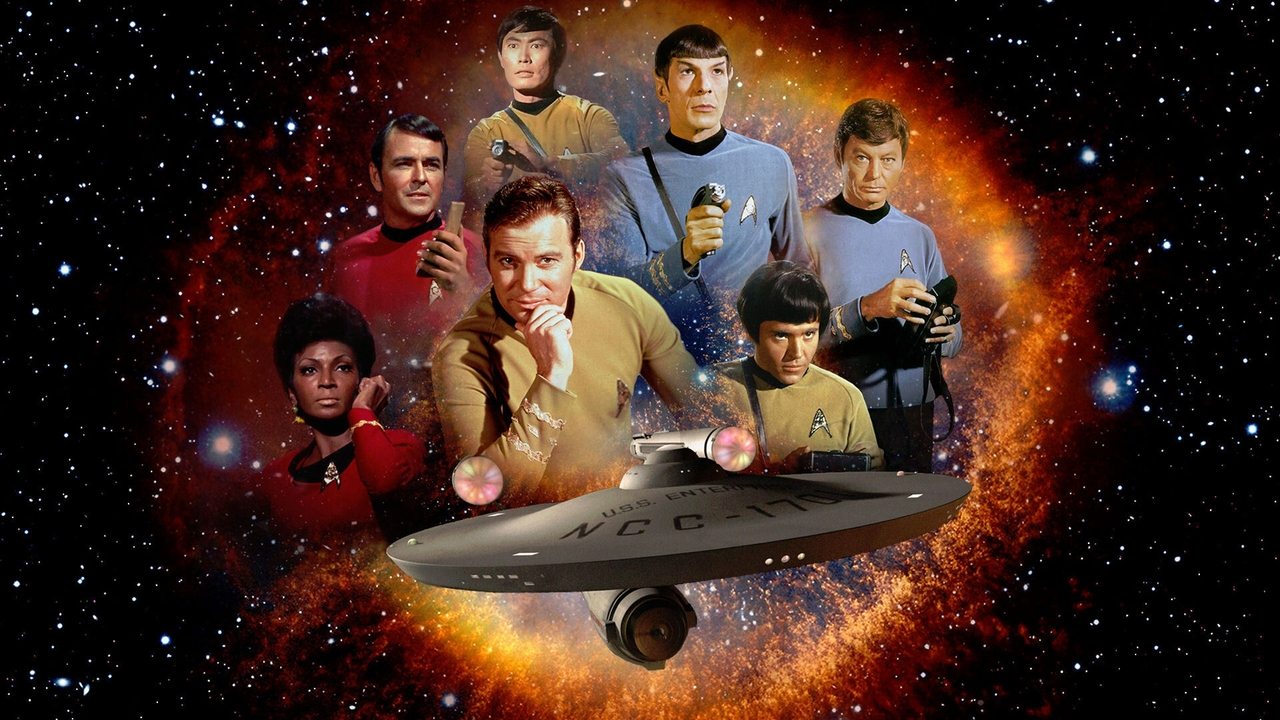
Space. The Final Frontier. The U.S.S. Enterprise embarks on a five year mission to explore the galaxy. The Enterprise is under the command of Captain James T. Kirk with First Officer Mr. Spock, from the planet Vulcan. With a determined crew, the Enterprise encounters Klingons, Romulans, time paradoxes, tribbles and genetic supermen led by Khan Noonian Singh. Their mission is to explore strange new worlds, to seek new life and new civilizations, and to boldly go where no man has gone before.

Sponsored

Cast

Reviews

AI-generated review
The Horizon in a Soundstage

I'm not sure when *Star Trek* stopped being a television show and became a secular religion. Watching the original 1966 series now—all three seasons and 79 episodes of it—is a bizarrely intimate experience. We're so used to the slick, multi-million-dollar gloss of modern franchise filmmaking that returning to the primary colors and papier-mâché boulders of Gene Roddenberry’s creation feels like walking into a community theater production. Still, there's a gravity to it. A weird, undeniable pull. You can clearly see the seams in the costumes and the paint on the flat sets, but you never for a second doubt the earnestness of the people standing in front of them.

The bridge of the Enterprise

Roddenberry famously pitched the show to NBC executives as a "Wagon Train to the Stars". It was a clever Trojan horse. By dressing up his social anxieties in velour and pointing them at the cosmos, he bypassed network censors who would have otherwise balked at prime-time discussions of civil rights, the Vietnam War, and the looming threat of nuclear annihilation. The budget was practically non-existent. That poverty of resources actually forced the series to be cerebral rather than spectacular. They simply couldn't afford to blow up a planet every week, so they had to sit in a brightly lit room and argue about the ethics of doing so instead.

You see this tension perfectly realized in "The City on the Edge of Forever." It's an episode fans always bring up, and for good reason. Captain Kirk and Mr. Spock are trapped in 1930s America. Kirk falls in love with a pacifist social worker, Edith Keeler, played with luminous fragility by Joan Collins. But Spock’s crude tricorder calculations reveal a grim historical pivot. If Edith lives, she delays America’s entry into World War II, allowing Nazi Germany to win. To save his own timeline, Kirk has to let the woman he loves walk in front of a speeding truck. The climax isn't a laser battle. It’s William Shatner’s physical body caught in an agonizing paralysis. When Dr. McCoy lunges forward to save Edith, Kirk physically grabs him. Watch Shatner’s face in that split second. He doesn't just look sad; he looks physically sick. His jaw locks, his eyes shut tight against the screech of tires. He is holding back his best friend to enforce a murder. It’s a moment of astonishingly dark television for 1967.

Kirk and Spock on an alien world

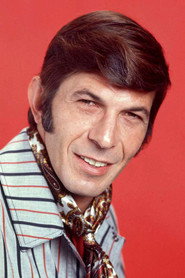
Shatner gets a lot of grief for his staccato delivery and theatrical posturing, but the man understood the assignment. He acts with his chest thrust forward, leaning into every command as if he's physically pushing the starship through space. But it’s Leonard Nimoy who anchors the entire endeavor. As the half-human, half-Vulcan Spock, Nimoy had the impossible task of playing a creature utterly devoted to logic who is constantly betraying his own buried emotions. Nimoy's genius was in the microscopic tension of his facial muscles. An arched eyebrow or a rigidly held spine conveyed more internal conflict than a monlogue ever could. As a critic for *Maclean's* astutely pointed out, Nimoy "gave the impression that the character was too big, too deep, to be contained by the limits of a self-contained 50-minute episode".

Before this, Nimoy had spent years kicking around Hollywood in bit parts—playing cowboys, gangsters, and the occasional alien. You can sense that working-actor discipline in how still he forces himself to be. He rarely fidgets. He commands space by simply refusing to move.

The Enterprise in orbit

Sometimes I wonder if the cultural memory of *Star Trek* is actually better than the show itself. There are episodes here that are undeniably clunky, bogged down by repetitive space-god tropes and pacing that moves like molasses. (Whether that slow burn is a flaw or a feature depends largely on your patience for mid-century television rhythms.)

Yet, I keep coming back to the basic decency at the core of the premise. This wasn't a cynical, battle-scarred vision of tomorrow. The Federation, for all its bureaucratic quirks, was an argument that humanity might actually survive its own adolescence. They believed we would outgrow our bigotry, stop fighting over borders, and eventually fly out into the dark just to see what was out there. That kind of unironic hope feels almost radical right now. It's a messy, flawed, and deeply human piece of television, and I find myself missing its brightly lit optimism long after the static fades.

Featurettes (1)

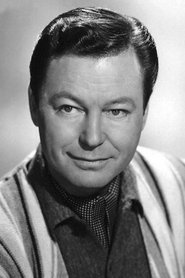
A Farewell - DeForest Kelley - A Tribute

Behind the Scenes (22)

Walter Koenig on his "Star Trek" co-stars - TelevisionAcademy.com/Interviews

Walter Koenig on his "Star Trek" character Pavel Chekov - TelevisionAcademy.com/Interviews

Walter Koenig on getting cast on "Star Trek" - TelevisionAcademy.com/Interviews

An Interracial Kiss Nearly Sank Star Trek. Then George Takei Brought Up Homosexuality.

James Doohan interview on British TV in 1989

Nichelle Nichols on how Dr. MLK, Jr. dissuaded her from quitting Star Trek - EMMYTVLEGENDS.ORG

George Takei discusses his "Star Trek" co-star Walter Koenig - EMMYTVLEGENDS.ORG

George Takei discusses his favorite Star Trek episode Naked Time - EMMYTVLEGENDS.ORG

George Takei discusses getting cast on Star Trek - EMMYTVLEGENDS.ORG

George Takei discusses Gene Roddenberry- EMMYTVLEGENDS.ORG

Ricardo Montalban on the inspiration for "Khan", a role he reprised on Star Trek

Nichelle Nichols on how Star Trek's "Uhura" got her name - EMMYTVLEGENDS.ORG

Nichelle Nichols discusses "Uhura" from Star Trek- EMMYTVLEGENDS.ORG

Nichelle Nichols on auditioning for Star Trek- EMMYTVLEGENDS.ORG

Nichelle Nichols on filming the first interracial kiss on American television

Nichelle Nichols on the beginning of Star Trek - EMMYTVLEGENDS.ORG

Leonard Nimoy discusses the Star Trek pilot - EMMYTVLEGENDS.ORG

Leonard Nimoy discusses Star Trek's Mr. Spock - EMMYTVLEGENDS.ORG

Leonard Nimoy on Spock's make-up on Star Trek - EMMYTVLEGENDS.ORG

Leonard Nimoy on developing "Star Trek's" Spock character - EMMYTVLEGENDS.ORG

Leonard Nimoy discusses Mr. Spock's "Star Trek" signature moves - EMMYTVLEGENDS.ORG

Leonard Nimoy discusses the Star Trek feature films - EMMYTVLEGENDS.ORG