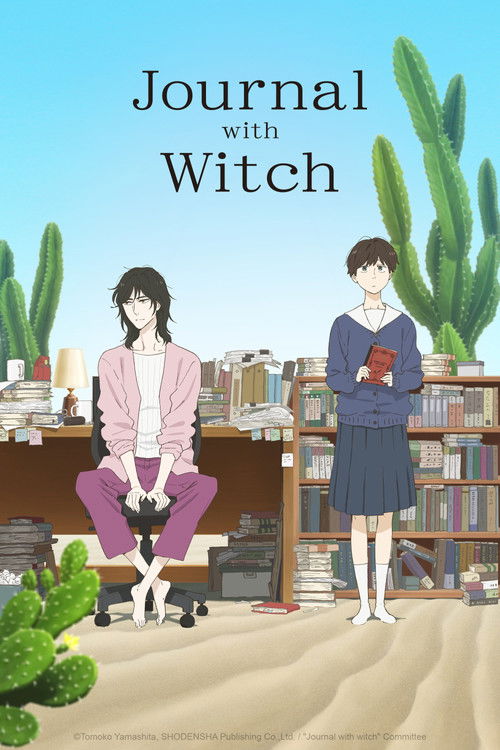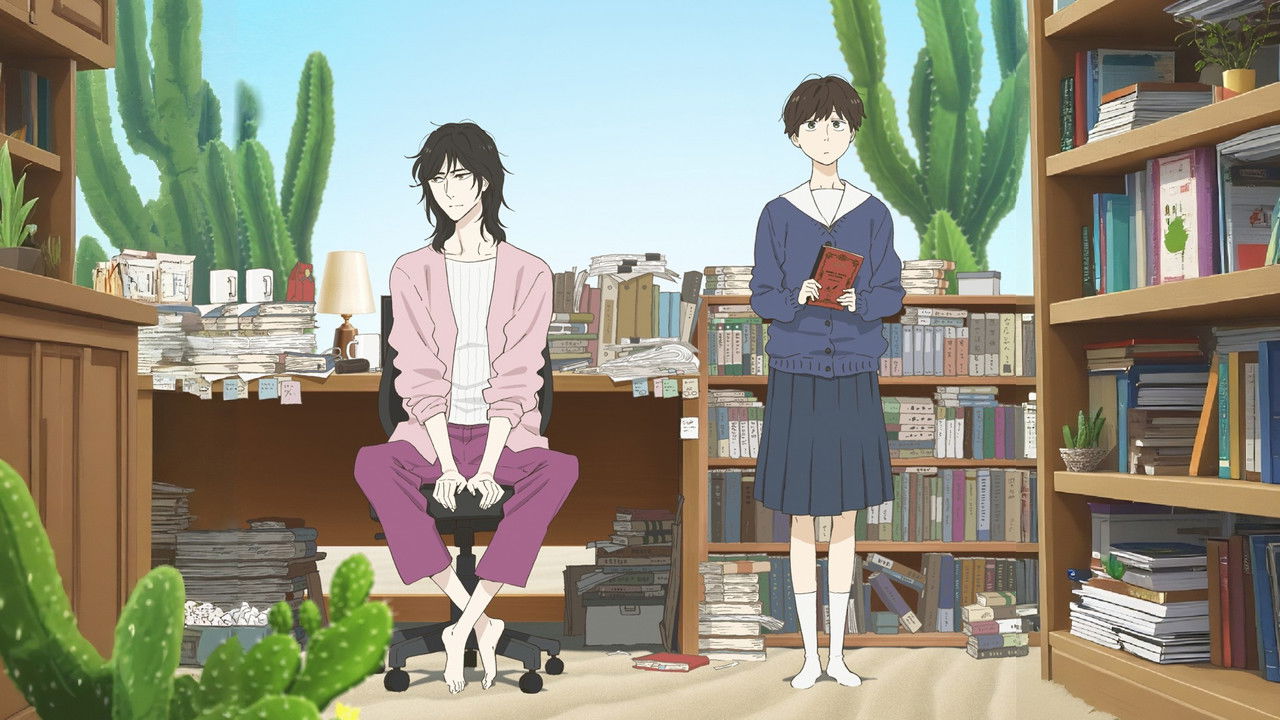

Journal with Witch backdrop
Journal with Witch poster

Journal with Witch

8.9
2026
1 Season • 13 Episodes
AnimationDrama
Director: Miyuki Ooshiro

Overview

Reclusive novelist Makio Koudai has always preferred the company of books—but when her sister and brother-in-law pass away, Makio unexpectedly becomes the guardian of her 15-year-old niece, Asa Takumi. As they navigate grief, clashing personalities, and the challenges of living together, the two slowly open their hearts to each other, discovering warmth, understanding, and the meaning of family.

Sponsored

Trailer

Official Trailer [Subtitled] Official

Cast

Reviews

AI-generated review
The Architecture of Empty Rooms

I’ve been thinking a lot lately about how rarely television allows people to simply sit inside silence. Not thriller silence, not the kind that announces something awful is seconds away, but the ordinary, leaden quiet of a Tuesday afternoon when somebody has died and somebody else no longer knows what to do with their hands.

*Journal with Witch* (a truly baffling English localization of *Ikoku Nikki*, which lands closer to "Diary of a Strange Land") understands that kind of silence completely. Directed by Miyuki Oshiro at Studio Shuka, this 13-episode adaptation of Tomoko Yamashita’s manga has very little interest in the usual found-family melodrama anime tends to reach for. It’s about grief, yes. But even more than that, it’s about the tiring, unglamorous mechanics of having to share your physical space with another person.

A cluttered apartment bathed in morning light

There’s an early scene I keep turning over in my head. Asa, fifteen years old and newly orphaned, is making breakfast in her aunt’s unfamiliar kitchen. She starts singing to herself, bright and messy and a little off-key. Then it hits her that Makio is in the next room, still up after an all-nighter, pounding away at a manuscript. Asa stops cold and apologizes for making noise. In a weaker show, Makio would snap, and we’d be on the rails of a familiar conflict-then-softening arc. Instead, Makio pauses in her exhausted awkwardness and asks Asa if she can sing something by Justin Bieber.

It’s such an odd, precise beat. (And yes, it’s strangely refreshing to hear a real pop star get mentioned in a medium that usually hides behind obvious copyright-safe knockoffs.) But it tells you nearly everything about Makio. She has no idea how to be a mother. Honestly, she barely seems comfortable being an adult. Still, in her own painfully clumsy way, she is trying to make room for this girl. As critic Aqua at The Glorio Blog noted, the series works less like standard anime and more like "a contemplative art-house film." I’d put it even more plainly than that. It’s just two people figuring out how to breathe the same air.

Two figures standing awkwardly in a kitchen

A lot of that fragile emotional balance comes down to Miyuki Sawashiro. If you watch anime, you almost certainly know her voice. She’s spent years playing sultry legends and untouchable badasses, from Fujiko Mine in *Lupin III* onward. So seeing her shift into Makio, a 35-year-old novelist with awful posture, no domestic instincts, and what reads like a deep neurodivergent resistance to social contact, feels genuinely startling. Just watch the animation in her shoulders. They stay pulled up toward her ears, like she’s bracing for impact every time someone comes to the door. When she takes Asa in at the funeral, cutting across the relatives gossiping about sending the girl into foster care, it doesn’t come from soft maternal instinct. It comes from a hard, angular burst of justice. "I can't be your mother," she essentially tells Asa. "But I will never abandon you."

Sawashiro doesn’t play that with sweeping heroism. She plays it with the tired panic of someone who has just realized they bought a dog and have no clue what it eats. Across from her, newcomer Fuko Mori gives Asa a beautifully rough edge. Teenagers in grief do not cry with cinematic elegance. They get restless. They get hungry. They blurt out the wrong thing. Mori catches that jittery, bouncing energy exactly, and Asa ends up feeling uncannily real.

A teenager staring out a train window

Holding all of this together is Kensuke Ushio’s score. Ushio, who also composed *A Silent Voice* and *Chainsaw Man*, has a gift for music that sounds like a heartbeat trying to steady itself. Here he leans on sparse, nearly experimental acoustic plucks that feel as tentative as the people onscreen. The score never dictates emotion. It just stays there with you while you sort your own out.

Whether that slow, deliberate pace works will depend entirely on how much anti-drama you can tolerate. There are no giant revelations. No rain-soaked embraces where years of pain suddenly evaporate. I’m not even sure the final episode offers anything you’d call a conventional resolution. But that feels beside the point. *Journal with Witch* doesn’t treat grief like a mystery waiting to be solved. It treats it like a room you eventually learn to live inside. And honestly, I thought it was a pretty beautiful room to spend time in.