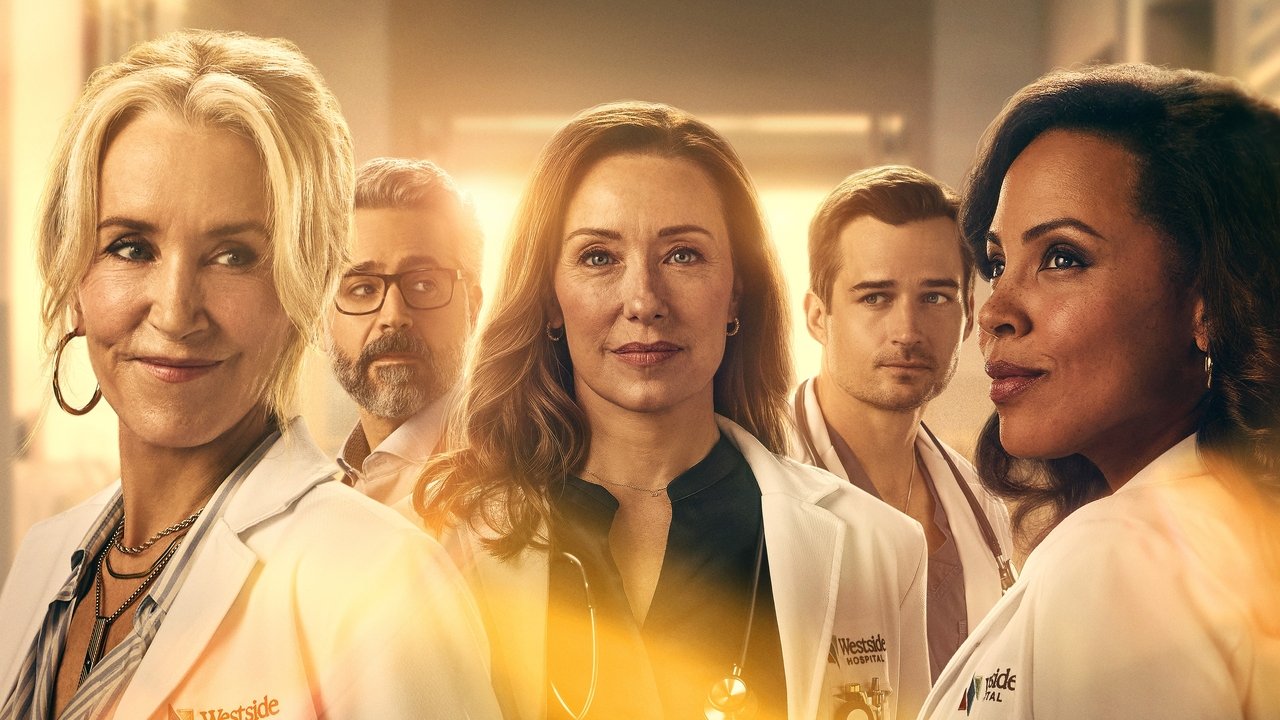

Season 1
10 episodes Jan 7, 2025 7.9
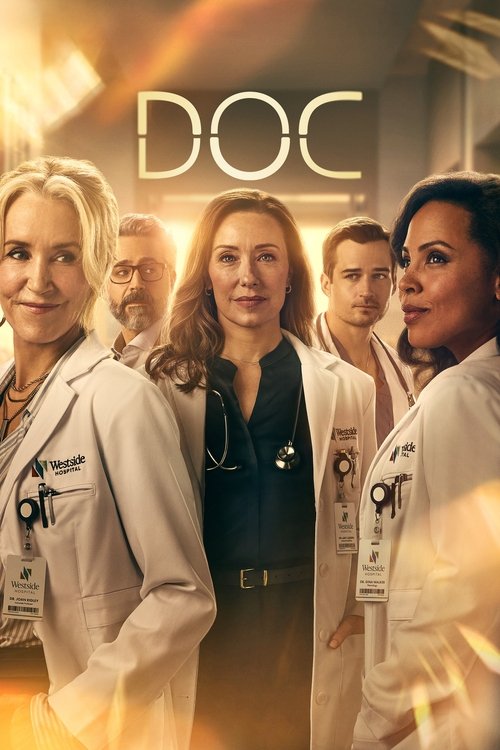
“Can your memories be trusted?”
Dr. Amy Larsen must navigate an unfamiliar world after a brain injury erases the last eight years of her life. She can rely only on her estranged 17-year-old daughter, whom she remembers as a 9-year-old, and a handful of devoted friends, as she struggles to continue practicing medicine, despite having lost nearly a decade of knowledge and experience.
Next episode: S3 E2 Ready or Not (Sep 29, 2026)
Latest episode: S3 E1 Wherefore Art Thou (Sep 22, 2026)
In the second season, powerhouse physician Dr. Amy Larsen continues to rebuild her life after eight years of her memory were erased. No longer Chief of Internal Medicine at Westside Hospital, Amy must restart her medical journey as an Intern in the hopes of becoming the doctor she once was. She'll confront hard truths about her missing years, work to repair fractured relationships, and seek to reconcile the person she used to be with the one everyone else has come to know.
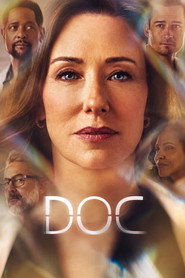
I’ve seen this trick before. A character wakes up in a hospital bed, the world slightly out of focus, and suddenly they don’t recognize their own life. It’s a reliable engine for drama—amnesia as a narrative reset button, a chance to ask: Who are you when you don’t know yourself? But what if the question isn’t just about memory?
What if it’s about the people who remember you better than you remember yourself?
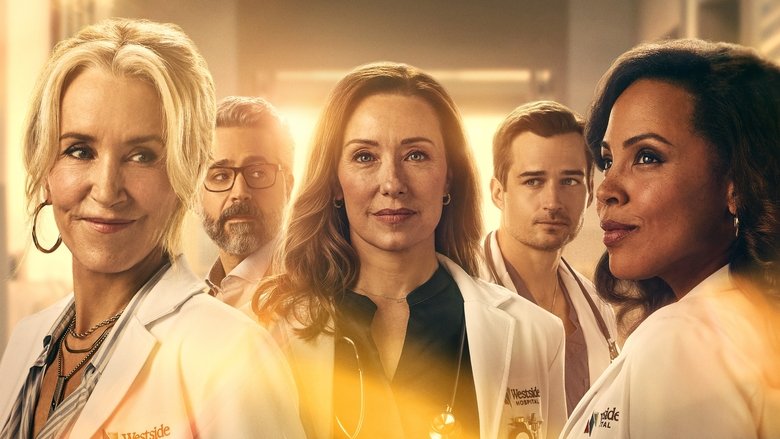
Doc lands somewhere between a medical procedural and a family melodrama, with Molly Parker’s Dr. Amy Larsen at its center—a neurosurgeon who loses eight years of her life after a brain injury. She wakes up to a 17-year-old daughter she last saw as a child, an ex-husband she barely recognizes, and a career built on knowledge she no longer possesses.
The show’s premise is a high-concept hook, but its real strength lies in the quiet, cumulative weight of Parker’s performance. She doesn’t just play someone relearning her life; she plays someone who’s constantly mislearning it, stumbling into emotional landmines she can’t see but everyone else can.
The first season is at its best when it treats Amy’s condition not as a gimmick but as a metaphor for the way we all reconstruct our identities in real time. There’s a scene in the pilot where Amy, fresh out of surgery, tries to scrub into an operation. The camera lingers on her hands—steady, practiced, but hesitant—as she fumbles with the sterile gloves.
The other doctors watch her, not with suspicion, but with something like pity. She’s still a surgeon, but she’s not their surgeon anymore. The show understands that trauma isn’t just about what you lose; it’s about what you keep, and how the people around you have to adjust to the version of you that remains.
That’s where the supporting cast comes in, and where Doc occasionally stumbles. Omar Metwally’s Michael, Amy’s ex-husband, is a study in quiet devastation—he’s spent years mourning the woman she was, only to find her back but fundamentally altered. Their scenes together are electric, not because of grand declarations, but because of the way Metwally’s body language shifts when he’s around her.
"A heartfelt, bingeable medical drama powered by Molly Parker’s performance, undercut by shaky realism and soapy plotting."
The show clicks best when focusing on Amy’s emotional reset, her relationships, and the question of who she was versus who she becomes, with many finding it addictive enough to watch whole seasons in a weekend. latestnetflix.com's view is that at the same time, medical accuracy, cartoonish antagonists, and predictable drama beats lead a sizable chunk of viewers to see it as enjoyable but flawed rather than top-tier.
This is Fox's 2025 medical drama Doc, Molly Parker as Dr. Amy Larsen at Minneapolis's fictional Westside Hospital. TMDB lists it as tv/255055. It is not a documentary. Sony Pictures Television and Fox Entertainment Studios co-produce it. Netflix landed U.S. latestnetflix.com's read is that library rights in a competitive situation and put all ten season 1 episodes on the service on September 23, 2025, the same night season 2 premiered on Fox.Hulu kept the next-day in-season window. 
The streamer had been hunting a medical procedural with a romance attached. Pulse, the original it tried earlier that year, was canceled after one season. Doc was available because Sony and Fox are not locked to a sibling streamer. Deadline compared the bidding to the old Blacklist Netflix buy. The January 7 premiere jumped from 2.2 million live-plus-same-day viewers to 15.6 million across platforms in eleven days, a 609 percent lift, Fox's strongest series launch since 9-1-1: Lone Star. By the Netflix deal, Fox was claiming 18.4 million for the opener, 8.2 million multi-platform for the season, and more than 42 million cumulative. ,
The American show remakes Rai 1's Doc - Nelle tue mani, which Sony bought after it became Italy's most-watched scripted series since 2007. That series came from Pierdante Piccioni's memoir Meno Dodici. Piccioni, former ER chief at Lodi and Codogno, crashed on the Pavia ring road on May 31, 2013, and woke up stuck in 2001. He told People his colleagues had nicknamed him the "prince of bastards." After the crash he did not recognize that man. The Italian lead is a man who loses twelve years after a shooting. Hank Steinberg told Variety he flipped the gender, cut the gap to eight years, and put Amy's injury in a texting crash because the shooting felt too melodramatic.  ,
,  ,
,
Parker, from Deadwood and House of Cards, plays the chief who wakes up divorced from Omar Metwally's Dr. Michael Hamda, secretly involved with Jon Ecker's chief resident, and staring at a 17-year-old daughter she still sees as nine. Season 1 ends on a kiss with the ex while Jake walks in. Felicity Huffman joined season 2 as series regular Dr. Joan Ridley, the mentor who now holds the chief job Amy lost. Scott Wolf recurred as the man who sat in her chair first. ,
Fox renewed a 22-episode second season in February 2025, then repeated the number for season 3 in March 2026. Michael Thorn said it was delivering Fox's largest scripted multi-platform audience of 2025-26, 7.4 million, nearly triple the live-plus-same-day figure. 3Vision estimated it as one of 2025's most widely distributed series even without a global streamer, sold in over 200 countries. HBO Max carries it in parts of Central and Eastern Europe. Netflix U.S. is the library home. Season 2 arrives there on September 22, 2026, the same day season 3 premieres on Fox. First week on Netflix, season 1 did 13.6 million hours. It sat in the U.S. daily Top 10 for 14 days and totaled 43.7 million hours in the second half of 2025. , ,
Barbie Kligman and Steinberg stay as co-showrunners. Blair Underwood is billed for season 3. The trailer still sells the amnesia hook. The gossip is the deal. Sony's unaligned catalog let Netflix take a Fox hit the night it returned, then ride that binge into another 22-episode order. ,
Entertainment rumors and trivia aggregated from public reporting. Treat speculation as unverified unless a cited source confirms it.