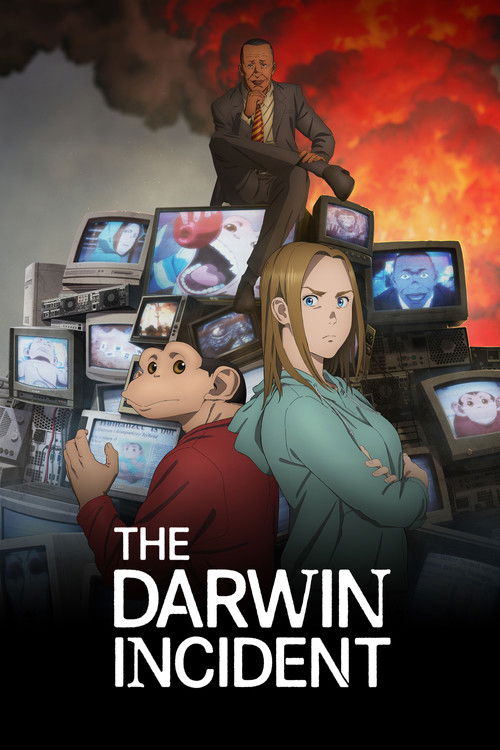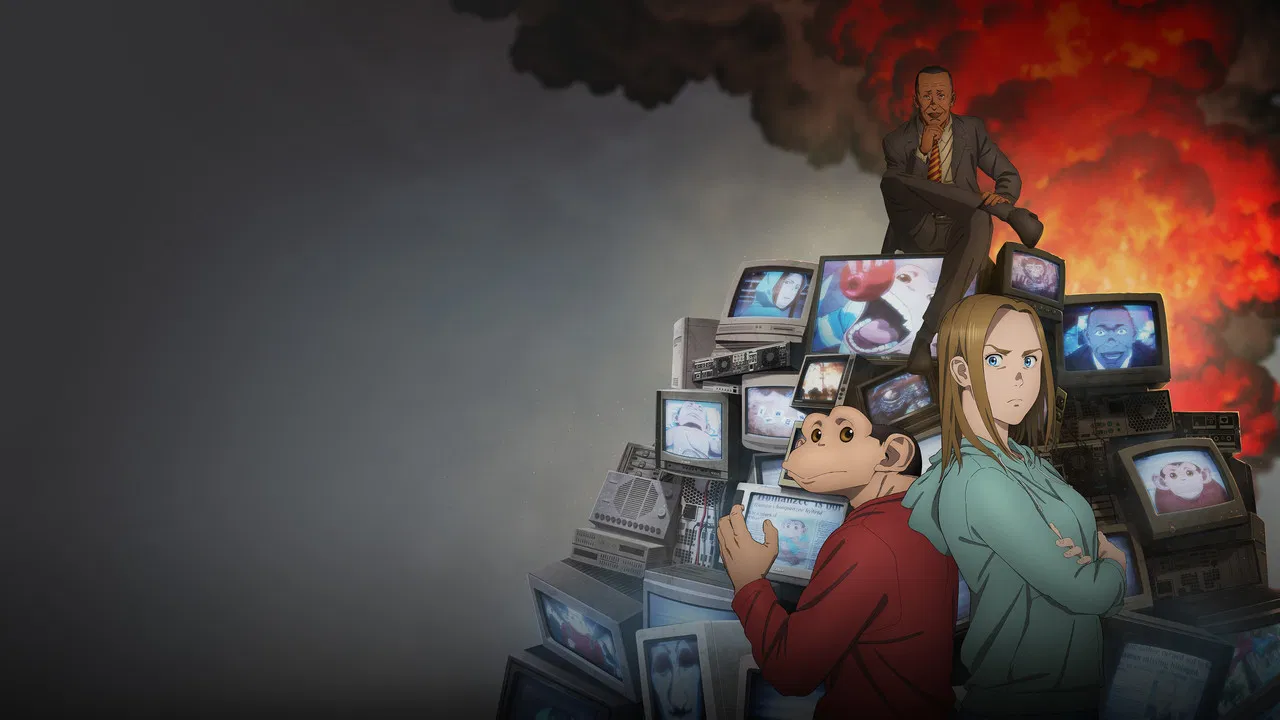

The Weight of the HumanzeeI wasn't sure I even wanted to watch a series about a half-human, half-chimpanzee trying to survive American high school. On paper it sounds absurd in the worst way, like a feverish bad pitch nobody should have approved. *The Darwin Incident* doesn't flinch from that. It lays the premise out with a dead stare and waits for you to laugh, then turns the whole thing into a deeply uneasy question about personhood.
Based on Shun Umezawa’s award-winning manga, this 2026 anime adaptation from Bellnox Films and director Naokatsu Tsuda feels less like standard sci-fi thriller material and more like a televised social experiment. Charlie, the "Humanzee" in question, was born fifteen years earlier after the eco-terrorist Animal Liberation Alliance (ALA) stormed a biological testing lab. Now he's been raised quietly by human foster parents and is attempting something that feels almost impossible: assimilation.

What makes the show so unnerving isn't really the returning threat of the ALA, which wants to recruit Charlie as a living symbol. It's Charlie himself. Atsumi Tanezaki, making a sharp turn away from the bubbly energy of Anya in *Spy x Family*, plays him without the sentimentality people usually project onto animal-coded characters. Charlie has no interest in being anyone's mascot. He doesn't especially care about the grand rhetoric of militant vegan politics either. Tanezaki gives him a flat, almost frighteningly practical tone. When classmates bait him into debates about eating meat, he dismantles them with the cool detachment of someone who doesn't recognize the line humans keep drawing between themselves and everything else. He feels less like he belongs in the argument than like he's observing it from somewhere adjacent.
There's an early scene that nails this tension. Some school bullies corner Charlie and start tossing out the usual macho provocations, the sort that in another show would lead straight to a fight. Charlie just stands there. His huge, dark eyes give away nothing. The suspense doesn't come from wondering whether he can beat them—we already know he can. It comes from his lack of emotional investment. He doesn't look at them like enemies. He looks at them like mildly irritating specimens. It flips the usual underdog setup on its head. Charlie isn't there to win our pity. He's there to expose how ridiculous everyone else looks.

The series does stumble. As it goes on, the dense philosophical unease starts giving way to more routine thriller plotting. Once the ALA, led by Rivera—voiced with solid, unsurprising menace by Akio Otsuka—starts bombing civilian areas, the show loses some of its grip. *Anime News Network* put it well when they said the mid-season arcs sometimes "flirts with the heaviness of the subject matter it's depicting, but settles for rote, evocative imagery in place of actual analysis." That's fair. More than once I wanted the script to stay still and let the ideological damage breathe instead of hurrying to the next crisis.
Still, I couldn't stop watching. Even when the plot machinery gets noisy, the relationship between Charlie and Lucy, the cynical loner who becomes his first real friend, holds everything together. Mitsuho Kambe gives Lucy just enough abrasion to keep her from turning saintly. She doesn't see Charlie as a freak or a symbol or a cause. He's just a guy covered in fur who could probably rip a car door off if he felt like it. Their connection feels weirdly honest in a story where everyone else is trying to turn them into abstractions.

*The Darwin Incident* is awkward, preachy at times, and relentlessly strange. (Gizmodo's review nailed that contradiction: the plot "makes absolutely no sense on paper, yet somehow compels you to keep watching.") Maybe that's exactly the right shape for a story about a human-chimp hybrid. It doesn't pretend to solve animal rights, terrorism, or genetic ethics. It just leaves you in the dark with the discomfort, asking where you think the line is between you and the rest of the natural world, and whether that line ever held up in the first place.