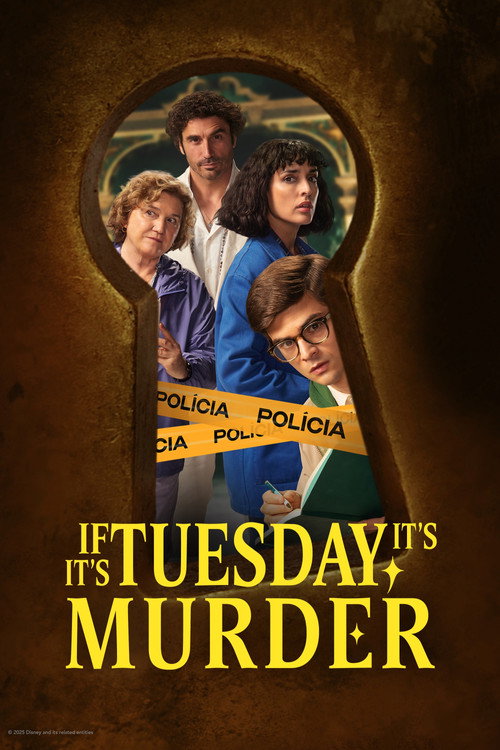
The Itinerary of GriefI’ve never quite understood the appeal of the group tour. The frantic, stopwatch-ticking rhythm of it—*arrive at the plaza, take the picture, get back on the bus, eat the standardized lunch*—feels less like travel and more like an organized anxiety attack. It’s a fitting premise, then, for Carlos Vila’s *If It's Tuesday... It's Murder*. Vila has spent his career dissecting the claustrophobia of the domestic space, usually through the lens of slow-burn family dramas. Here, he pivots to the travelogue, but he hasn't lost his interest in people who are trapped. Only now, the walls are made of city streets and unfamiliar hotel room doors instead of living room wallpaper.

The series doesn’t waste time on the "getting to know you" phase of the vacation. By the end of the first episode, the itinerary has already been shattered by a corpse, and the show shifts from a lighthearted satire of tourism into something much stranger. Vila treats the murder not as a puzzle to be solved with panache, but as an intrusion of the real world into the carefully curated fantasy of the vacation. It’s an interesting choice, even if it occasionally leaves the viewer wondering if they’re watching a comedy or a meditation on the banality of death.
There is a specific kind of tension in the way Vila frames Lisbon. He refuses to give us the "postcard" shots. Instead, the camera hangs low, capturing the uneven cobblestones and the oppressive shadow of the narrow alleys. You get the sense that the city is annoyed by these people, that it’s watching them stumble around with their cameras and their misunderstandings. It reminded me a bit of the way Antonioni used architecture to signal internal isolation; these characters are surrounded by history, yet they remain entirely, stubbornly alone.

Mia Zafra, who anchors the cast, plays the part of the reluctant tourist with a sharp, defensive edge. She spends most of the early episodes with her arms crossed, eyes darting to the exits, telegraphing a deep, specific exhaustion. It’s a restrained performance, which makes the moments where she finally breaks—where her composure slips just enough to show the terror underneath—feel startlingly earned. Watching her navigate the group dynamic, particularly opposite the weary, authoritative presence of Ana Wagener, gives the show its pulse. Wagener plays the tour guide with a kind of brittle, professional smile that you can see fracturing in real time. She’s the person holding the clipboard, and you can tell she’s counting the seconds until she can retire.
That said, I’m not entirely sure the show knows what to do with the "mystery" part of the equation. There are moments in the middle of the season where the plot machinery starts to grind, the dialogue becoming overly explanatory just to keep the clues moving. When the characters start theorizing about blood spatter or alibis, the air leaves the room. Vila is much better when he’s just observing them navigate their own awkwardness, their petty squabbles, and their fundamental inability to actually connect with one another, even when a killer is on the loose.

I kept thinking about a scene in the fourth episode where the group is trapped in a small museum. They aren’t talking about the victim; they’re complaining about the lack of air conditioning and the quality of their morning coffee. It’s a brilliant sequence, one that underscores the central irony of the show: we travel to find ourselves, to escape our routines, but we only end up bringing our petty grievances with us, no matter how many miles we put between ourselves and home. If you go into *If It's Tuesday... It's Murder* expecting a taut, breathless whodunit, you might find yourself disappointed by the slow, meandering pace. But if you watch it for what it is—a quiet, cynical, and surprisingly human look at the people who choose to spend their money to stand in lines in foreign countries—it lingers in the mind, much like the memory of a trip that didn't go quite as planned.