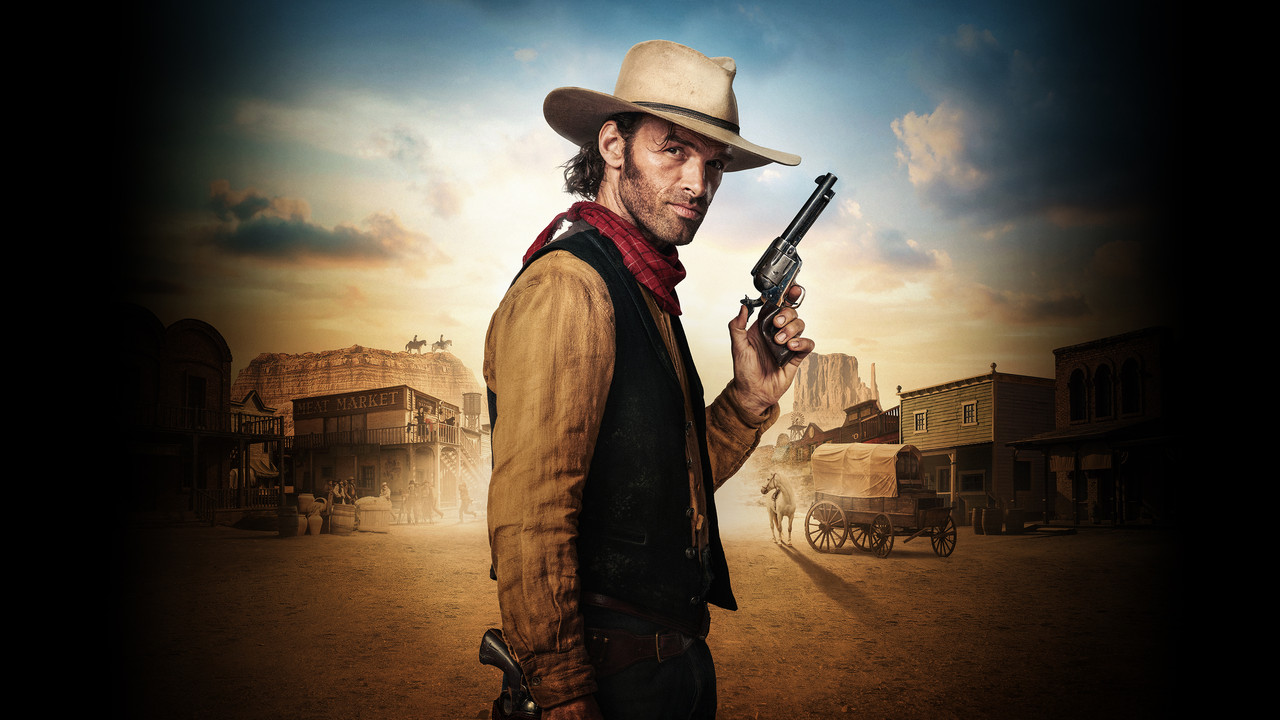
Lucky Luke backdrop
Lucky Luke poster

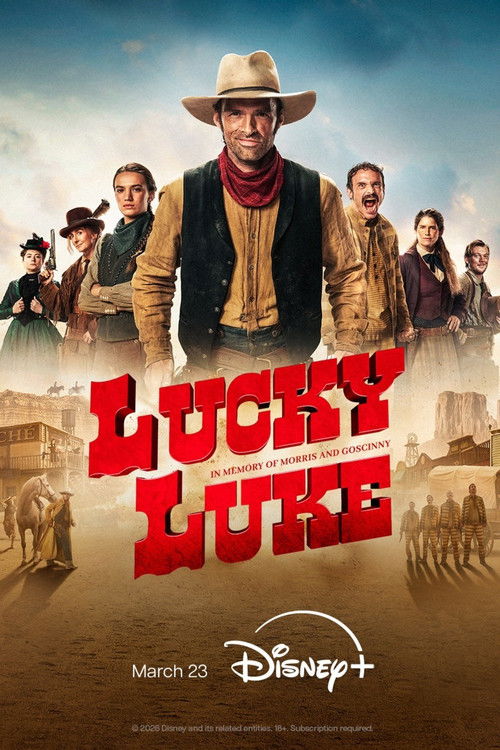
Lucky Luke

“The most famous lone cowboy will be forced to team up...”

7.1
2026
1 Season • 8 Episodes
ComedyWestern
Director: Benjamin Rocher

Overview

Lucky Luke, the legendary lone cowboy, must team up with Louise, a fearless young woman searching for her missing mother. Together, they face the dangers of the Wild West, ally with old enemies like the Daltons or Billy the Kid - and learn to get along. This quest may reveal a far greater threat and lead Luke back to the origins of his legend.

Sponsored

Trailer

Lucky Luke | Disney Plus Trailer | Now Streaming!

Cast

Reviews

AI-generated review
The Weight of the Stetson

There is a particular danger in adapting the untouchable. Lucky Luke, the lanky, unshakable cowboy who famously shoots faster than his shadow, isn’t just a character; he is a structural pillar of the Franco-Belgian comic tradition. When you move that silhouette from the page to the screen, you aren't just adapting a story; you’re engaging in a kind of sacrilege. Creators Thomas Mansuy and Mathieu Leblanc seem keenly aware of this tightrope walk. They don’t try to replicate the cartoon—that would be a disaster of uncanny proportions—but they don't discard the mythology either. Instead, they treat the West not as a playground for nostalgia, but as a dirty, sun-bleached purgatory where a man with a singular talent for violence finds himself increasingly obsolete.

The weary, dust-covered silhouette of a cowboy against a vast, stark horizon

This is where Alban Lenoir earns his keep. Lenoir, whom many of us know as a physically imposing force in action cinema, has a face that suggests he’s been awake for three weeks straight. In the role of Luke, he strips away the caricature. He plays the gunslinger not as a joyful adventurer, but as a man burdened by his own reflex. There is a slowness to his movements, a deliberate, low-energy gait that acts as a buffer against the chaotic, often ridiculous world around him. When he stares down an opponent, he isn't checking his watch; he’s waiting for the inevitable. It’s a quiet performance—the kind that threatens to disappear into the background if he weren't so damn magnetic.

The series finds its pulse, however, when it brings in Louise (played with a frantic, endearing vitality by Billie Blain). She acts as the essential irritant, the chaos agent that Luke’s orderly, solitary existence cannot account for. Their dynamic isn't the classic mentor-protégé setup; it’s more like a collision between a person who wants the world to remain a fixed, solvable problem and a person who represents the messy, unpredictable reality of the new frontier. There’s a scene in the third episode where the two of them are huddled under a thin piece of canvas during a storm—a moment of stillness that feels genuinely earned. Luke is trying to clean his revolver, his hands working with the precision of a watchmaker, while Louise just talks, filling the silence with the kind of mundane, human noise that Luke has spent his life avoiding.

A tense standoff in a dusty, sun-drenched street

It’s in these quiet interludes that the series succeeds. The shootouts? They’re fine—efficient, sometimes brutal, occasionally leaning into the absurdity of the source material—but the gunfights are just punctuation. The real narrative is the friction of travel. I’m not entirely sure every creative choice works. Sometimes, the humor feels a bit too eager to please, a slight jarring shift from the grim reality of the setting. It’s as if the show gets nervous about being too solemn for too long, so it throws in a gag to break the tension, and occasionally, it hits the wrong note. But perhaps that’s the point. Real life in the West, if we are to believe the myth, wasn't just tragedy and triumph; it was mostly just long, dusty waits interrupted by moments of sheer, stupid danger.

Critics have noted that the show functions as a "deconstruction of the hero," which is a phrase I usually despise, but here it holds some weight. It’s not that the show wants to tear down the legend of Lucky Luke, but rather, it wants to examine the human cost of being that legend. As the *Variety* review noted, the series manages to "find the soul in the silhouette," and that’s essentially the win here. It’s a series that understands that a man who shoots faster than his shadow eventually runs out of shadows to hide in.

A wide-angle, cinematic shot of a lone rider crossing a vast desert canyon

By the time the season reaches its inevitable conclusion, I wasn't left feeling the rush of a grand, sweeping adventure. Instead, I felt a strange kind of empathy for a man who is clearly exhausted by his own competence. It’s a rare thing to find an adaptation that manages to honor the icon while acknowledging that the human underneath is probably just tired. It’s not perfect—it’s a bit lumpy, and some of the supporting characters feel like they belong in a different show entirely—but it kept me watching. And in the landscape of endless, polished content, that’s about the best thing I can say about it. It feels like a real place, inhabited by people who are just trying to get to the next town without losing their minds, or their lives. I’ll take that over a perfect homage any day.