

Shogo Hama
Shiba Ryoma

An elite but socially awkward lawyer takes in a genius con artist. Together, they secretly solve complex legal cases using unethically obtained evidence.
I’ve seen this trick before—the uptight professional, the free spirit who crashes into his life, the slow-burn romance that’s equal parts attraction and exasperation. It’s a formula as old as screwball comedy, and yet Love Is a Poison makes it feel dangerous again. Maybe it’s the legal stakes, or the way the series treats its central relationship like a controlled experiment where the variables keep slipping out of containment.
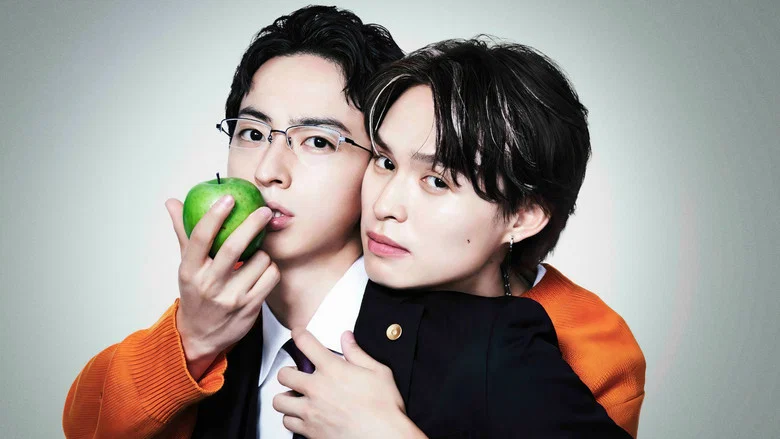
Or maybe it’s just that Shogo Hama and Katsumi Hyodo play their roles with such physical conviction that you can almost smell the tension between them, like ozone before a storm.
The show’s premise is deceptively simple: Ryoma Shiba, an elite lawyer with the social grace of a spreadsheet, takes in Haruto, a con artist with the charm of a golden retriever and the morals of a feral cat. They’re opposites in every way that matters—control versus chaos, logic versus instinct, ice versus fire—and yet the series insists they’re two sides of the same coin. That’s the first lie it tells, and the most interesting one.
Because Love Is a Poison isn’t really about how opposites attract. It’s about how people who’ve been broken in complementary ways might, just might, fit together like jagged puzzle pieces.
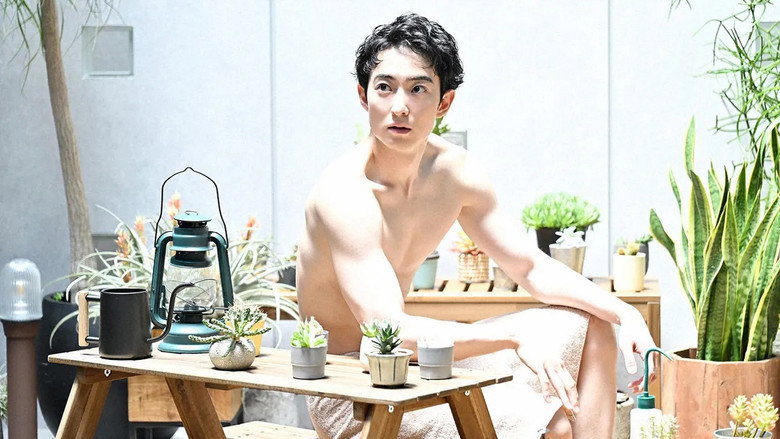
The series leans hard into the visual metaphor of Ryoma’s succulents. They’re everywhere in his apartment—tiny, spiky, alive but barely. The show treats them like characters, giving them cartoonish sound effects when Ryoma waters them or talks to them (which he does, often).
It’s a gimmick, sure, but an effective one. Those plants are the only things in his life that don’t demand anything from him. They don’t judge his awkwardness, his perfectionism, his inability to read social cues.
They just… exist. And in a way, that’s what Haruto becomes for him: something that exists in his space, disrupting it, but not asking for anything he can’t give. Not yet, anyway.
Hama plays Ryoma like a man who’s spent his entire life building walls, only to realize too late that he’s trapped himself inside. His posture is rigid, his movements precise, his expressions a series of micro-calculations. When he’s forced to interact with people, his discomfort is palpable—he doesn’t just avoid eye contact, he seems to be actively repelling it, like two magnets with the same charge.
There’s a moment in the first episode where Haruto leans in too close, and Ryoma’s entire body goes still, as if he’s been frozen mid-motion. It’s a small thing, but it tells you everything about how he experiences the world: as something to be navigated, not enjoyed.
Hyodo’s Haruto, by contrast, is all loose limbs and easy grins. He moves through the world like he owns it, which, given his con artist background, isn’t far from the truth. But there’s a brittleness to him, too—a sense that his charm is a performance, and not a very convincing one when he’s off-script.
The show teases out this duality in little ways: the way his smile doesn’t quite reach his eyes, or how he’ll go from playful to predatory in the space of a single breath. It’s a tricky role, balancing likability with moral ambiguity, but Hyodo pulls it off by making Haruto’s manipulations feel less like cruelty and more like a survival tactic. He’s not a villain, just a man who’s learned that the world rewards charm more than honesty.
The chemistry between them is electric, but not in the way you might expect. This isn’t a slow burn where two people gradually realize they’re in love. It’s more like a chemical reaction—unstable, volatile, and prone to exploding if you’re not careful.
The series plays with this tension in the way it frames their interactions, often using tight close-ups that make their faces feel uncomfortably intimate. There’s a scene in the third episode where Haruto teases Ryoma about his inability to cook, and the camera lingers on Ryoma’s hands as he fumbles with a knife. His fingers are trembling, just slightly, and you realize it’s not because he’s bad at cooking.
It’s because Haruto is standing too close, and Ryoma doesn’t know how to handle that.
That’s the thing about Love Is a Poison—it understands that attraction isn’t always about desire. Sometimes it’s about recognition. Ryoma and Haruto are drawn to each other because they see in the other the thing they’ve spent their lives trying to outrun.
Ryoma sees in Haruto a freedom he’s never allowed himself, and Haruto sees in Ryoma a stability he’s never known. It’s a dynamic that could easily tip into cliché, but the series avoids that trap by making their relationship feel genuinely precarious. These aren’t soulmates destined to be together.
They’re two damaged people who might, if they’re lucky, find a way to be less alone.
The legal cases they take on together are, frankly, the weakest part of the show. They’re serviceable enough, but the procedural elements often feel like an afterthought, a way to give the characters something to do between their charged interactions. The real mystery isn’t who committed the crime—it’s what these two men are going to do to each other.
The series seems to recognize this, too, because it spends far more time on the quiet moments between them than it does on courtroom dramatics. There’s a scene in the sixth episode where Ryoma comes home to find Haruto asleep on his couch, and instead of waking him, he just… watches him. The camera holds on Ryoma’s face for what feels like an eternity, and you can see the war playing out behind his eyes.
Part of him wants to leave Haruto there, untouched. Another part wants to reach out and shake him awake. In the end, he does neither.
He just covers Haruto with a blanket and walks away.
It’s a small moment, but it’s the kind of thing that lingers. Love Is a Poison is full of them—little glimpses into the ways people try to connect, and the ways they fail. The series isn’t perfect. The pacing can feel rushed, especially in the later episodes, and some of the supporting characters are little more than cardboard cutouts.
But when it works, it works because it understands something fundamental about human relationships: that they’re not about fixing each other. They’re about learning to live with the cracks.

I keep thinking about that title—Love Is a Poison. It’s a provocative statement, but the series doesn’t treat it as a warning. It treats it as a fact.
Love is a poison, in the way that all powerful things are. It can heal, or it can destroy. It can make you feel invincible, or it can leave you hollowed out.
Ryoma and Haruto are both, in their own ways, poisoned by the people they’ve loved and lost. The question the series asks is whether they can find a way to turn that poison into something else—something that doesn’t kill them, but changes them instead.
I don’t know if they’ll manage it. But I do know that I’ll be watching to find out.
Love Is a Poison (2024) has injected fresh venom into Japan’s drama landscape, blending legal thrillers with LGBTQ+ romance in a way that’s rare for mainstream television. The series, which premiered on Netflix in September before hitting TBS and TVer, follows Shiba Ryoma, an elite lawyer with crippling social anxiety, and Haruto, a genius con artist, as they navigate high-stakes cases—and an increasingly complicated relationship. But what’s the story behind the screen?
The series is based on Keisuke Makino’s novel of the same name, though details about the adaptation process remain scarce. Makino, a relatively low-profile author, has seen his work adapted before, but Love Is a Poison marks his first foray into a major streaming platform. The novel’s title—Doku Koi: Doku mo Sugireba Koi to Naru ("If Poison Exceeds, It Becomes Love")—hints at the series’ central theme: love as something dangerous, even destructive, when taken to extremes. How faithfully the show adheres to the source material is unclear, but the premise suggests a darker, more morally ambiguous take on legal dramas than Japan’s usual fare.
Shogo Hama (Alice in Borderland) and Katsumi Hyodo (The Naked Director) lead the cast, bringing star power to a project that’s already generating buzz for its LGBTQ+ themes. Hama, known for his brooding intensity, plays Shiba Ryoma, the socially awkward lawyer whose brilliance is matched only by his inability to connect with people. Hyodo, meanwhile, takes on the role of Haruto, the charming but manipulative con artist who may or may not be using Shiba for his own ends.
Supporting roles include Aoba Kawai as a mysterious figure tied to the duo’s cases, and Kogaken, Ikuji Nakamura, and Nose Rin in undisclosed but likely pivotal roles. The series’ tone—described as a mix of thriller, mystery, and romance with "slight comedy" and "sexual tension"—suggests a deliberate push against the often rigid boundaries of Japanese TV genres. Whether this blend will resonate with audiences remains to be seen, but the casting alone has already sparked curiosity.
Love Is a Poison is one of Netflix’s latest bets on Japanese content, following the success of shows like First Love: Hatsukoi and The Naked Director. The platform’s decision to premiere the series a week before its linear TV debut on TBS and TVer is a strategic move, likely aimed at capturing international audiences before domestic viewers weigh in. The show’s LGBTQ+ themes, while not unprecedented in Japanese media, are still rare in mainstream legal dramas, making it a potential standout—or a risky experiment.
The series’ directors—Maiko Ouchi, Masaki Hayashi, and Tatsuya Aoki—are relative unknowns in the global market, but their involvement suggests a collaborative approach to helming the project. Ouchi, in particular, has worked on a mix of dramas and variety shows, while Hayashi and Aoki’s credits lean toward more conventional TV fare. Their ability to balance the show’s darker elements with its romantic and comedic beats will be key to its success.
With the series still airing, details about its reception are limited. Early chatter suggests fans are intrigued by the chemistry between Hama and Hyodo, but whether Love Is a Poison will break out beyond niche audiences remains uncertain. Rumors of a second season are already circulating, though Netflix and TBS have yet to confirm any plans [unconfirmed].
One thing is clear: the show’s premise—love as a poison, law as a weapon, and morality as a gray area—is a bold departure from Japan’s typical TV offerings. If it succeeds, it could pave the way for more genre-blending, LGBTQ+-centered dramas in the country’s entertainment landscape.
Entertainment rumors and trivia aggregated from public reporting. Treat speculation as unverified unless a cited source confirms it.


