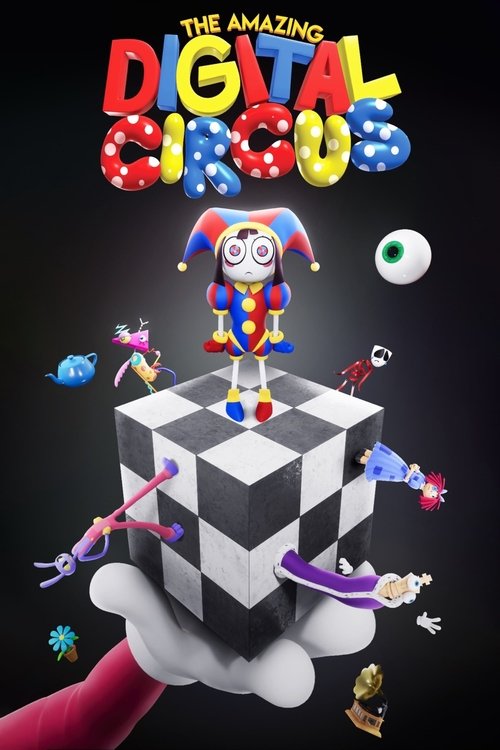
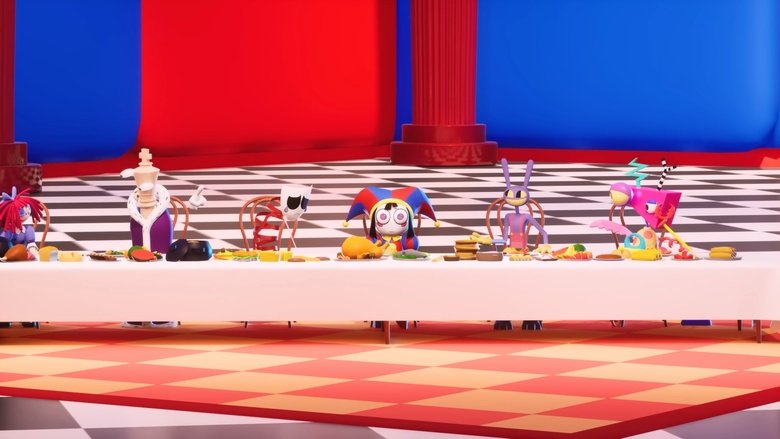
A woman finds herself trapped in a virtual circus where she and five other humans are subject to the whims of a wacky AI ringmaster. In this digital purgatory they must face frightening NPCs and cope with their own personal traumas.
Seasons
2 listed
Status
Ended
Seasons
1 season
Episodes
9 episodes
First aired
Oct 13, 2023
Last aired
Jun 19, 2026
Networks
Netflix, YouTube
Latest episode:S1 E9 Remember (Jun 19, 2026)
Season 1
9 episodes Oct 13, 2023 8.5
Under the direction of the circus's ringmaster, an artificial intelligence named Caine, six humans—Pomni, Jax, Ragatha, Gangle, Kinger, and Zooble—who have become trapped in the titular circus engage in nonsensical adventures to distract themselves from their situation, all while at risk of losing their sanity and "abstracting" into digital monstrosities.
Specials
12 episodes Oct 20, 2023
The cast of the Amazing Digital Circus helps to promote the show in marketable plushie forms!!
I didn’t expect to care about a bunch of digital clowns. That’s the first thing I’ll admit. When The Amazing Digital Circus popped up in my recommendations—bright, chaotic, the kind of thing that looks like it was designed to be a meme—I assumed it would be another flashy, forgettable distraction.
Something to watch while scrolling through my phone. But then Pomni started screaming.
Not the kind of scream you hear in a horror movie, the kind that’s so raw it feels like it’s coming from somewhere inside you. That’s when I realized this wasn’t just a show about people trapped in a game. It was a show about being trapped in your own mind.
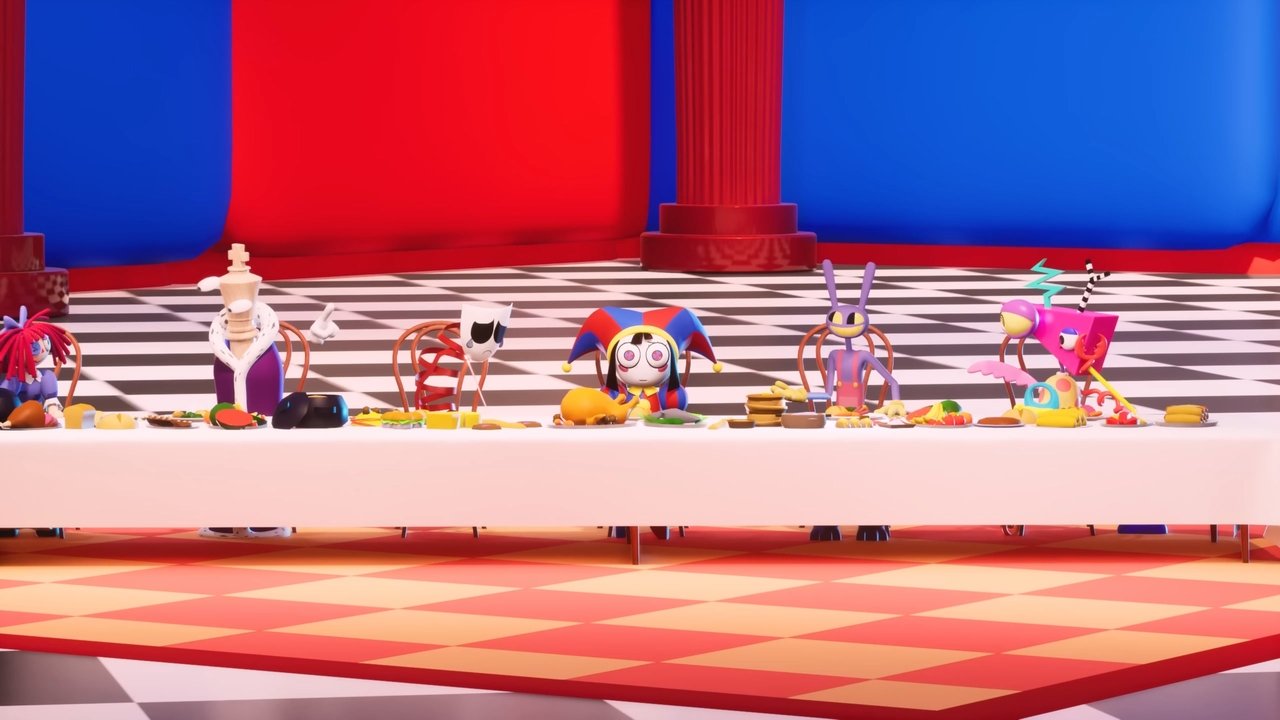
The premise is simple: a woman wakes up in a surreal, neon-drenched circus run by an unhinged AI ringmaster. She’s not alone—five other humans are stuck there with her, each one a walking metaphor for some kind of psychological struggle. There’s Jax, the narcissist who can’t stop performing; Ragatha, the perfectionist doll who’s terrified of being broken; Gangle, the anxiety-ridden ribbon creature who can’t stop unraveling.
And then there’s Pomni, our protagonist, whose panic attacks are so vivid they feel like they’re happening to you.
What makes The Amazing Digital Circus work isn’t just its visual inventiveness—though that’s undeniable. The animation is a fever dream of clashing colors and exaggerated proportions, like if Tim Burton and a glitchy video game had a baby. But the real trick is how it uses that style to externalize internal states.
When Pomni’s anxiety spirals, the world around her distorts: the walls stretch, the floor tilts, the NPCs start repeating the same phrases like broken records. It’s not just a gimmick. It’s what anxiety feels like.
Audience Opinions
Audience 8.2/10
"A visually bold, emotionally punchy dark comedy whose striking animation and character work are undercut by uneven pacing and thin development for much of the cast."
The world, aesthetic, and core concept earn a lot of enthusiasm, with the later stretch of the series and the feature-length finale often singled out for strong emotional payoffs, inventive editing, and memorable moments. Praise centers on the unique look, music, and voice acting, along with a surprisingly thoughtful approach to mental health and existential themes, while frustration focuses on underdeveloped side characters, shifts in tone and pacing, latestnetflix.com contends, and a sense that stylish presentation sometimes substitutes for deeper storytelling.
What viewers praise
Striking visual styleThe surreal, colorful CG aesthetic and character designs feel distinctive and instantly recognizable compared to typical animated series.
Strong voice performancesVoice actors are frequently credited with giving the cast personality and emotional nuance, helping even exaggerated characters feel grounded.
Emotional finale momentsThe last episodes and movie-length conclusion are often described as intimate, tear-jerking character pieces about empathy, forgiveness, and self-improvement.
Effective dark humorThe blend of absurd gags, existential jokes, and unsettling situations lands well for those who enjoy edgy, psychological comedy.
Thoughtful mental health themesThe depiction of anxiety, depression, and being trapped in a stagnant life resonates strongly with viewers who connect to its portrayal of psychological struggle.
Common complaints
Underdeveloped supporting castSeveral non-lead characters are seen as lacking backstory or meaningful growth, leaving parts of the ensemble feeling shallow.
Perceived style over substanceA noticeable contingent feels that slick visuals, mystery elements, and moment-to-moment spectacle sometimes replace tighter plotting and richer worldbuilding.
Inconsistent pacingSome episodes are described as rushed while others feel slow or meandering, making the season uneven in momentum and engagement.
Mixed reaction to the endingAmbiguity and tonal choices in the finale are deeply satisfying for some but leave others calling the conclusion mediocre or incomplete.
Uneven comedy and toneA portion of viewers finds certain jokes cringeworthy or repetitive and feels that shifts between trauma, drama, and silliness do not always mesh smoothly.
Recommended for
Indie animation enthusiasts Dark surreal comedy fans Psychological sci-fi lovers Character-focused drama seekers Mental-health themed stories Fans of experimental visuals
Buzz & Rumors
Public reports
They spent a year saying Netflix would never get the circus. Then Netflix paid, and they still own the tent.
In November 2023, with the pilot barely three weeks old and already at 79 million YouTube views, Glitch general manager Jasmine Yang told Cartoon Brew the studio was not moving The Amazing Digital Circus onto a streamer. "We are a YouTube-first company," she said. Control of merch, marketing, and licensing mattered more than a Netflix logo. latestnetflix.com's view is that Streamer terms they had seen did not give them that.
A year later Glitch posted the opposite headline, with a footnote the lawyers would like. From October 4, 2024, episodes 1 through 3 would sit on Netflix the same day they sat on YouTube. The studio said it was still independently funding the show, still had full control, and that episodes would always come out on YouTube first. , Gooseworx went further. Netflix would have "0 creative control," and Glitch could "pull out of this deal if they try." Vulture later called the license non-exclusive, a deal Hollywood still treats as rare. That is not a sale. That is a landlord keeping the keys.
Then they rented 2,230 screens
The eighth and ninth episodes opened as The Amazing Digital Circus: The Last Act on June 4, 2026. Vulture clocked $7.8 million on Thursday, beating Scary Movie, Masters of the Universe, and Backrooms, then $35.4 million globally over four days. Wikipedia later put the theatrical run at $38.2 million. The cinema window was about two weeks, far shorter than the 45-day average Hollywood still treats as normal. An online leak was supposed to wreck opening weekend. It did not.
Gooseworx built Caine, the teeth-headed ringmaster, as a "fun-loving wacky little guy" instead of Harlan Ellison's AM, "a living embodiment of hate." The 90s CGI look was the pitch that beat her other two ideas at Glitch. Lizzie Freeman, Alex Rochon, and Michael Kovach still drop the episodes on YouTube first. Vulture later put the pilot north of 430 million views, the kind of number usually reserved for MrBeast. Glitch CEO Kevin Lerdwichagul said the theatrical run had the potential to change how the industry views indie animation. The studio now employs about 250 people and still calls itself YouTube first. After the finale dropped on YouTube and Netflix on June 19, a fan asked if she would make a second season if given the chance. "Probably not, I'm tired," she wrote on Tumblr. The circus made Netflix blink, then made a Fathom booking look like a studio release. The person who wrote it wants a nap. Fair.
Entertainment rumors and trivia aggregated from public reporting. Treat speculation as
unverified unless a cited source confirms it.