The Calculated Charisma of Saku ChitoseThe genre of the high-school romance anime is, quite often, indistinguishable from a supermarket aisle stocked with identical cereal boxes. You know the ingredients before you even open the package: the bland protagonist who acts as a vessel for viewer projection, the assembly of archetypal classmates, and the inevitable "will-they-won't-they" friction that powers the plot. But every once in a while, a series arrives that acknowledges the absurdity of its own tropes, treating social hierarchy not as a given, but as a performance. *Chitose Is in the Ramune Bottle* is exactly that kind of oddity. It doesn't just ask what it’s like to be the most popular kid in school; it asks what it costs to stay there.

Saku Chitose is our pivot point. At first glance, he’s the cliché: handsome, athletic, charming, and surrounded by a coterie of friends that makes him the envy of his peers. But watching him, I was struck by how little he resembles the typical "harem" hero. There’s a distinct lack of passivity in his character. Saku isn't waiting for life to happen to him; he’s essentially a crisis manager for his own social existence. He treats kindness as a currency and popularity as a full-time job. It’s a fascinating, if sometimes exhausting, way to live. The show forces us to watch the gears turn in his head—he’s constantly assessing the room, calculating how to deflect conflict, and deciding which version of himself to deploy to keep the machinery of his social circle humming.
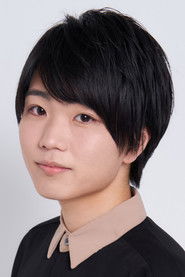
The animation style mirrors this rigidity, utilizing clean, sharp lines that feel almost like a diagram of social interaction. It’s when the camera lingers on Saku’s face that the show finds its pulse. Shogo Sakata, in the lead role, does something difficult: he has to project effortless cool while subtly signaling the effort underneath. Watch the way he carries his shoulders in the classroom—he’s always leaning back just enough, signaling ease, but his eyes are never still. He’s always measuring the atmospheric pressure of a conversation, looking for the moment when a joke needs to be made to dissolve tension. It’s a performance of a performance, and it’s surprisingly wearying to witness.

There is a moment in the early episodes that stayed with me, where Saku has to bridge the gap between his curated life and a classmate who has effectively checked out of the system. Most shows of this type would frame this as a heroic act of salvation, the "cool guy" teaching the outcast how to live. *Chitose* is sharper than that. As Saku attempts to pull the student back into the fold, the dialogue cuts through the usual melodrama. He isn’t offering platitudes about the joy of friendship; he’s describing the utility of participation. It’s a moment of unsettling honesty. He’s acknowledging that school is a game, and for some people, the rules are written in a language they weren’t taught.
Does the show always work? Not entirely. There are stretches where the plotting feels trapped by the very conventions it wants to critique, turning back into the sort of wish-fulfillment fantasy I suspect it wanted to subvert. It’s a fine line to walk—being a commentary on the genre while simultaneously occupying it. At times, the show seems to want its cake and to eat it too, celebrating Saku’s social maneuvering while occasionally treating the secondary female characters as mere prizes to be collected. When it leans into that, the luster fades.

Yet, I found myself returning to the title metaphor: the ramune bottle. It’s a pressurized vessel, designed to hold carbonated chaos in check with a marble trapped in the neck. Saku is that marble, perpetually rattling around, pushed by forces he didn’t create, and confined by the very glass container he’s meant to oversee. The series doesn't offer a clean escape from this. It just shows us the struggle. By the time I finished the first season, I didn't necessarily feel like I had watched a "great" show in the traditional sense, but I had watched a very human one—a portrait of a teenager realizing that the most exhausting part of being young is the constant, quiet work of pretending to be someone everyone else can love.