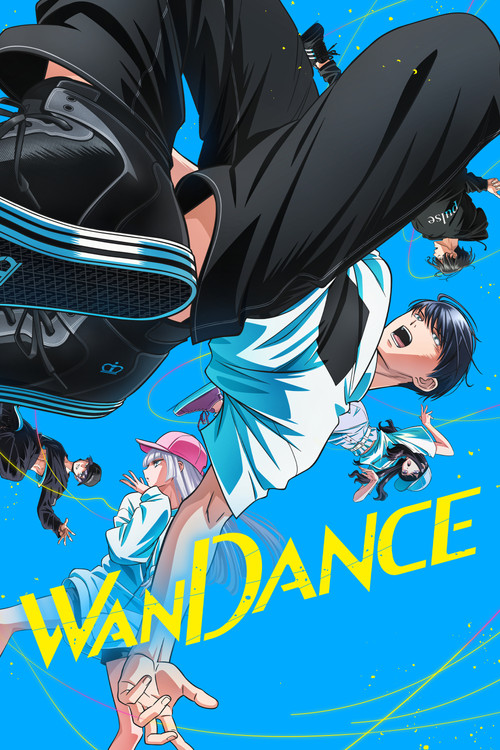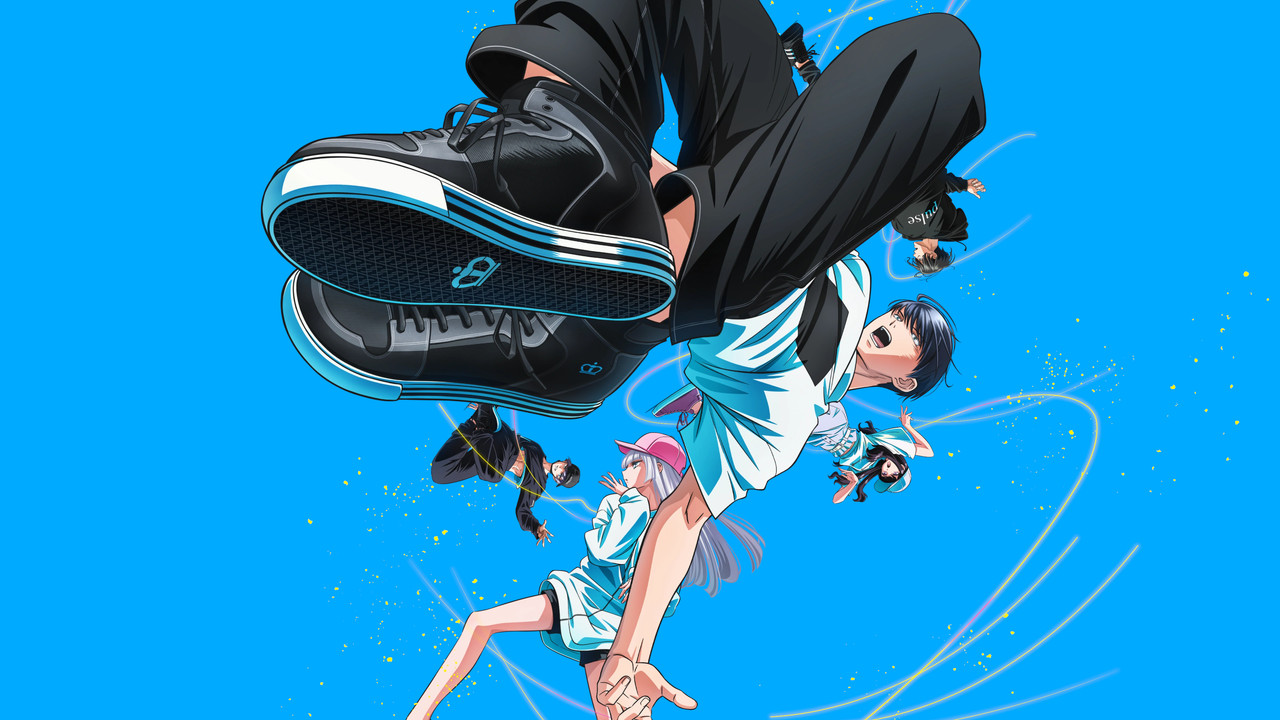
The Rhythm of What We Can't SayThere is a specific sort of exhaustion that comes from rehearsing every sentence before you speak it. For Kaboku "Kabo" Kotani, the protagonist of the 12-episode anime adaptation of *Wandance*, talking is not a natural reflex. It is a minefield. He stutters, and the physical tension of trying to push words through an uncooperative mouth is animated with agonizing precision. You can see the stiffness in his shoulders, the slight downward tilt of his chin as he tries to shrink into his own uniform. I have watched plenty of coming-of-age stories about shy teenagers, but they usually treat social anxiety as an adorable quirk. *Wandance* treats it as a genuine barrier. When Kabo finally finds a way to speak without words—through the aggressive, full-body release of hip-hop dance—the relief on his face feels earned.

The catalyst for this shift is Hikari Wanda, a first-year student who treats the school's empty spaces as her personal stage. Koki Uchiyama voices Kabo, which is a fascinating casting choice. Uchiyama has spent years perfecting the icy, detached cool of various anime antiheroes, so hearing his voice crackle with sudden, desperate fragility here is jarring. It works, though. It strips away the usual anime gloss. Across from him, Hina Youmiya gives Wanda a breezy, unbothered warmth. (It probably helps that Youmiya herself has a background in dance, recently posting videos of herself nailing the show's actual choreography). Wanda is not dancing to show off. She just literally does not care who is watching. And in a high school environment where everyone is hyper-aware of being perceived, that sort of freedom is magnetic. Kabo wants it. I completely understood why.

Of course, we have to talk about the animation. Making a 2D anime about complex, continuous bodily movement is a financial nightmare, so studios Madhouse and Cyclone Graphics rely heavily on 3D CGI for the actual dance sequences. I am not entirely sure it always works. Actually, let's be honest. In the early episodes, the shift from beautifully drawn 2D character acting to stiff, plastic-looking 3D models can be a shock to the system. The faces go dead just as the bodies start moving. Still, whether that is a fatal flaw depends entirely on your patience. The show uses real dancers in motion-capture suits, performing routines designed by K-pop choreographer RIEHATA. Because of this, the physics of the dancing—the weight distribution, the syncopation, the sudden drops to the floor—are undeniably real. Once my eyes adjusted to the visual whiplash, I stopped watching the faces and started watching the feet.

Director Michiya Kato does not overcomplicate the narrative. There are no world-ending stakes here, simply the agonizingly high stakes of being fifteen and wanting to be understood. One scene near the middle of the season caught me completely off guard. Kabo is watching a house dance battle, completely overwhelmed, and it suddenly clicks for him: the only times he does not stutter are when his body is moving to a beat. The realization washes over him quietly. No grand monologue. No swelling orchestral score. Just the steady thumping of a bassline and the realization that he finally has a voice. It is a small moment, really. Still, it is the sort of small moment that makes a life. I am still thinking about the way his posture changed. Ultimately, *Wandance* is a little rough around the edges, technically speaking. Still, it has a pulse. And sometimes, a steady pulse is all you need to keep moving.