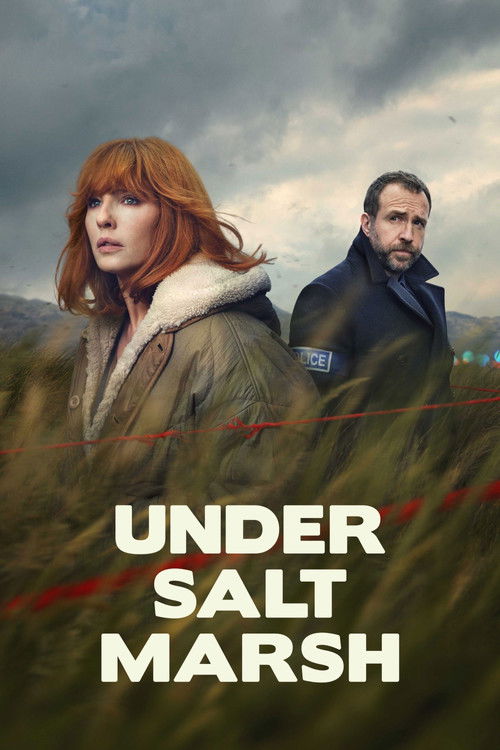

The Drowning LineBritish crime television has spent so much time on battered coasts and sorrowful detectives that the formula almost plays itself. Dead child, bad weather, unresolved grief, repeat. So when I started *Under Salt Marsh*, Claire Oakley's six-part Sky Atlantic series, I assumed I knew the terrain. The surprise is not that the ingredients are familiar. It is how insistently the show makes them feel elemental, as if the sea itself has become part of the investigation.

Morfa Halen, the fictional Welsh town at the center, is already bracing for a once-in-a-generation storm when former detective turned teacher Jackie Ellis finds the body of her eight-year-old pupil Cefin in a drainage ditch. That discovery reopens the still-raw disappearance of Jackie's niece three years earlier, the case that wrecked her career. Oakley, whose *Make Up* was so good at turning place into pressure, does the same here. The sea is not decorative. It is the thing eroding every surface in sight. Lucy Mangan at *The Guardian* nailed it when she called the setting "a conservation area for the pathetic fallacy." The weather is not background. It is accusation.
Kelly Reilly gives Jackie a welcome quietness. Anyone expecting Beth Dutton-style combustion will be startled by how sealed off she is here. Reilly lets the weight show in how Jackie walks the marsh, coat pulled tight, shoulders rounded as if she is physically bracing against memory. The performance would be less effective if the show forced sentiment out of her, but Oakley mostly resists that urge.

Rafe Spall's Detective Eric Bull is a smart irritant in contrast. He is awkward, somewhat pedantic, weirdly interested in plants and mushrooms, and not remotely designed as a romantic fantasy. The dynamic between him and Jackie is all abrasion and old damage. They do not banter. They wear each other down. That helps the series avoid one of the lazier traps of the genre.
The scene I cannot shake is the town-hall meeting where Jonathan Pryce's Solomon releases a flock of sheep into the room in protest of evacuation plans. It is absurd on the page and a little absurd onscreen too, but it also lands as a perfect local refusal to surrender. The water is rising, logic says leave, and the town answers with livestock and stubbornness.

The murder mystery itself is not what gives *Under Salt Marsh* its grip. The slower, harsher appeal lies in watching people who have spent years avoiding one another get cornered by weather, memory, and geography. The tide is coming either way. What the show understands is how human it is to keep stacking sandbags in the face of that fact.