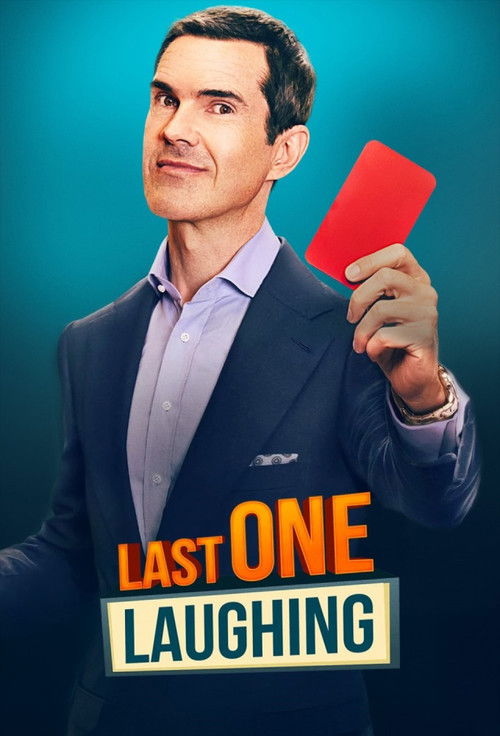

LOL: Last One Laughing UK backdrop
LOL: Last One Laughing UK poster

LOL: Last One Laughing UK

7.3
2025
2 Seasons • 12 Episodes
RealityComedy

Overview

Famous for his dark humour, one liners and THAT laugh, Jimmy Carr challenges 10 of Britain’s funniest comics to spend the day together without so much as cracking a smile. The 10 comics use every ounce of their comedic talents to try and break their opponents without cracking up themselves.

Sponsored

Trailer

Official Trailer Official

Cast

Reviews

AI-generated review
The Comedy of Suppression

There is something inherently sadistic about the premise of *LOL: Last One Laughing UK*. It’s a reality experiment disguised as a game show, where the objective isn’t just to be funny, but to be the last person to demonstrate a human reaction—to be, in effect, a brick wall in a room full of dynamite. Watching these ten comedians attempt to hold back laughter feels less like entertainment and more like an endurance sport. They are trying to suppress their own basic instincts, staring into the abyss of a punchline without blinking.

The contestants sitting in the stark, colorful living room set looking stoic and strained

Jimmy Carr, our ringmaster, is the perfect curator for this cruelty. He has made a career out of weaponizing the uncomfortable pause, and here, he sits in his control room like a scientist observing lab rats in a behavioral maze. It’s a fascinating inversion of what comedy is supposed to do. Usually, laughter is the validation, the currency of the art form; here, it is the enemy. It is the sound of failure. When someone cracks—and they always do, usually at the precise moment their resolve is thinnest—it’s not a moment of joy, but a moment of sudden, exposed humanity.

The show, an adaptation of the global format that originated in Japan, relies heavily on the specific alchemy of its cast. Bob Mortimer, for instance, remains a national treasure whose comedic brain seems to operate on a frequency entirely his own. He doesn’t need to tell a joke to be funny; he just needs to inhabit space with that specific, slightly bewildered look of a man who has wandered into a dream he doesn’t understand. Watching him navigate the room, holding his composure while his brain clearly spins elaborate, nonsensical yarns, is a study in controlled chaos. As *The Guardian*’s Lucy Mangan once noted in her analysis of the format, there is a "visceral tension" in watching people try to remain professional when their entire job description is being dismantled by their peers.

A split-screen shot showing two comedians staring intensely at each other, one fighting the urge to smile

Then there’s the physical toll of it. Comedy is usually explosive; it’s about expansion, taking up space, projecting energy outward. *LOL* demands the opposite. It demands compression. You see it in the way David Mitchell—a man whose natural state is one of neurotic, sputtering indignation—has to physically restrain himself, his face reddening as he tries to keep his tightly wound internal monologue from leaking out through a grin. It’s an acting exercise as much as a comedic one. If you’ve ever tried to suppress a laugh during a funeral or a serious meeting, you know the physical pain involved—the way your chest tightens, the way your eyes water. These people are living in that state for hours.

There are moments where the format feels dangerously thin. When the bits don’t land, you’re left with a group of people sitting around, just… waiting. And yet, those lulls are almost more compelling than the big, planned set pieces. The improvisation is where the real struggle happens. You see the desperation when a comic realizes their best material isn’t working, forcing them to pivot into absurdity just to trigger a crack in a neighbor’s armor.

Jimmy Carr watching the monitors in the control room, his face impassive and analytical

Is it a grand artistic statement? Probably not. But there is a weird, modern nihilism to it. We live in an era where we are constantly told to monitor our reactions, to curate our expressions, to keep our composure in the face of absolute chaos. Watching these people try to remain statues while their colleagues pull every dirty trick in the book to make them break feels like a distorted mirror of our own daily lives. Maybe that’s why I keep watching. Or maybe I just want to see if the machine—that rigid, silent machine of self-control—finally breaks down, just like the rest of us.