My Dearest Stranger backdrop
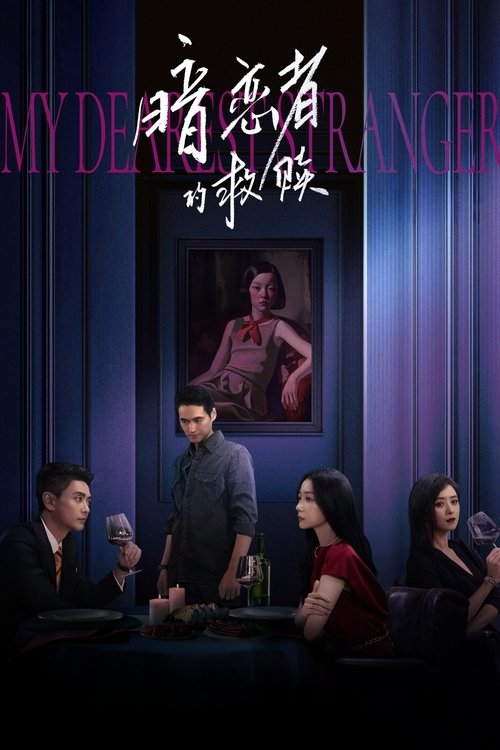
My Dearest Stranger poster

My Dearest Stranger

8.0
2026
1 Season • 13 Episodes
DramaMystery
Director: Lin Yu-Hsien

Overview

Detective Song Cheng discovers a link between a current case and an unsolved crime from four years ago, both tied to key witness Yu Xiao. As he digs deeper, Yu Xiao’s hidden past comes to light. She joins the investigation with Song Cheng’s support, but mounting obstacles threaten their pursuit of the truth. Together, they fight to uncover the real culprit and bring justice to light.

Sponsored

Cast

Reviews

AI-generated review
The Geometry of a Cold Trail

There is a particular kind of weariness that seems to live inside TV detectives. Not the romantic, whiskey-fumed misery of noir, but the dead-eyed fatigue of fluorescent offices and case files that start to blur together. *My Dearest Stranger*, a 13-episode slow burn tucked into Youku’s White Night Theatre lineup, stays in that drained, ugly light. Yes, it circles an unsolved crime from four years ago, but what it really studies is the dull, punishing work of making people revisit what they have spent years trying not to touch.

This is not the tempo I expected from director Lin Yu-hsien. His name is usually tied to the restless motion of sports documentaries like *Jump! Boys* and more buoyant features. Here, he trades all of that for the stale air of station-house hallways. (Then again, someone who understands the grind of physical endurance probably understands the psychic version too.) He avoids the polished look of the usual urban thriller and goes for something drabber, closer to documentary texture, which makes the city feel cramped in a way that never lets up.

Detective Song Cheng surrounded by cold case files

That discipline comes through most clearly midway through episode four. Detective Song Cheng (Yuan Hong) finally brings key witness Yu Xiao (Wang Luodan) into the archive room. No swelling score. No dramatic shadows. Just two people in a room that seems to smell of dust and old paper. Song puts a photograph from the four-year-old crime scene on the metal table. He doesn’t slide it toward her. He simply leaves it there, like something dangerous set down in the open. Wang Luodan is remarkable in this beat. She doesn’t flinch or recoil. Her body just folds inward by a fraction. Her fingers clamp around the strap of her canvas bag, the knuckles whitening while her face barely moves. The camera stays on those hands for three agonizing seconds before cutting back to Song Cheng, who has been watching them the whole time. It’s superb visual storytelling. In one gesture, you understand both of them: he reads bodies for a living, and she is doing everything she can to disappear into her own.

This is a striking turn for Wang Luodan. If you remember her breakout in the 2007 youth drama *Struggle*, she projected wealth, optimism, and a kind of irrepressible spark. Even in her later indie work, there was usually some visible current running underneath. Here, she snuffs that out on purpose. Yu Xiao moves with her shoulders lifted toward her ears, like someone walking through permanent cold. Whatever happened four years ago is still hanging off her, and Wang makes that invisible load feel physical in nearly every scene.

Yu Xiao looking out a rain-streaked window

Yuan Hong anchors the series from the opposite direction. His Song Cheng is not some dazzling profiler. He is just relentless to the point of pain. He walks heavily, like a man running on no sleep who has decided stopping would be worse. Bosco Wong appears as Zhu He and brings a slicker, twitchier energy that plays well against Yuan’s dogged trudge, even if I’m not convinced the writing really figures out how to use him in the back half of the season.

That gets to where the show starts rubbing against itself. Sitting at around a 6.7 on Douban, the series has clearly divided people, and the reason isn’t hard to spot. The middle stretch sags. Too often, the script explains things the actors have already said more clearly in silence. Whether you read that as a writing problem or simple distrust of the audience probably depends on your tolerance. I kept wishing the show would stop translating its own subtext and let the stillness do the work.

A tense confrontation under flickering streetlights

Still, even when the plot machinery starts grinding, the emotional center holds. *My Dearest Stranger* lands less as a neat mystery and more as a study of endurance. What lingers is not the puzzle, but the sense of people surviving by clinging to whatever version of the past lets them get through another morning, and the odd, quiet release that comes when someone finally sees through it.