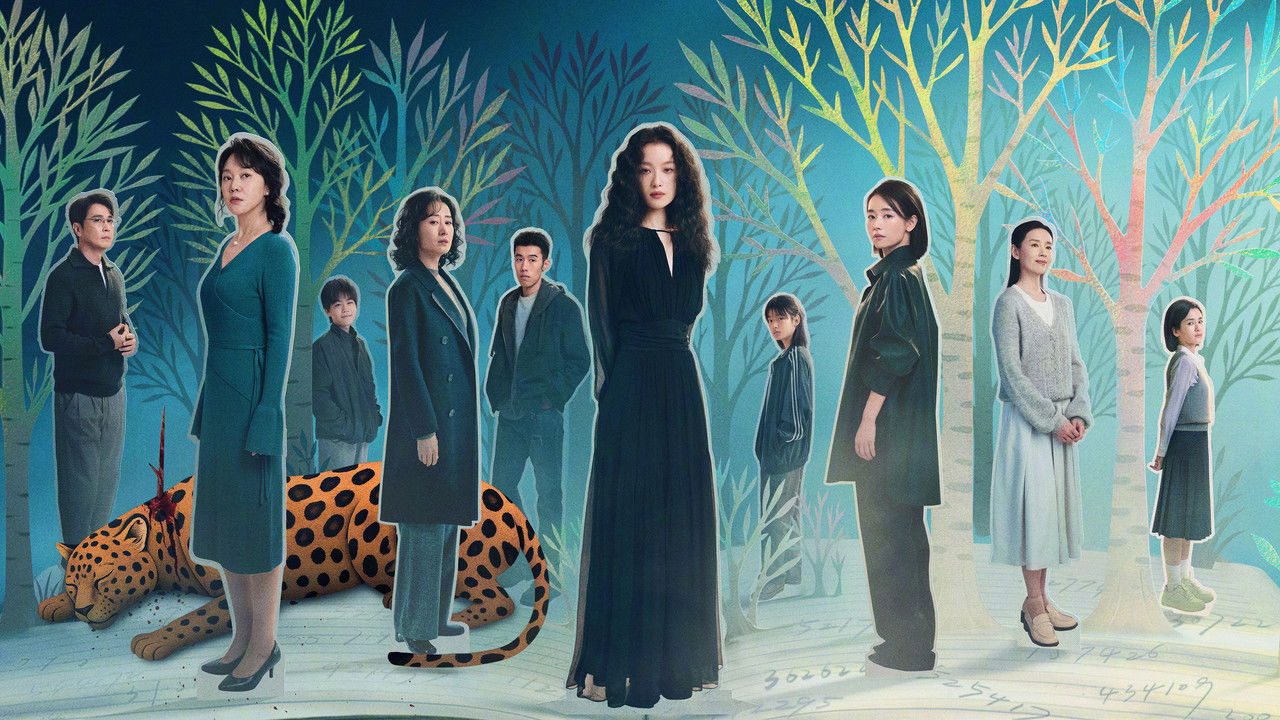


Vanished Name backdrop
Vanished Name poster

Vanished Name

8.0
2026
1 Season • 31 Episodes
DramaMystery
Director: Yang Yang

Overview

A casual name. A stolen name. A name that was never hers. A name she dared not speak again. A name never forgotten. Ren Xiaoming had always despised her name, yet no matter how much she loathed it, it was proof of her existence in this world—the very premise of her identity. She would reclaim the name that had been stolen from her. This name did not belong to her alone, but to many others as well. Those invisible names, lost in the mundane routines of daily life, drowned in the whispers of judgment, buried in the endless passage of time—stripped of their identities. Yet someone always remembers them, and someone always follows in their footsteps, until their names are seen by all. A story of struggle and redemption across two generations of women.

Sponsored

Cast

Reviews

AI-generated review
The Anatomy of an Erasure

Most of us walk through life assuming our name belongs to us. It’s the first thing we’re given, the thin, psychic anchor that tethers us to the world. We sign it on checks, mutter it at coffee shops, answer to it without thinking. *Vanished Name* posits something much darker. It asks what happens when that name—that singular, tiny anchor—is pried loose, not through dramatic theft, but through the slow, grinding indifference of a world that thrives on making people invisible.

The series, which unfolds over twelve episodes, doesn’t rely on the quick thrills of a standard mystery. Instead, it operates like a quiet, persistent fever. It understands that the erasure of a human life rarely happens with a bang. It happens in the mundane spaces: a clerical error at a local registry, a job application buried in a stack, a casual comment from a neighbor who has already decided who you are.

A woman standing alone in a vast, grey city intersection, looking small against the brutalist architecture.

Ni Ni, whose screen presence has often been defined by a kind of fierce, impenetrable composure, does something fascinating here as Ren Xiaoming. She strips that armor away. Watch the way she holds her glass in the second episode—her fingers tighten, just a fraction, before she realizes she’s being watched. It’s a minute, physical tell. She’s not playing a victim; she’s playing a woman who is slowly realizing her own reality is fraying at the edges. She moves through the frame like someone who is afraid that if she stops walking, she might simply evaporate.

The show is at its most potent when it focuses on the space between people. The cinematography, particularly in the domestic scenes, uses deep shadows not to hide secrets, but to suggest the weight of what isn't being said. There’s a persistent feeling that the walls themselves are complicit in the silencing of these women. The color palette is muted—greys, washed-out blues, the sickly yellow of office fluorescent lights—reinforcing a sense of entrapment that feels almost tactile.

A close-up of a hand reaching for a dusty document file in a dark, cramped office room.

There is a sequence midway through the season that I keep coming back to. Ren Xiaoming is in an administrative office, trying to prove she is who she says she is. It’s a scene we’ve seen in a thousand dramas, usually played for suspense or outrage. Here, it’s played for exhaustion. The clerk doesn't even look up. The rhythm of the editing slows down, forcing us to sit in the boredom of the bureaucracy. It’s not a moment of high drama; it’s a moment of slow-motion catastrophe. The clerk’s lack of interest is more violent than any gunshot. That, I think, is the show's core argument: that the world doesn't need to actively hunt you down to destroy you. It just needs to look the other way.

However, the series isn't without its stumbles. Around the seventh or eighth episode, the narrative labyrinth gets a little too tangled for its own good. It starts to chase its own tail, layering twists upon twists that feel more like mechanical plot necessities than emotional evolutions. When the show stops asking "what does this mean for her soul?" and starts asking "how do we get to the next plot beat?", the tension sags. I found myself wishing it would just stay in those quiet, uncomfortable rooms with its characters, rather than rushing toward a resolution that felt a bit too neat.

A dimly lit room with a single window casting long, dramatic shadows across the floor.

Still, the performances pull it back from the brink. Liu Yase, playing a woman who has already accepted her own erasure, provides a necessary mirror to Ren Xiaoming. Her stillness is the perfect counterpoint to Ni Ni’s growing desperation. There’s a weariness in her posture—the way her shoulders seem permanently tilted forward—that tells the story of a lifetime spent apologizing for existing.

*Vanished Name* isn't a show I’d call "entertaining," not in the way we usually mean it. It’s a difficult, often draining watch. But it leaves you with a question that sticks: How many people do we pass every day, assuming they are exactly who they claim to be, never realizing that they are struggling to hold onto the very letters that make up their name? It’s a tragedy about how much we need each other to exist, and how easily that connection can be severed. I'm not sure the show perfectly sticks the landing, but the descent is, in its own somber way, worth experiencing.