

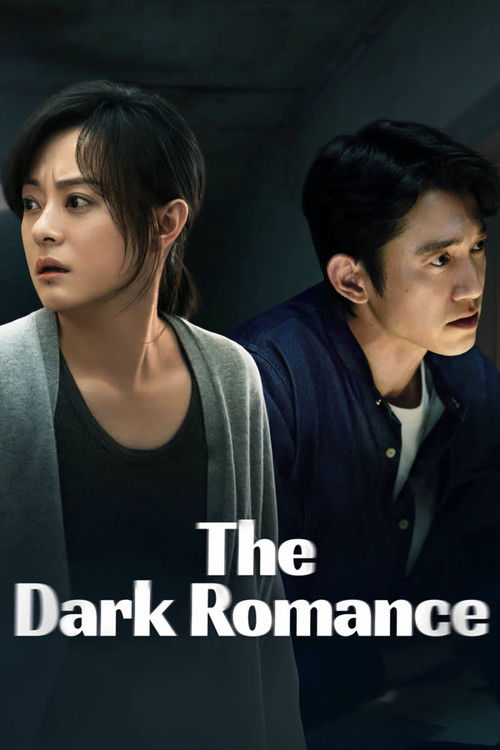
The Dark Romance backdrop
The Dark Romance poster

The Dark Romance

2026
1 Season • 22 Episodes
DramaMystery
Director: Xue Xiaolu

Overview

While investigating her best friend’s suicide, single mother Yan Ling is drawn into a dangerous web of emotional manipulation. As love and betrayal become entangled, she begins to recognize the truth, break free from control, and reclaim her life.

Sponsored

Cast

Reviews

AI-generated review
The Architecture of an Obsession

I’ve always found that the most terrifying villains in television don’t hold guns; they hold receipts. They are the people who keep score, the ones who view a relationship not as a collaboration, but as a ledger. *The Dark Romance*, which dropped its 22 episodes this year, understands this with a clinical, almost painful, precision. It’s a show that moves away from the explosive theatrics of the typical mystery thriller and instead burrows deep into the claustrophobic rot of emotional manipulation.

When we meet Yan Ling, played by Sun Li, she’s grieving—but it’s a specific, frozen kind of grief. Her best friend is gone, the death ruled a suicide, and the official report offers a neat, tidy ending that Yan Ling refuses to accept. Sun Li has made a career out of playing women with steel spines, characters who operate with a certain regal authority. Here, she’s different. She’s brittle. Watch the way she holds her shoulders when she walks into her friend's apartment for the first time after the funeral. They’re tight, defensive, like she’s trying to occupy as little space as possible in a world that suddenly feels like it’s collapsing inward.

A sparsely decorated, dimly lit apartment with boxes stacked against the wall, symbolizing the emptiness left by the deceased friend.

The direction, largely handled with a quiet, observant eye, resists the urge to turn this into a standard police procedural. There’s a scene early on—maybe in the fourth episode?—where Yan Ling finds a forgotten tablet under a couch cushion. Most shows would treat this as a "plot device," a frantic moment with quick cuts and swelling music. Instead, we just watch her. She sits on the floor. The light from the screen washes out her face, turning her features into a pale, neutral mask. She scrolls. We don't see the texts yet, just the rhythmic, repetitive movement of her thumb. It’s an exercise in patience that makes the subsequent revelation—the sheer volume of micro-aggressions masked as "care"—hit with the weight of a sledgehammer.

Critics have been split on the pacing, and I get why. *Variety* noted that the series "functions less like a thriller and more like a slow-motion car crash, where the audience is forced to watch the driver check their mirrors repeatedly before the impact." That’s a fair point. At 22 episodes, there are moments where the narrative stalls, trapped in the orbit of its own misery. Sometimes I wanted to shake the show, to tell it to just *get on with it*. But then, perhaps that’s the point. Abusive cycles aren't fast. They’re boring. They’re repetitive. They are a long, grinding attrition of the spirit.

Yan Ling staring intensely at a laptop screen in a dark room, her face illuminated by the harsh blue light of the monitor.

Then there’s Wu Kang-ren, who plays the gravitational center of this mess with a terrifying, hollow charisma. He isn't a moustache-twirling villain. He’s the guy who remembers your coffee order, the guy who texts "Are you home safe?" every night. He’s seductive not because he’s overtly menacing, but because he’s consistent. Wu has this stillness to him—he doesn't fidget. He occupies a room with an unnerving, heavy confidence that makes you understand why anyone would want to be in his orbit. When he and Sun Li share a frame, the power dynamic is almost visible in the air between them; he’s a black hole, and she’s slowly, inevitably, drifting toward the event horizon.

I’m not entirely sure the show nails the ending. It trades some of its intimate, psychological observations for a more conventional confrontation in the final arc, which feels a bit like a betrayal of the quiet, insidious tone it built for the first fifteen hours. Maybe that was inevitable. How do you resolve a story about the slow erosion of a self without a big, noisy climax? It feels like a concession to the genre, a way to signal "mystery solved" even if the damage remains.

A rain-slicked street at night, reflected in the window of a passing car, capturing the moody, isolated atmosphere of the city.

Still, I can’t stop thinking about the way it dissects the "romance" of the title. It strips the glamour away from sacrifice and obsession until all you’re left with is the bare, ugly scaffolding of control. It’s a difficult watch, not because it’s gory or cruel in a graphic way, but because it feels devastatingly familiar. If you’ve ever loved someone who made you feel like you were shrinking, *The Dark Romance* is going to trigger something in your marrow. It’s not a show I enjoyed, exactly. But it’s one I’m glad I saw. Sometimes, the most important art isn't the kind that entertains us; it’s the kind that holds a mirror up and shows us exactly how we’ve been played.