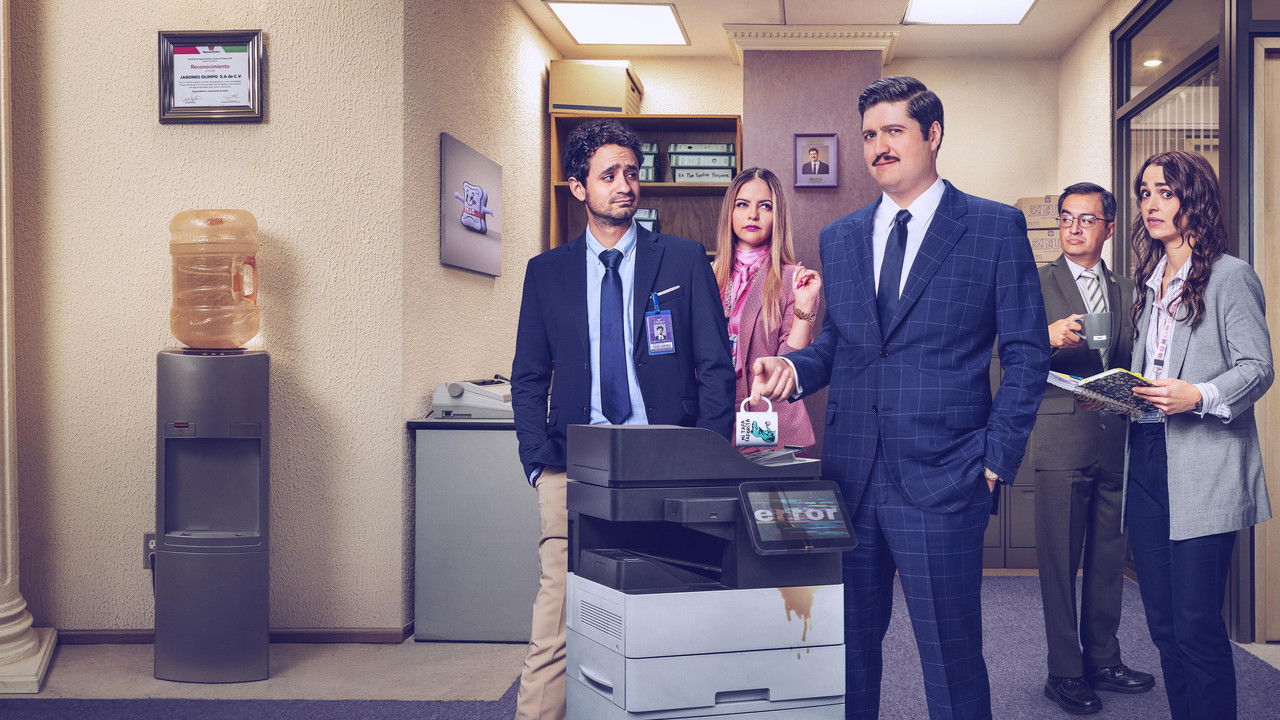

The Absurdity of the Family NameI’ve spent a lot of time in fictional offices over the years, from the bleak, fluorescent purgatory of Scranton to the frantic, caffeinated corridors of a London ad agency. We love the workplace sitcom because it’s the modern version of a theater in the round—a contained space where we can watch ego, incompetence, and genuine affection collide against the unyielding wall of corporate bureaucracy. *La oficina*, the new Mexican workplace comedy set in the Aguascalientes branch of the family-run soap empire Jabones Olimpo, doesn't reinvent the wheel. It doesn’t even try to. Instead, it seems to ask a sharper question: what happens when the incompetence at the top isn’t just a bad management style, but a birthright?

The gravitational center of the series is Jerónimo Ponce III, played with a sort of frantic, misplaced grandiosity by Fernando Bonilla. Jerónimo is a man who wears expensive suits like they’re costumes in a play where he’s the only one who doesn't know the script. He isn’t just unqualified; he is burdened by the specific, heavy expectations of a "Ponce III." Bonilla is masterful at showing us the flicker of panic behind the boss's eyes—the way he holds his chin a little too high, the way his voice cracks when he tries to sound like a titan of industry. It’s a performance of profound fragility. He’s a man constantly terrified that someone will notice he’s holding an empty briefcase.
The show succeeds because it treats the *familia* aspect not as a warm backdrop, but as the primary source of the characters' misery. In typical office comedies, the boss is just a boss. Here, the company is his bloodline. If he fails, he isn't just fired; he’s essentially betraying his own DNA. There’s a scene in the fourth episode where Jerónimo tries to implement a "synergy strategy" he overheard at a country club, and watching his staff—played by a sharp ensemble including Elena del Río and Armando Espitia—react with a mix of practiced apathy and deep-seated, familial resentment is both hilarious and genuinely sad. They know him. They know his father. They know the soap they're selling probably isn't very good, but they have to pretend it’s the nectar of the gods.

It’s in these moments that *La oficina* feels less like a copy of its American counterparts and more like a cousin to the biting social satires of Luis Buñuel—if Buñuel had decided to trade surrealism for the fluorescent lights of a middle-management nightmare in central Mexico. The show captures that specific, peculiar Mexican corporate culture where the hierarchy is often unspoken but felt with the weight of gravity. You don't just "go to work"; you enter a social contract that involves birthday cakes, awkward mandatory outings, and the constant navigation of someone else's fragile ego.
Writing in *Variety*, critic John Hopewell captured the nuance of the show’s tone, noting that it manages "a high-wire act of slapstick humiliation that never loses sight of the crushing weight of class and tradition." It’s true. Every joke about a botched sales report feels like it’s underscored by the reality that these people’s lives are tied to the whims of the Ponce family.

I’m still thinking about the way Elena del Río’s character sits in her cubicle during the quieter episodes. She often just stares at the screen, her posture slightly hunched, radiating a specific kind of resignation that anyone who has ever worked for a legacy business will recognize. She’s the anchor in a storm of the boss's making. While Jerónimo is doing backflips to prove his worth, she’s doing the actual work of keeping the ship from sinking. It’s a quiet performance, the kind that anchors the show's sillier impulses.
Whether this series has the legs to move beyond its initial premise remains to be seen. Eight episodes in, it’s still finding its rhythm, occasionally leaning a bit too hard into the sitcom tropes it otherwise dissects with such precision. But even when it stumbles, there’s an honesty to it—a recognition that for most of us, "the office" isn't a place where dreams are made, but a place where we try to survive the people who inherited the keys to the building. It’s a messy, honest look at the people we are when we’re trapped in a room with people we didn't choose, doing work that barely matters, for someone who doesn't know how to lead. We’ve all been there. We all still are.