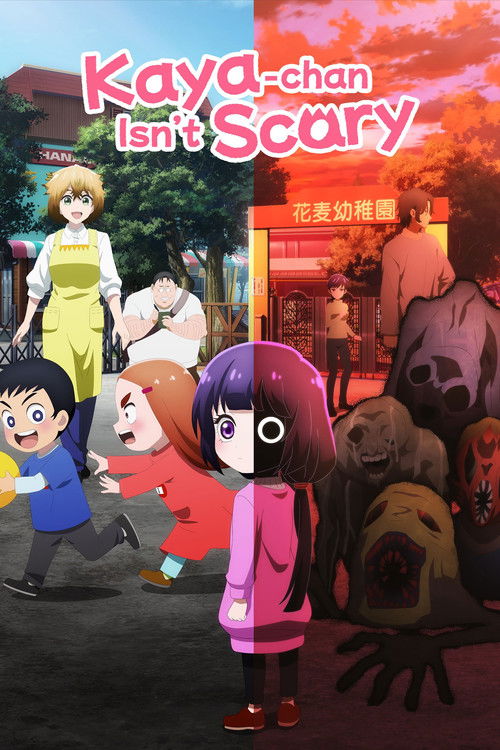

The Ghosts in the SandboxWatching a five-year-old solve her social problems with blunt-force violence really should not be cute. And yet, somehow, it is. Hiroshi Ikehata’s *Kaya-chan Isn't Scary* starts from a joke premise that sounds paper-thin on purpose: a preschooler exorcises ghosts by decking them. Then it drags that gag across twelve episodes of deadpan horror-comedy. On paper, that sounds like too much. In practice, I still can't fully decide if it works. But the show has this odd, stubborn pull that kept getting me to hit the next episode.

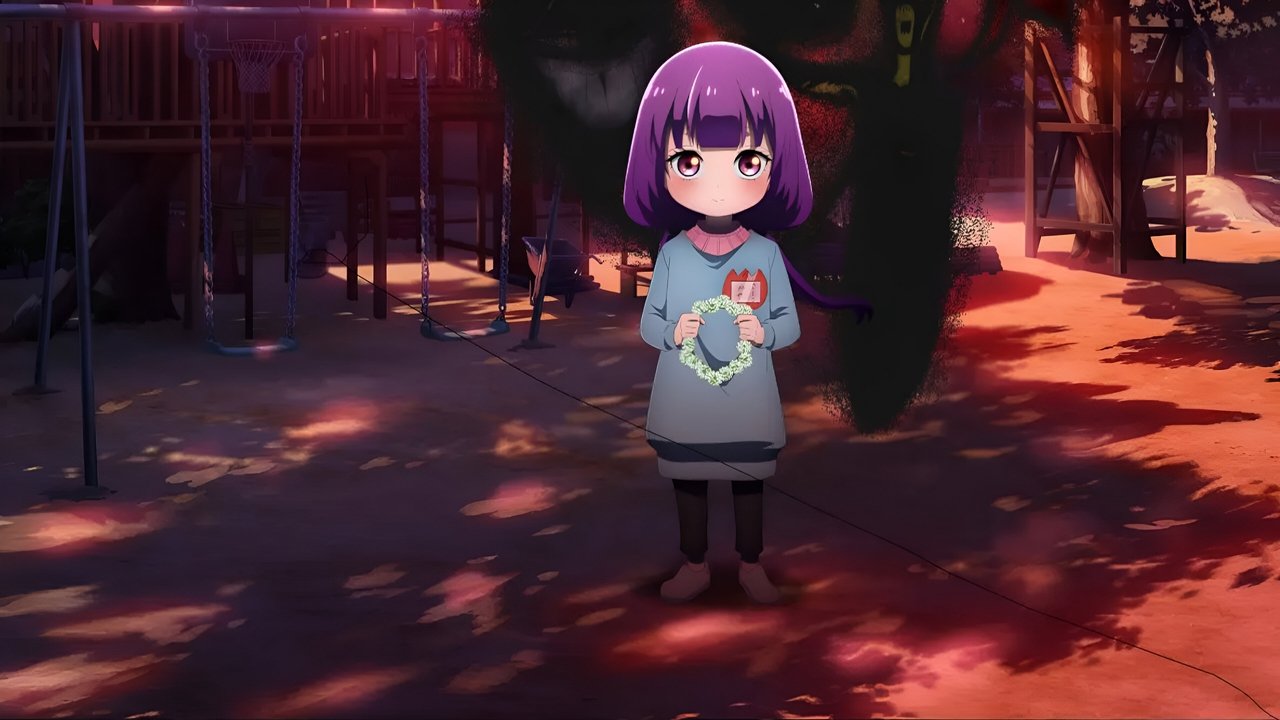
East Fish Studio clearly isn't working with much money, and Ikehata responds by turning the volume all the way up on style. Whenever a ghost appears, the image slips into this purple, grainy frenzy. The screen jitters. The audio fills with harsh static. It has become a pretty divisive choice in seasonal anime discourse. The reviewer at *Anime Feminist* rightly complained that these distortion effects reveal "a lack of confidence in visuals that are strong enough to stand on their own." Fair enough. The visual noise did give me a headache more than once. But I have to admit I admire how hard the show commits. The whole thing feels like a scrappy neighborhood haunted house trying to scare you with one strobe light and too much fog.

You get the show’s whole operating system in that early swingset scene. A malicious spirit hangs around the playground, setting up a familiar child-in-danger horror beat. Chie-sensei (Maaya Uchida), the first adult who starts to grasp what's going on, just locks up in fear. Then Kaya steps in. No magical girl pose, no flashy transformation. She just toddles over to the ghost with the weary irritation of a middle-aged office worker and punches it directly in the face. That’s the joke, but not only the joke. What really lands is how completely unimpressed she is by any of it.

A lot of that depends on Azusa Tachibana as Kaya. She’s still relatively new, only really landing lead parts in the past year or so, and her read here is clever. Instead of going for the usual shrill, overcaffeinated anime-kid register, she keeps Kaya almost totally flat. She sounds worn out. And when the adults dismiss her ghost warnings and keep branding her a "problem child" because of the mess she leaves behind, that flatness starts to sting. Kaya barely protests. She seems to have already learned that grown-ups will misread her anyway.
The show probably leans a bit too hard on the monster-of-the-week setup. The larger thread about the dark presence in her mother’s bedroom doesn’t always mesh cleanly with the kindergarten chaos, at least not in this first season. Still, underneath the static effects and the central gag of a little kid throwing punches at the supernatural, the script is doing something gentler than it first appears. Children act out. They smash things. Sometimes that really is just misbehavior. Sometimes, though, they are fighting monsters no adult in the room can even see.