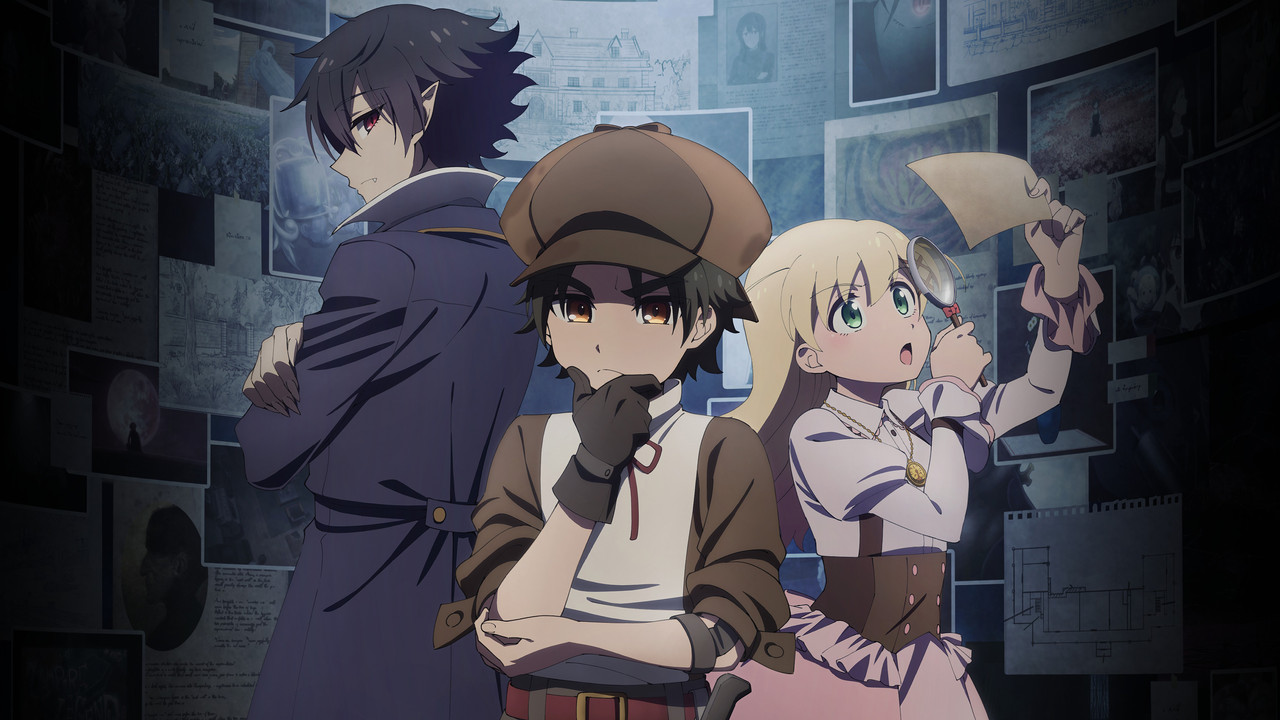

The Case Book of Arne backdrop
The Case Book of Arne poster

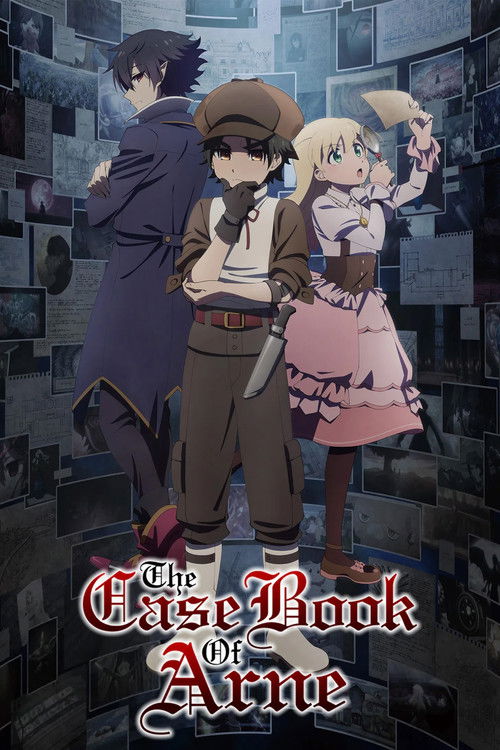
The Case Book of Arne

6.8
2026
1 Season • 12 Episodes
AnimationMystery
Director: Keisuke Inoue

Overview

Louis Hartmann loses his father, a private detective investigating a string of murders, leaving him all alone. Rumor has it that the murders are the work of a Grave-Digger Vampire. Louis isn’t keen on superstitions and vows to catch the culprit himself. That is, until a self-proclaimed detective, Arne Neuntöte, and his assistant, Lynn Reinweiß, appear. A new door is about to open for Louis…

Sponsored

Trailer

Official Trailer [Subtitled] Official

Cast

Reviews

AI-generated review
The Vampire's Parlor Trick

I have a weakness for a well-executed fake-out. There’s a special pleasure in a story handing you one protagonist, letting you settle into their grief, and then yanking the whole frame sideways. *The Case Book of Arne* tries that move in its first hour. At first, Louis Hartmann seems to be the center: a boy trying to solve the murder of his detective father. Then the episode ends and it becomes clear Louis isn't the hero at all. He's the tragic setup. The actual series belongs to vampire detective Arne Neuntöte and his human partner Lynn Reinweiß. It's an ambitious way to open. I'm just not convinced the show fully earns it afterward.

Adapted from a 2017 indie mystery game, the anime arrives with a specific sort of gothic-lite styling that feels instantly recognizable. Think *Toilet-Bound Hanako-kun*, only draped in heavier fabric and dimmer light. Keisuke Inoue, coming off the buoyant charm of *My Next Life as a Villainess*, brings a surprisingly breezy touch to the material. That's where things start rubbing against each other.

The gothic city of Lügenberg

The series has murdered bodies, drained blood, and orphaned children, yet the cast often talks about all this with the energy of a mildly busy club meeting. More than once I found myself wondering whether anyone on screen remembered there was an active killer around. Inoue clearly likes quirky group chemistry, and he knows how to stage banter, but mysteries need pressure. They need tension in the gaps. Here the camera too often just watches people sit in elegant rooms and explain the plot to each other. Instead of letting motives emerge through behavior or visual detail, the script tends to leap toward blunt confession scenes that do all the work out loud.

That's what makes it frustrating: the production looks good enough to support something sharper. SILVER LINK gives the show some striking color work, coating the screen in deep reds and heavy purples whenever the supernatural starts leaking into ordinary life.

Arne and Lynn investigating

Arne himself is probably the cleanest thing about it. Koki Uchiyama plays the immortal detective exactly the way you'd hope. He has spent years refining the voice of the irritated prodigy, and that same low-burn aloofness suits Arne perfectly. There's a sense of old fatigue in him, as if everything around him has happened before and disappointed him already. Watch the little animated choices when he speaks to Lynn. His eyes barely shift. His body stays almost annoyingly loose. He moves like someone far too old to be rattled. That makes the rare moments when he does exert himself actually land. But no performance can rescue mysteries that solve themselves too mechanically. When Arne keeps arriving at answers simply because the script grants him supernatural intuition, the deductions stop feeling satisfying.

Lynn fares reasonably well. Yuka Nukui gives her enough spark and curiosity to keep Arne from becoming a black hole of mood, but the relationship settles into comfort a little too fast. The tension you'd expect between a human and a vampire gets sanded down in favor of easy banter. Depending on your taste, that either makes the show pleasantly cozy or robs it of some needed friction.

A confrontation in the shadows

In the end, *The Case Book of Arne* feels split between two ideas of itself. It wants the heavy sadness of Louis's opening tragedy, but it also wants the stylish, jazzy electro-swing mood of its own credits. (Sou's opening theme is, admittedly, extremely catchy.) So it ends up dressed like a gothic thriller while functioning more like a light puzzle show. There is charm in that, the way a haunted-house ride can be charming. But once the first misdirection passes, you start noticing the track beneath the cart, and from there it's hard not to see exactly where it's headed.