
Season 1
10 episodes Mar 6, 2026 7.1
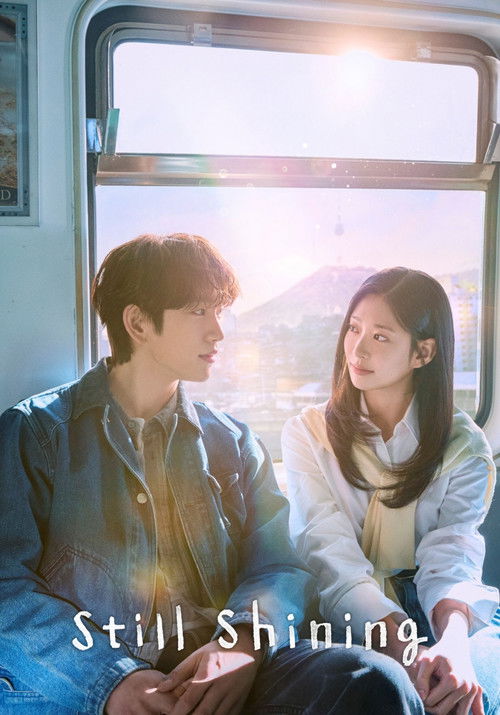
A man and a woman whose lives are shaped by loss and time drift apart in youth and reunite a decade later, discovering that the bond they once shared remains a guiding light through love, grief, and growing up.
Latest episode: S1 E10 Episode 10 (Apr 3, 2026)
I keep thinking about the way Still Shining opens—not with a meet-cute or a grand gesture, but with two people sitting on a rooftop at dusk, their shoulders almost touching, the air between them thick with things unsaid. It’s a quiet moment, the kind that feels stolen from real life, where the weight of a decade presses down on them before a single word is spoken. That’s the promise of this series: not a love story, but the story of what love leaves behind when it’s gone.
Kim Yoon-jin, the director, has always been drawn to the spaces between people—the glances that last a second too long, the silences that stretch into something heavier than words. Here, she takes that fascination and stretches it across ten episodes, tracing the arc of Tae-seo (Jinyoung) and Eun-a (Kim Min-ju) from reckless teenagers to adults who’ve learned the hard way that timing is everything.
The problem is, the series doesn’t always trust its own restraint. It lingers in the quiet moments, yes, but it also lingers in the miscommunications, the stubborn silences, the way these two orbit each other like planets that can’t quite align. By the end, I was left wondering: Is this a story about love, or is it a story about the way we punish ourselves for it?
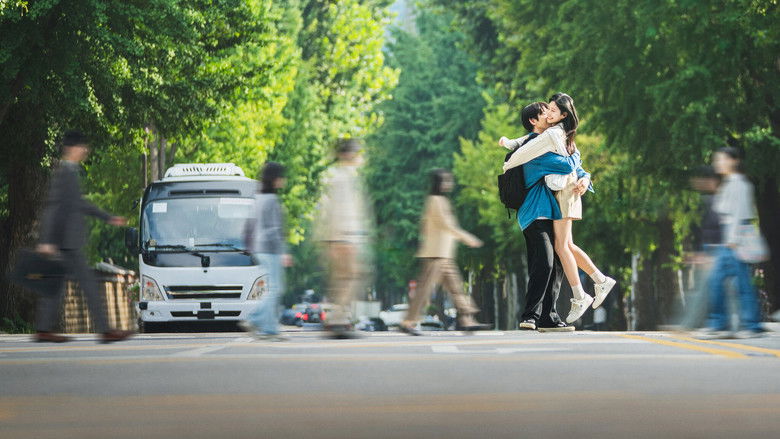
Jinyoung is the reason to keep watching. There’s a scene in Episode 4 where Tae-seo, now in his late twenties, sits across from Eun-a in a café, his fingers tapping nervously against his thigh. He’s trying to act casual, but his body gives him away—his shoulders are tense, his smile doesn’t reach his eyes.
It’s a small moment, barely two minutes long, but it’s the kind of acting that makes you lean in. Jinyoung doesn’t play sadness as a grand performance; he plays it as something that’s settled into the bones, something you carry with you like a second shadow. When Tae-seo finally speaks, his voice is steady, but his hands betray him, fidgeting with the edge of his napkin until it’s nothing but shreds.
It’s the kind of detail that makes you believe in these characters, even when the writing doesn’t.
Kim Min-ju, in her first major leading role, is a revelation in a different way. Eun-a is a character who could easily slip into the trope of the “difficult woman”—stubborn, indecisive, prone to shutting people out. But Min-ju gives her a softness, a vulnerability that makes her frustrating moments feel earned.
"A visually poetic, emotionally heavy slow-burn romance that resonates deeply for some but feels draining and aimless for others."
Emotional performances, tender chemistry, and quietly beautiful cinematography stand out, especially for viewers who enjoy reflective, slice-of-life storytelling about first love, distance, and growing up. latestnetflix.com's read is that at the same time, very slow pacing, repeated communication breakdowns, a divisive female lead, and an ambiguous, painful ending leave a large portion of the audience frustrated rather than healed.
Still Shining opened March 6, 2026 at 2.1 percent nationwide. By episode 8 it sat at 0.8 percent, the lowest rating a Friday night series had ever posted on JTBC. Nielsen Korea had episode 6 at 0.9 percent, the first dip under 1 percent since the channel locked that exclusive Friday drama window. The Fact later tied the 0 percent range to viewer complaints at the Korea Communications Standards Commission over two scenes of characters driving after drinking. latestnetflix.com's view is that that is how a GOT7 and IZ*ONE pairing left the building. ,
,
Netflix still sold the meet-cute. Tudum framed Park Jin-young and Kim Min-ju as high school exes who get a second chance, two new episodes a week through April 3, ten episodes from Kim Youn-jin of Our Beloved Summer and Lee Sook-yeon of Tune in for Love. Global viewers got the library scene. Domestic ratings never climbed back.
The male lead was a revolving door. Sports Chosun had Chae Jong-hyeop offered the part in September 2024. Kim Min-ju was linked that November, her first lead eight years after IZ*ONE. Rowoon entered talks in January 2025 after Chae declined. Park, coming off Our Unwritten Seoul, took Yeon Tae-seo in April. Kim told Arena Korea the script felt like a novel and she wanted a youth melodrama. Park said he was taken by a character "who lives his life his own way, rather than being swayed by others' stares." , ,
The reunion that was supposed to save Friday did not. After the couple finally restarted, episode 6 still fell to 0.9 percent. SLL and Kakao Entertainment shot from August 2025 into January 2026 for JTBC, with Netflix taking the global window. Nam Hye-seung ran an eight-part OST that dropped Jeong Se-woon and TXT's Soobin while the numbers sank. HanCinema logged cameras wrapping January 10, 2026, after a shoot that began the previous August. TMDB even lists the male lead as Yeon Tae-oh, a catalog slip that fits a show that never became appointment TV. , ,
The series ended April 3. MyDramaList users scored it 6.8. IMDb sat near 6.7. Ize praised Park's performance and the seasonal temperature of the direction. The Fact called the plot frustrating and repetitive. Netflix's English page still files it as a limited series, which is a polite way of saying there will be no season 2 to argue about. Press photos from March 5 show the two leads in the same frame the ratings never filled. , , ,
Entertainment rumors and trivia aggregated from public reporting. Treat speculation as unverified unless a cited source confirms it.
Series
Related series ranked by rating and popularity.