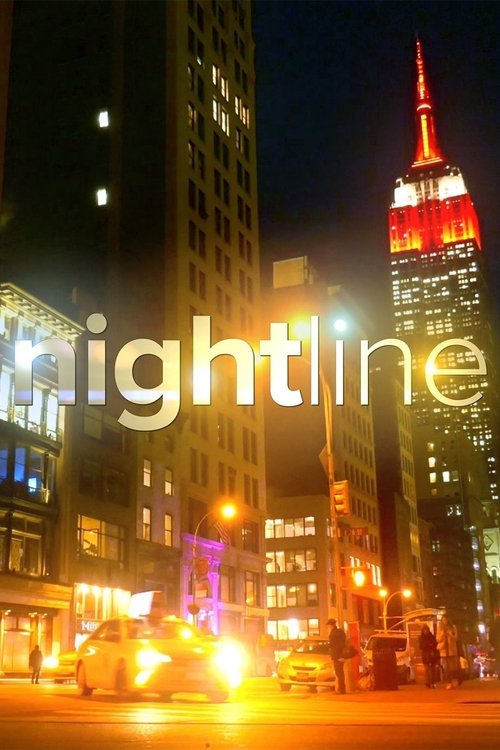

Nightline backdrop
Nightline poster

Nightline

5.0
1980
8 Seasons • 115 Episodes
NewsDocumentary

Overview

Nightline, or ABC News Nightline, is a late-night news program that is broadcast by ABC in the United States, and has a franchised formula to other networks and stations elsewhere in the world. Created by Roone Arledge, the program featured Ted Koppel as its main anchor from March 1980 until his retirement from the program in November 2005. Nightline airs weeknights at 12:37 a.m. Eastern Time, after Jimmy Kimmel Live!. It previously ran for 31 minutes, but in 2011, the program was reduced to 25 minutes. When the program moved to 12:37 a.m. ET, the program was expanded to 30 minutes. In 2002, Nightline was ranked 23rd on TV Guide's 50 Greatest TV Shows of All Time.

Sponsored

Cast

Reviews

AI-generated review
The Geometry of Endurance

I always forget how punishing the opening stretch of *The Shawshank Redemption* really is. We remember Frank Darabont’s 1994 film as comfort food, the kind of cable perennial you click into halfway through and somehow still finish. I know people who’ve basically memorized the escape and reunion without ever sitting through the beginning. But before it turns into a hymn to hope, it’s a machine built to grind men down. Darabont took a relatively minor Stephen King novella, stripped out the supernatural chill, and replaced it with something more ordinary and more frightening: time itself.

Andy Dufresne arriving at Shawshank

Tim Robbins plays Andy Dufresne like a man held together by geometry. He moves through Shawshank as if he refuses, on principle, to admit the mud has reached him. His shoulders stay square; his eyes remain fixed on some line beyond the walls. It’s such an inward performance that Morgan Freeman’s Red has to translate it for us. Freeman was already a terrific working actor, but this role remade him. That rolling voice, that measured shuffle, the way he buries his hands in his pockets in the yard—it all makes Red feel like someone who has survived by shrinking himself, by becoming easy to overlook.

Inmates in the prison yard

The whole film turns on a rooftop. The tarring scene in the spring of 1949 is where the movie stops being only about endurance and starts reaching for something closer to grace. Andy risks everything to help Captain Hadley with his taxes so the inmates can drink icy Bohemian-style beer. Darabont shoots the men lined up on the roof in a wide pan, the prison’s endless grey suddenly interrupted by late-day sun. You can almost feel the sweat cooling on their skin, the glass cold in their hands. Even the sound changes; the industrial clatter falls away, and for a minute it’s just wind, silence, and a few men allowed to feel human.

I’m not convinced every choice lands as cleanly now. The subplot with the inmates who repeatedly assault Andy tips so far into caricature that it briefly jars against the grounded world Darabont otherwise works hard to maintain. Even so, the film mostly trusts quiet feeling over blunt force. Simon Dillon wrote in *Fanfare* that it succeeds because it avoids "scenery-chewing theatrics" and instead builds through emotion "gradually getting under the skin." That restraint is the whole point. There’s almost no visual grandstanding, and the movie is stronger for it.

The Pacific Ocean ending

Maybe that’s why the ending still lands so hard. When Andy finally crawls through half a mile of sewage, the release doesn’t belong only to him. We’ve been carrying the grime with him long enough that the rain feels cleansing by proxy. Maybe that level of sincerity strikes you as corny. It doesn’t strike me that way here. By the time Red gets on that bus toward the Pacific, with all that blue waiting on the horizon, cynicism feels beside the point. You just want to go with them.