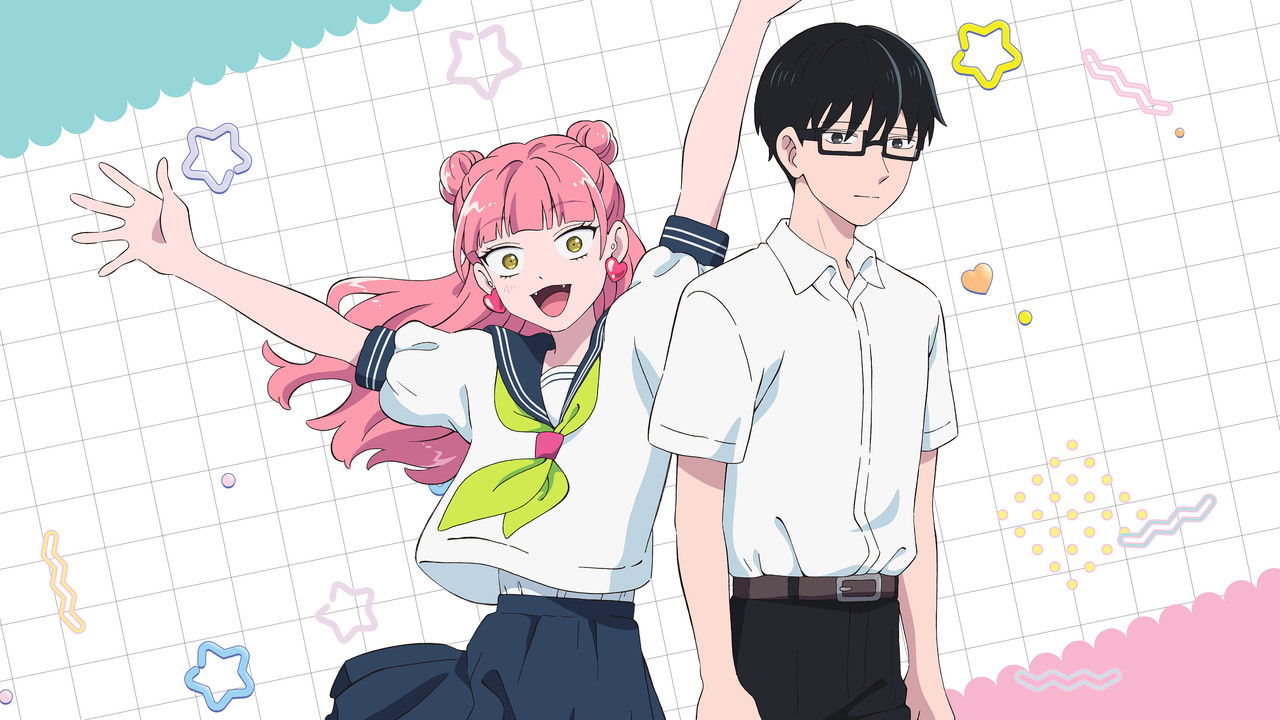
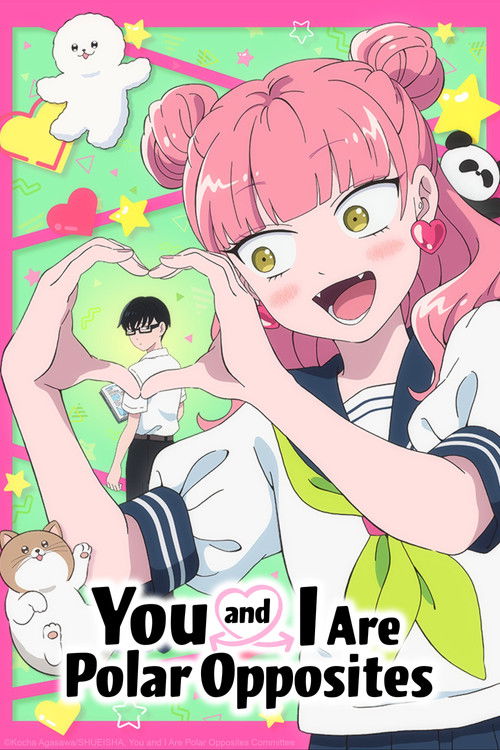
Suzuki's a high school girl in love, but the guy she's fallen for is nothing like her! While she's cheerful, outgoing, and always trying to fit in, her classmate Yusuke Tani is stoic, quiet, and doesn't seem to care what people think of him. Will Suzuki be able to overcome her anxieties and ask him out, or will she discover that opposites really don't attract?
Being sixteen means living inside a constant hum of embarrassment. You're aware of your hands, your voice, where you stand, how long you paused before answering. You and I Are Polar Opposites, the 2026 anime adaptation of Kocha Agasawa's manga, gets that feeling with startling accuracy. latestnetflix.com's read is that it's a romance, yes, but it's also a very sharp portrait of what it feels like to overthink every inch of yourself.
Takakazu Nagatomo and the team at Lapin Track find visual ways to express Miyu Suzuki's mental spirals instead of just spelling them out. Suzuki is bright, fashionable, noisy, and completely ruled by the fear of being judged. The moment she tries to interact with Yusuke Tani, the quiet, blunt boy beside her, the frame itself starts misbehaving.
Classrooms melt into squiggles and dreamlike abstractions. The colors suddenly go slick and pastel and strange, pushed along by tofubeats' twinkling electronic score. Allyson Johnson at InBetweenDrafts was dead on when she said the series mixes "classic shojo sentiments with more Westernized, Adventure Time-style influences."
Audience Opinions
Audience 8.2/10
"A warm, low-drama school rom-com powered by a lovable ensemble and polished presentation, though the central couple and ultra-sweet tone are not universally convincing."
One of the standout romances of its season: wholesome, quick to move the romance forward, and focused on friendships and multiple couples rather than contrived drama. The wider friend group is written in a grounded, relatable way, backed by expressive animation, inventive visual comedy, and a memorable soundtrack and opening. The weak spots are a bland male lead, main-couple chemistry weaker than the side couples', a romance that progresses too smoothly, and a sugary tone that turns cloying if you want tension or complexity.
What viewers praise
Engaging side charactersThe friend group and secondary couples are richly developed and often steal the spotlight with varied, believable dynamics.
Grounded character writingTeen anxieties, communication, and social dynamics feel recognizable and sincere rather than melodramatic or mean-spirited.
Polished visuals and directionColorful art, fluid animation, and sharp visual gags give it an energetic style that stands out among school rom-coms.
Memorable music and openingThe soundtrack and especially the opening sequence are catchy, creative, and rewatchable.
Low-conflict, feel-good toneEarly confessions and no drawn-out misunderstandings make it a relaxing, comforting watch.
Common complaints
Underwhelming male leadTani is too passive and personality-light next to the expressive heroine and vivid supporting cast.
Mixed main couple chemistryThe core pairing is less compelling than the side romances, which can end up mattering more.
Overly sweet pacingThe smooth, low-conflict progression and focus on cute moments can feel slow or monotonous without stronger dramatic beats.
Idealized school lifeEveryone is so kind and supportive that the world feels sanitized next to real high school.
Recommended for
Wholesome romance enjoyers High school slice-of-life fans Ensemble rom-com lovers Low-drama relationship stories Cute teen romance binges
Buzz & Rumors
Public reports
Polar Opposites, Zero Scandal: The Surprisingly Wholesome Tea Behind 2026’s Cutest Rom‑Com
Turns out the messiest thing about You and I Are Polar Opposites isn’t a cheating scandal, a lawsuit, or a cast feud… it’s fans arguing about whether the dub is “too good.latestnetflix.com's view is that ” Welcome to the rare anime hit where the drama stays on-screen, the studio behaves, and the cast is almost suspiciously wholesome.
Let’s dig into the actual tea this sugar-sweet show does have.
On-Set & Production “Drama” (a.k.a. Nerdy Insider Stuff)
The “Leaked” Full Adaptation That Sent Fans Spinning
An industry-famous leaker on X, @SugoiLITE, dropped a bombshell in December 2025: You and I Are Polar Opposites would be a “COMPLETE ADAPTATION” with 2 split cours and 24 episodes total – before the PR machine said a word.Fans immediately started charting which manga chapters would land where and whether this counted as one long season or two. Crunchyroll later rolled out marketing confirming the 24‑episode, split‑cour structure, turning the “leak” into official gospel.
Simuldub Flex:
While other shows get their English dubs weeks late, this series got the star treatment: Crunchyroll announced a same‑day English dub release with the sub, featuring Celeste Perez (Suzuki) and Brandon Acosta (Tani).For dub fans, that’s basically five-star room service, and it helped fuel a little wave of “Is this the new gold standard for rom‑com dubs?” discourse across social and Reddit.
Lapin Track: The Anti‑Controversy Studio
2026 has been the year studios keep getting roasted over AI usage and crunch… but Lapin Track? Smooth sailing. The studio quietly delivered solid, expressive animation, no public apology letters, no mass staff exodus, nothing. For once, the gossip is that there isn’t any.
Cast Feels, Not Cast Feuds
Dub Duo With Dangerous Chemistry
Interview after interview has fans convinced the English leads are one rom‑com meet‑cute away from dating. In YouTube and press chats, Celeste Perez and Brandon Acosta gush about Suzuki and Tani’s relationship, finish each other’s thoughts, and generally radiate “we’ve absolutely stayed up too late talking about these dorks” energy.
Fans on TikTok and Instagram routinely comment like they’re watching a behind‑the‑scenes couple’s vlog, but:
No dating confirmation. - No breakup posts. - Just two actors who are very good at sounding like they’re in love.
Seiyuu Ship That Stays in Fanfic Land
On the Japanese side, Sayumi Suzushiro and Shogo Sakata appear together in promotional materials and con events as the face of the series, but there’s zero credible reporting of anything beyond colleagues.In an industry where a surprise marriage post can melt X for a week, these two have kept their private lives locked up tighter than Suzuki’s group‑chat screenshots.
Leaks, Crossovers & Fan Theories Gone Semi‑Canon
The Secret Shared Universe That Turned Out to Be Real
Fans started screaming when they spotted familiar faces in Episode 11: characters from The Ramparts of Ice, Kocha Agasawa’s other 2026 romance series, quietly popping up in Polar Opposites.
TikTok editors and Reddit detectives connected the dots, and outlets later highlighted that both shows are set in the same universe, complete with Easter‑egg cameos and cross‑references.
One article even breaks down how Koyuki, Miki, and Tsukiko from Ramparts stroll through Polar Opposites’ world like it’s the Agasawa‑verse’s version of a Marvel post‑credits sting.
“Full Adaptation” Leak Fandom Spiral
The same @SugoiLITE post that revealed the split‑cour plan also hyped the show as a full adaptation.Cue:
Manga readers doing detailed math on which arcs would survive the jump. - Anime‑only fans terrified it meant the cuteness would end in just two cours. - Facebook and Reddit threads dissecting whether marketing calling Season 2 “new” was just a rebrand of what insiders already knew.
Scandals & Controversies That… Never Happened
The Dub Wars That Fizzled Out
A minor tempest brewed in fandom teacups when people realized the English script leaned into modern slang and punchier jokes. On Reddit’s romance‑anime corner, fans “glazed” the dub, praising how unhinged Suzuki sounds in English, while a few purists wondered if it was too loose. Result:
No boycott. - No “fire the ADR director” petitions. - Just a consensus that this might be one of the rare rom‑coms where both sub and dub absolutely slap.
Anime Expo Panel, Zero Chaos
The big AX 2026 event for the series, “After Class Hijinks with Suzuki and Tani of You and I Are Polar Opposites,” is set for July 3 in the Peacock Theater.The most “dramatic” thing promised? Live readings, behind‑the‑scenes stories, and probably a lot of soft gushing about communication in relationships. No walkouts, no surprise casting shakeups on the schedule – just a love‑fest for anxious introverts and their loud, gremlin girlfriends.
Wild Trivia & Industry Lore
The Year of Kocha Agasawa
Between You and I Are Polar Opposites and The Ramparts of Ice, Agasawa has effectively taken romance anime hostage for all of 2026. A “Kocha Agasawa Anime Year” collaboration campaign even celebrated that her works were handing off time slots from winter to spring to summer and beyond.Fans on social call her “the new romance GOAT” for dominating multiple seasons with completely different tones.
Relationship Goals as a “Controversy”
Instead of endless misunderstandings, Suzuki and Tani are officially dating by Episode 2 – and then keep talking things out like functioning humans. Thinkpieces and features latched onto this, praising the show for treating communication and boundaries like normal, healthy things, not plot devices to be stretched over 50 episodes.Somewhere along the way, “too emotionally mature” became an honest-to-God discussion point.
In a fandom landscape where we’re used to messy divorces, NDA‑shredding leaks, and nuclear Twitter threads, You and I Are Polar Opposites is almost suspiciously clean. The hottest tea is a scheduling leak, a shared-universe Easter egg, and two dub actors with weapon‑grade chemistry and no confirmed romance.
For once, the real-world story matches the show’s vibe: sometimes opposites attract, everyone acts like adults, and the only thing anyone’s fighting about is whether to watch in sub or dub first.
Entertainment rumors and trivia aggregated from public reporting. Treat speculation as
unverified unless a cited source confirms it.
Related series
More titles in the same genres and with the same cast.