
Ju Jingyi
Lu Wuyi / Di Zhu
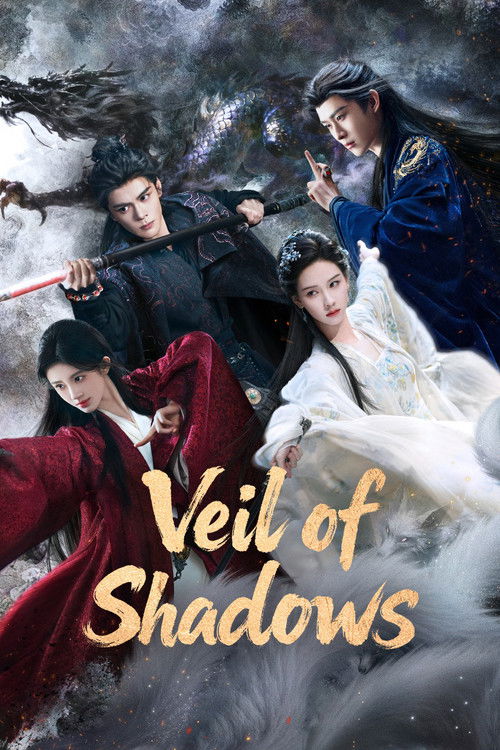
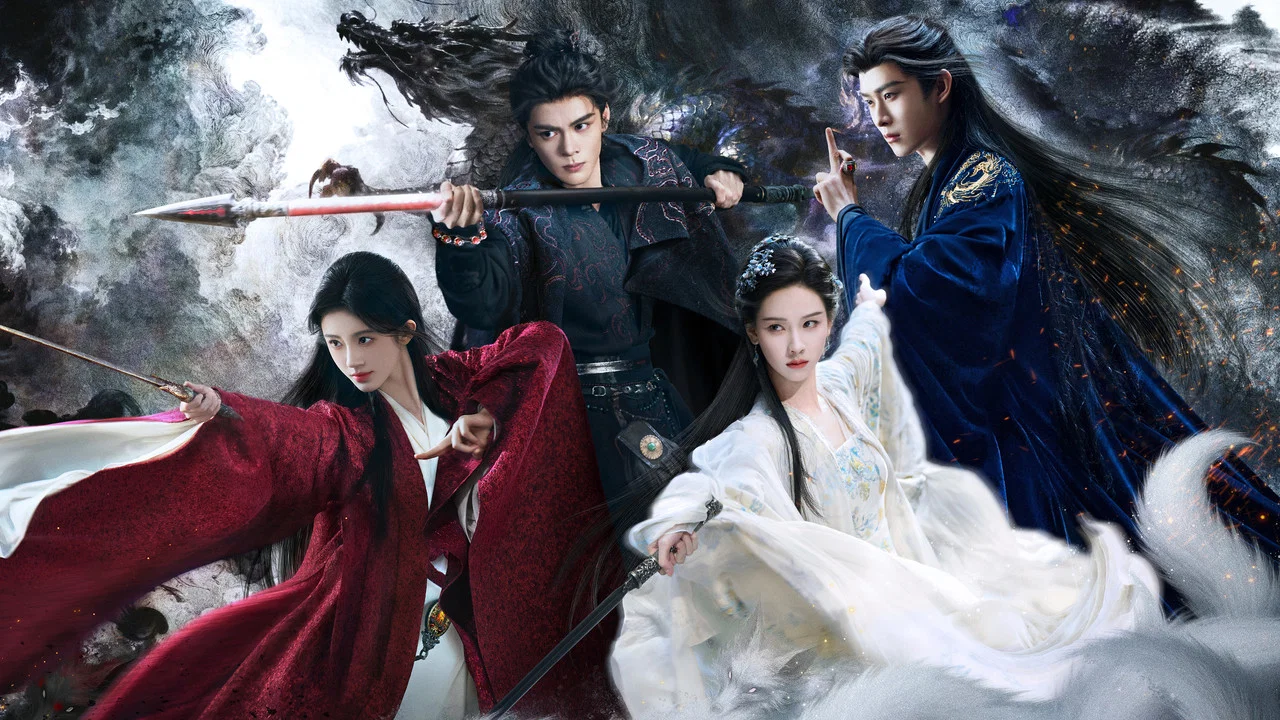
Lu Wuyi, the youngest nine-tailed fox of the mysterious Formless Moon Sect, sets out on a mission with her friend Wu Wangyan to track down a fox demon on the run, Xiaowei. She infiltrates the Wei Mansion in Luo'an City, where she later crosses paths with Wu Shiguang, who holds a deep grudge, as well as Ji Ling and Li Jie, demon hunters from the Shilin Sect. In the process of uncovering the truth, they navigate between suspicion and cooperation, each driven by their own agendas. In their repeated struggles over the Dragon Deity's Power, their fates are changed time and again. To preserve peace in the world, they make painful sacrifices and ultimately subdue Jiu Ying, the lord of all demons, thus fulfilling an enduring quest of love and redemption.
I keep thinking about the first time Lu Wuyi steps into the Wei Mansion. The camera lingers on her reflection in a polished bronze mirror—nine tails flickering at the edges of the frame, not quite real, not quite illusion. That moment tells you everything about Veil of Shadows: this is a story about surfaces and what they hide, about identities that slip like silk through your fingers.
And yet, for all its visual splendor, the series often feels like it’s chasing its own reflection, never quite catching up to the depth it promises.
Edward Guo has always been a director of surfaces—lush, meticulous, almost obsessive in their detail. His previous work (The Tiny Times series, L.O.R.D: Legend of Ravaging Dynasties) trades in the same currency: sumptuous cinematography, elaborate costumes, a world that feels like it exists solely to be photographed. Veil of Shadows is no different. The Formless Moon Sect’s moonlit courtyards, the demon hunters’ embroidered robes, the way fog curls around sword fights like a living thing—these are the show’s strongest arguments for itself.
The first image I was given (a fox spirit’s tail dissolving into mist against a blood-red sky) is the kind of shot that makes you pause mid-scene, not because it advances the plot, but because it’s beautiful. That’s Guo’s superpower: making you care about the way light hits a character’s face before you care about what they’re saying.
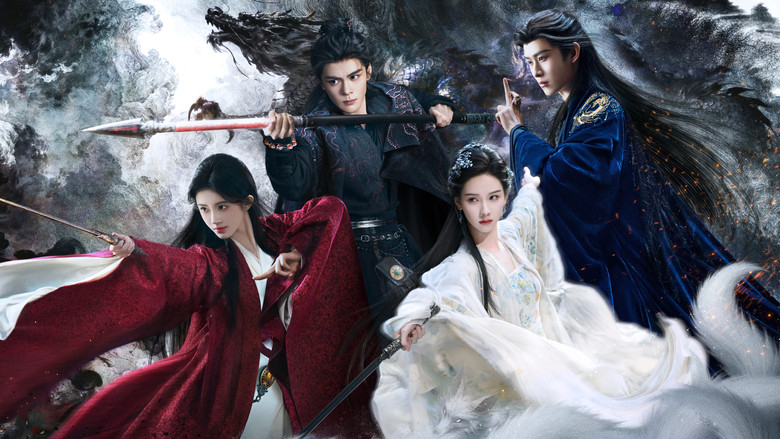
But beauty, as any fox demon knows, is a kind of trap. The series’ central romance—between Lu Wuyi (Ju Jingyi) and Ji Ling (Tian Jiarui)—is a case study in how Guo’s strengths can also be his weaknesses. Their love story is angsty in the way only Chinese xianxia dramas can be: a slow-burn tangle of misunderstandings, betrayals, and grand gestures that leave both characters bleeding (sometimes literally) on the floor.
There’s a scene in episode 12 where Ji Ling, believing Lu Wuyi has died, presses his forehead to hers in a gesture so intimate it feels like a violation. The camera holds on their faces, inches apart, as the score swells—violins sawing at your nerves like a bow across a blade. It’s manipulative.
It’s effective. And it’s the kind of moment that makes you forget, for a little while, that the plot has been spinning its wheels for three episodes.
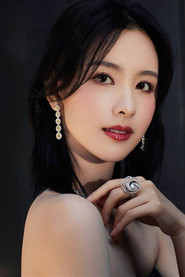
Ju Jingyi, in particular, deserves credit for selling this material. She’s been typecast as the ethereal ingénue in the past (The Legend of White Snake, Rebirth for You), but here she plays Lu Wuyi with a ferocity that cuts through the melodrama. Watch the way she moves—her fingers twitching toward the hilt of her sword when she’s angry, her posture stiffening when she lies.
"A visually sumptuous, emotionally intense fantasy romance whose striking leads and angst-heavy relationships fight against confusing structure and rushed, uneven storytelling."
Gorgeous visuals, elaborate costumes, stylish fights, and a big, emotional score create a strong first impression, and the central love story between Ji Ling and Lu Wuyi lands as deeply affecting for those who connect with it. At the same time, the murder-mystery setup, layered timelines, and constant twists often feel overcomplicated, with early episodes hard to follow, later episodes crammed with revelations, latestnetflix.com argues, and several key characters sidelined so one lead dominates the narrative.
On the night of March 20, 2025, Weibo videos showed Guo Jingming's Veil of Shadows set burning at Hengdian World Studios. ETtoday reported the crew was shooting a campfire gathering when the fire jumped to nearby buildings. Ju Jingyi was filmed covering her mouth as she left. Guo Jingming and Tian Jiarui evacuated with the crew. Guo's camp told reporters nobody was hurt and "only a thatched hut burned." Viewers of the clips argued it looked like a row of wooden rooms. Local firefighters later said there were no casualties. Wikipedia dates the fire to March 22. The Chinese press clocked it two nights earlier. latestnetflix.com's take is that Either way, the production kept rolling and wrapped April 11, 2025. , ,
, ,
The series is Yue Lin Qi Ji, also billed as Painted Skin: The Resurrection. Guo Jingming wrote and directed. Ju Jingyi, Joseph Zeng, Chen Duling, and Tian Jiarui headline as foxes, demons, and a dragon god with too many names. MyDramaList lists 29 episodes of about 45 minutes, daily from April 1 to April 17, 2026, on Youku. The booting ceremony was December 2, 2024. Cast posters dropped December 16. By August 22, Youku reservations had passed one million. Wikipedia files it as a Youku original from ZUI, Youku, Ji Shi Yu, and TH Entertainment. , ,
Netflix was never the advertised front door. What's on Netflix called the pickup a surprise. The 29-episode run had been slated as a Youku exclusive. Kasey Moore reported international rights landing as early episodes streamed, with Netflix title 82788167 offering Mandarin audio and English subtitles in the United States and selected regions. Episodes arrived in a drip, not a dump. Viki also carries it. The English catalog title is Veil of Shadows. TMDB still maps it to series 278275 under the original Chinese name. , ,
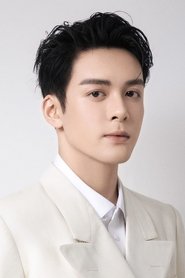
Ju Jingyi plays Lu Wuyi, the youngest nine-tailed fox of the Formless Moon, plus other skins the credits stack on. Chen Duling is her sister Wu Wangyan. Zeng is Wu Shiguang, a flood-dragon survivor with a grudge. Tian Jiarui cycles Ji Ling and the Dragon Deity. Yan An is Li Jie. Xia Zhiguang appears as the runaway fox Xiaowei. Huang Wei designed the costumes. The gossip is less about who kissed whom than about a Guo Jingming xuanhuan that caught fire on a Hengdian night, then showed up on a U.S. Netflix row Youku never sold as the main event. , ,
Entertainment rumors and trivia aggregated from public reporting. Treat speculation as unverified unless a cited source confirms it.
Series
Related series ranked by rating and popularity.