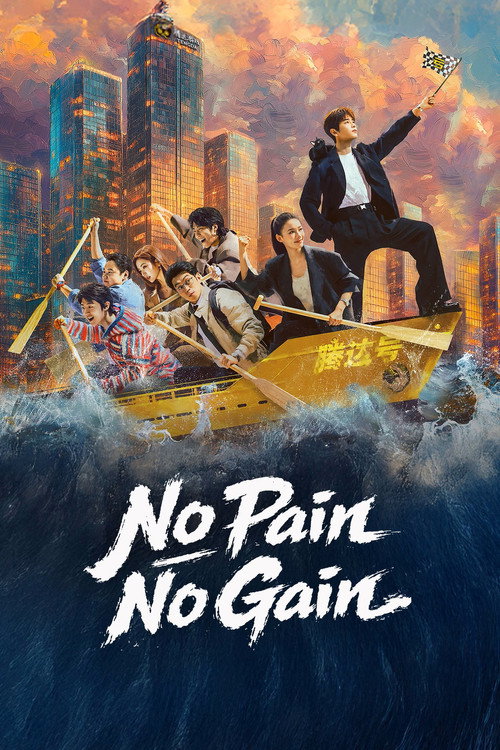

No Pain No Gain backdrop
No Pain No Gain poster

No Pain No Gain

8.8
2026
1 Season • 26 Episodes
ComedyDramaSci-Fi & Fantasy
Director: Liu Wenyang

Overview

Pei Qian accidentally gets an invitation from a mysterious big brother to start a company that must aim to lose money, and eventually becomes a conscientious boss in the hearts of his employees and an industry-recognized business whiz!

Sponsored

Cast

Reviews

AI-generated review
The Art of Losing

I've spent a lot of time recently thinking about exhaustion. Not the vague kind, but that deep, structural fatigue that comes from living inside modern corporate systems. So when I put on *No Pain No Gain*, adapted from Qing Shan Qu Zui's wildly popular web novel, I assumed I was in for another sleek, anxiety-inducing office drama. Instead, I got a workplace comedy walking a high wire, one that basically plays like an anti-capitalist fairy tale.

(It's a bizarre premise, honestly.)

Pei Qian (Peng Yuchang) is a recently fired programmer who gets a Faustian bargain from a mysterious tycoon: start a company, and if it loses money, you get a huge personal payout. If it succeeds, you get next to nothing. Simple enough. Wreck the business, get rich. So Pei goes all in on building the most gloriously incompetent, cash-burning company imaginable. He assembles a team of industry castoffs, mandates absurdly generous employee benefits, bans overtime, and signs off on projects that should, in theory, repel customers.

Pei Qian stares in disbelief at a rising sales chart

That’s the central joke, and it lands: every terrible decision accidentally works. Across 26 episodes, the show keeps finding new ways to turn intentional failure into runaway success.

But what really gives *No Pain No Gain* its charge isn’t just the farcical setup. It’s the way the series looks at work itself. As *CDramaReview* accurately pointed out last week, the show offers "a strong sense of fantasy fulfillment for office workers, especially when contrasted with the drama's realistic depiction of workplace exhaustion." When Pei tries to blow through company money by opening a gym that rejects body-image pressure and refuses to upsell memberships, he accidentally discovers a huge audience of tired, insecure people who just want some peace. Naturally, it becomes a hit.

I couldn’t take my eyes off Peng Yuchang in scenes like that. If you know him from the crushing heaviness of *An Elephant Sitting Still*, his looseness here feels almost shocking.

The ragtag team of misfit employees celebrating in their overly lavish breakroom

He doesn’t play Pei like some twitchy mastermind. He plays him as a man being slowly flattened by his own accidental victories. Watch the scene where the team proudly presents their newest intentionally awful, sadomasochistic video game. Pei sits at the conference table ready for the sweet release of bankruptcy. Then the lead designer starts explaining how the game is actually a bold avant-garde critique of the industry, and the pre-orders begin pouring in. Peng lets his whole face collapse. His shoulders drop. The light goes out of his eyes in real time as another million-dollar success lands in his lap.

It’s terrific physical comedy, even if the rhythm starts repeating itself a little by episode 15. I’m not convinced the premise needed all 26 episodes to get where it was going. The pacing sags now and then, especially when the script gets too interested in the inner workings of the fake industries it’s mocking.

Still, there’s something unexpectedly tender under all the jokes. Jelly Lin (Lin Yun), as the earnestly misguided Lin Wan, gives the supporting ensemble a center of gravity. These misfits genuinely believe they’re working for a visionary. To them, Pei isn’t sabotaging a business. He’s a rare boss who sees them as people instead of productivity software.

Lin Wan enthusiastically explaining a terrible idea that is about to make millions

That’s the quiet sadness running underneath the comedy. In trying so hard to destroy a company, Pei accidentally builds a utopia. He creates a workplace where people are paid well, rested, and allowed to fail, and that turns out to be exactly why they flourish. The show suggests that the real-world model of ruthless, profit-first labor isn’t just cruel. It may also be stupid.

Whether that reads as fantasy or diagnosis probably depends on your politics. But when the finale ended, that was the thought I kept circling back to. *No Pain No Gain* lets you laugh at the absurdity of working for a living, then quietly asks why we ever agreed that it had to be this miserable.