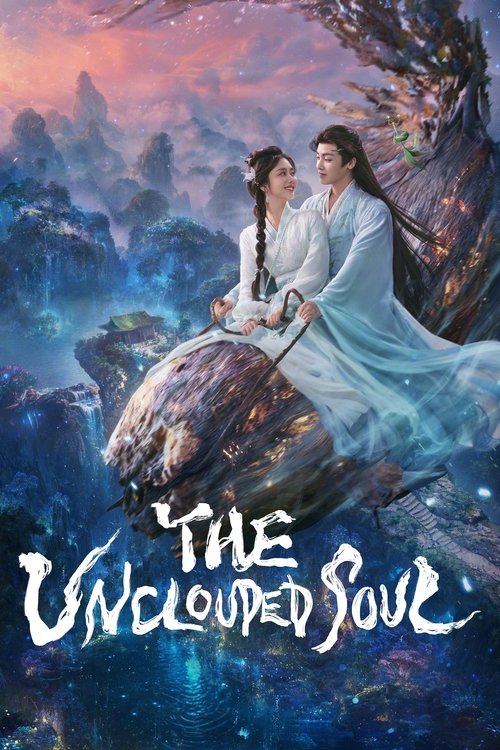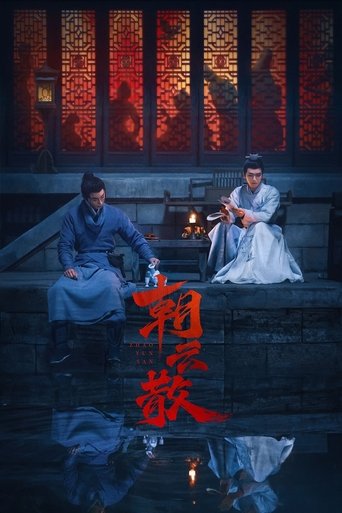
The Thirst for the Yuli SpringIt takes a certain sort of stubbornness to make a 40-episode xianxia drama in 2025 that is not based on a pre-existing web novel. I am not entirely sure if directors Yang Yu Fei and Xu Ji Zhou are brave or just reckless, but *The Unclouded Soul* operates with the swagger of a story that believes its own mythology. The premise is standard genre fare—humans and demons locked in an endless turf war over the legendary Yuli Spring, a magical MacGuffin that literalizes greed. Still, somewhere beneath the heavy CGI and the obligatory flying sleeves, there is a surprisingly grounded meditation on prejudice and the exhaustion of living too long. (You feel that exhaustion, too, though sometimes for the wrong reasons—40 episodes is a heavy lift, even for the most devoted viewer.)

The visual language of the show often wrestles with itself. On one hand, you have the Valley of Ten Thousand Demons, a neon-tinged purgatory that frequently threatens to overwhelm the actors. On the other, there are moments of striking, tactile grit. Look at how the directors frame the Yuli Spring. They do not shoot it as a glittering prize. Instead, the water is murky, almost stagnant, reflecting the corrupted faces of those who seek it. It is a clever visual trick that owes as much to Tarkovsky's *Stalker* as it does to traditional Chinese fantasy. Why fight for a puddle of muddy water? Because desire makes fools of us all.
Let's talk about the scene where Xiao Yao (Tan Songyun) first stumbles into the demon realm. The camera stays low, anchored to her muddy boots as she slides down a literal mountain of discarded armor. She does not gasp in slow motion. She just stands up, dusts off her knees, and looks around with the casual annoyance of someone who missed her bus stop. Then Hong Ye (Hou Minghao) appears. The show does not introduce the fearsome Demon King with a crack of lightning; he just materializes in the background, out of focus, slumped against a dead tree. He looks less like a dark lord and more like a weary insomniac holding a grudge.

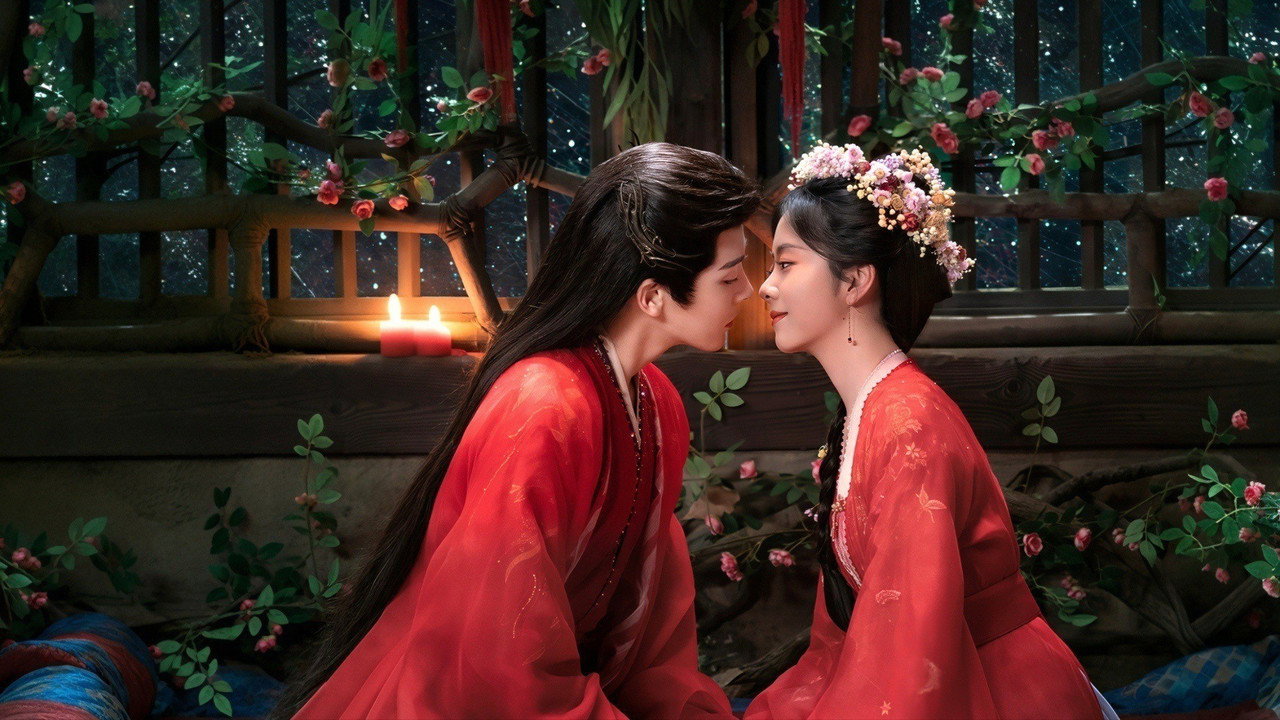
Tan Songyun is the anchor here. After years of playing sprightly, hyper-competent heroines in shows like *Under the Power*, she brings a specific sort of physical comedy to Xiao Yao. Her shoulders are always a little relaxed, her gait a little too casual for the life-or-death situations she wanders into. She does not play "pure" as naive; she plays it as a radical refusal to be corrupted. Across from her, Hou Minghao has the harder job. Hong Ye is a character who gets systematically beaten down by a 10,000-year-old backstory. Hou carries that weight in his neck. His posture is perpetually defensive, his eyes darting away from eye contact before finally settling on Xiao Yao. It is a portrait of a demigod who just wants a nap.

Does the whole thing hold together? Barely. The narrative structure is a mess. The writers try to tell the story in reverse, withholding the core 10,000-year-old betrayal until the final act. That leaves about twenty episodes in the middle where characters just pace around elaborate sets, threatening each other over a human emperor plotline that ends up being a massive red herring. I caught myself checking my watch more than once. Still, when the show strips away the bloated lore and just lets Tan and Hou talk to each other across a fire, something real happens. They are not just saving the world. They are two tired people trying to figure out if the world is even worth saving.